Product1 publisher2 min readPublished
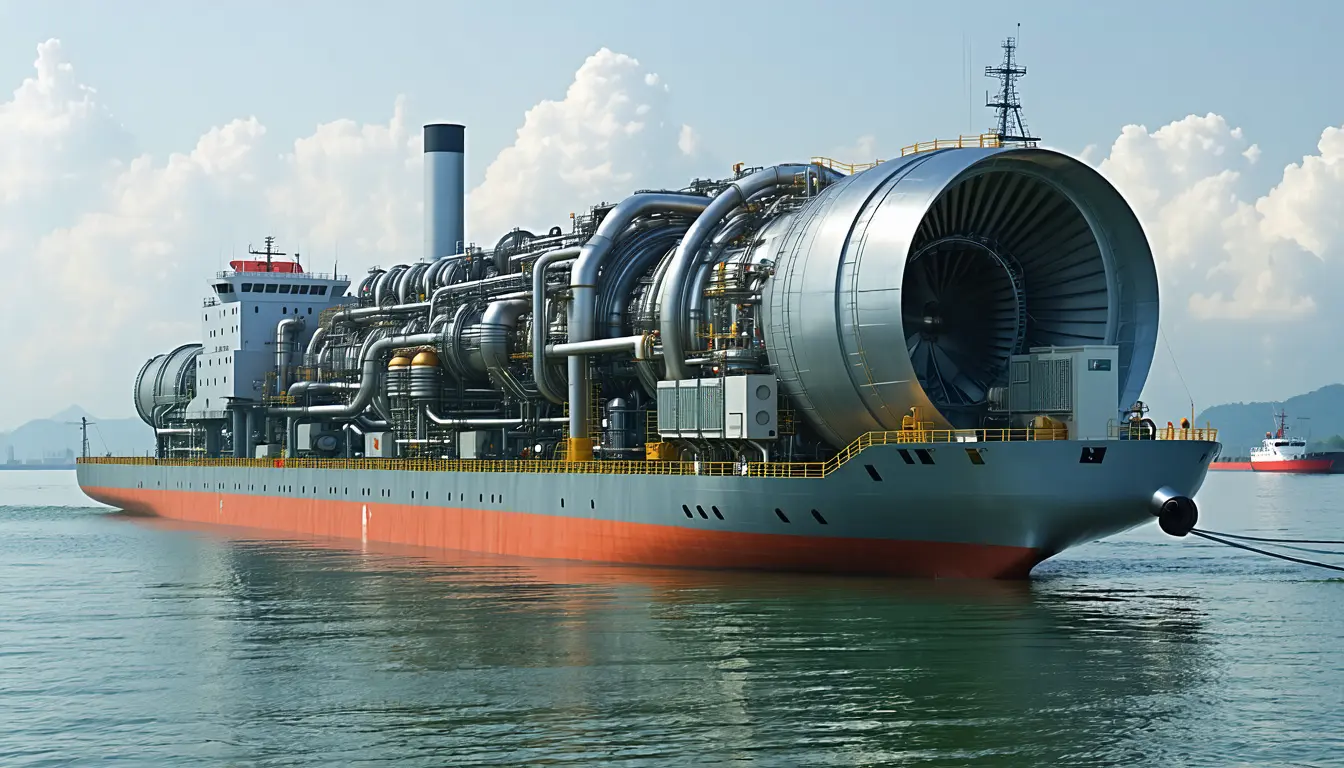
Atomarine plans a gas-fired floating data center, with its first reactor four years later
Investors polled by TechCrunch put Atomarine, whose first hull is planned to burn gas, among the highest-valued startups in Y Combinator's newest batch, on the strength of more than $4 billion in letters of intent.
The Product Desk · Product desk
What happened
- Y Combinator held its latest Demo Day on Thursday, and TechCrunch reports the presenting startups skewed far more toward deep tech than in past cohorts.
- TechCrunch's list of the buzziest names comes from asking early-stage VCs for their picks and keeping only startups flagged by at least two investors.
- Isengard plans to mass-produce jet-powered strike and counter-drones inside allied countries at a fraction of what prime contractors charge to build them in the United States.
- Nori launched six weeks ago with almost half a million dollars in sales for a clothes-folding humanoid priced around $1,600, against Neo at roughly $20,000.
Compiled by The Product DeskSomething wrong?How this is made
Why it matters
- contradiction The same poll says valuations were far more grounded than in recent cohorts, and it puts the two most capital-hungry names at the top of the batch's prices. No figures were published, and a founder pricing a round has nothing to benchmark against.
- constraint Atomarine's first hull runs on gas and does not arrive until 2028. A compute buyer whose problem is a power interconnection queue this year has to wait.
- decision Anyone underwriting Atomarine at the top of the batch is buying conversion. A letter of intent is not a purchase order, and diligence has to price how many become contracts.
- capability If Dipole's optical switch or Lamb's hardcoded-weight chips work, an operator gets more useful GPU time out of a hall that is already built and already powered.
Sort the batch by what a customer could order this quarter and the ranking rearranges. Isengard wants to mass-produce jet-powered strike and counter-drones inside allied countries. It is already at $10 million in revenue and drew one of the loftiest valuations in the batch, according to two investors who spoke to TechCrunch [12][13][14]. Atomarine's figure is 400 times larger and is a different kind of number: customer interest recorded in letters of intent [8][19]. A third pick, a robot-training data company, says it works with publicly traded companies and has captured video in more than 150 environments [18].
Divide Nori's sales by its sticker price and you get roughly 300 robots at list [20]. The humanoid it is compared against, Neo, costs 12.5 times as much [17][21].
The case for Atomarine starts outside the company. Power is in short supply, local communities increasingly oppose new data center construction, and seawater at sea would give near-free cooling [10]. The founders are an MIT computer science and naval engineer and an MIT PhD in nuclear engineering [6]. The plan has two steps: a gas-powered pilot by 2028, then floating nuclear power ships in 2032, four years after the first hull [7][22].
Two other picks work on the same electricity problem from inside the building. Dipole Labs says its optical switch keeps data as light through the networking layer, skipping the conversion to electricity and back that burns power and produces heat between GPUs [11]. Lamb Labs hardcodes model weights into silicon so inference chips stop fetching them from memory, which is where traditional AI chips spend much of their energy [15].
One investor told TechCrunch the tech in this batch felt "like science fiction" [3]. On price, the same investors told TechCrunch that valuations were far more grounded than in recent cohorts [4]. They also named Atomarine one of the highest-valued startups in the batch, on the strength of its letters of intent [9]. TechCrunch did not publish a valuation figure for any company in the batch. So the idea that entry prices have cooled enough to fund capital-heavy hardware cannot be checked against this account.
Two things separate these bets, and both can be settled in a first meeting. One is whether a customer has paid or only signed. The other is whether the first unit that ships removes the constraint the pitch names. Isengard and Nori answer the first with money received [13][16]. Atomarine's first hull needs a yard, a site and a gas supply, and the reactor that the pitch is built on is dated 2032 [7].
What to watch
- Whether any of Atomarine's letters of intent convert into signed capacity contracts before the 2028 pilot date.
- Whether the gas-powered pilot secures a yard slot and a site, and which regulator would license the 2032 reactor.
- Any published valuation figures from this batch, which would test the investors' claim that prices were more grounded.