Loading today’s stories
Build2 distinct publishers3 min readUpdated
Nvidia buys into powered land, and capacity plans should follow the substation
A minority stake in a site-and-utility intermediary, with no terms, dates or GPU counts disclosed. The actionable part is the ordering: power and cooling decisions move upstream of compute.
The Engineer · Build desk
What happened
- NVIDIA made a minority investment in Cloverleaf Infrastructure as part of a partnership to develop U.S. sites for AI data centers; Cloverleaf announced the deal on August 21.
- Neither company disclosed the investment's financial terms.
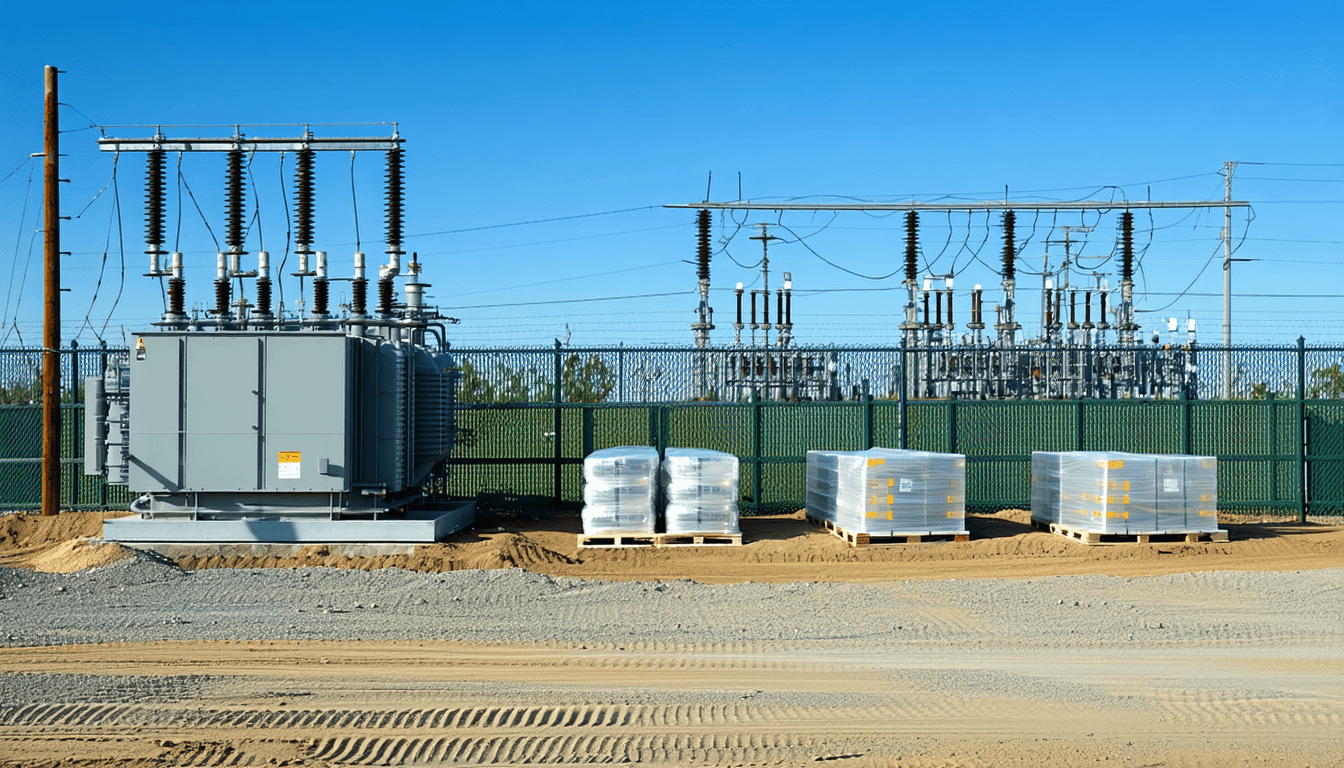
- Cloverleaf sits between utility companies and data centers, arranging power and site infrastructure: the interconnect agreements, the substations, and the land next to a utility that can actually deliver load. Its product is not compute.
- Per TechCrunch reporting cited by dev.to, Cloverleaf was founded in 2024 and raised $300 million that year.
- Cloverleaf said it will apply NVIDIA's DSX platform earlier in the design process, bringing site selection, power, cooling, computing, and facility decisions into the same planning stage.
Compiled by The EngineerSomething wrong?How this is made
Why it matters
A minority stake in a power-sourcing intermediary is a cheap way to buy standing in a queue you cannot otherwise join. Cloverleaf's inventory, as dev.to describes it, is interconnect agreements, substations and land next to a utility that can actually deliver load [3]. That is the layer Nvidia paid into [1], and dev.to's blunt version of why is that shipping more GPUs does not help if nobody can plug them in [11].
The mechanism worth reading closely is the planning one. Cloverleaf says it will apply Nvidia's DSX platform earlier in design, so that site, power, cooling, computing and facility decisions land in the same stage [5]. Four of those five inputs are building and utility questions; compute is the fifth [12], and it is the one with the shortest lead time. Move the other four upstream and the accelerator decision becomes a consequence of the site, not the thing the site is designed around.
Now the disclosure gap. No terms, no deployment dates, no GPU quantities, no customer contracts, no valuation [2][6]. The only dollar figure available in either account is the $300 million Cloverleaf raised in 2024, its founding year, attributed to TechCrunch reporting [4], and that is not Nvidia's money [13]. dev.to says so itself: treat the dollar figures as press reporting rather than filings [10].
The two publishers then diverge in a way that matters for how you use this. dev.to reads the stake as vendor underwriting, with some of the capital returning as GPU orders, capacity built ahead of demand because the supplier has a reason to finance it, and rental prices that can stay soft while the overbuild is absorbed and snap back if the loop tightens [9]. letsdatascience takes the narrower line: the agreement discloses nothing that supports an estimate of near-term hardware demand or added cloud capacity [6], and it flags its own conclusion, that site readiness and utility coordination now sit alongside accelerator availability in the planning problem, as interpretation rather than a disclosed forecast [7].
Both readings can hold at once, but only one of them is usable without knowing the terms. You cannot price a subsidy you cannot see. You can, however, ask a vendor a different question. letsdatascience notes that power delivery, cooling architecture, network topology and grid interconnection schedules can determine whether planned compute gets deployed on time [8]. So the useful number in a capacity conversation is not how many accelerators are earmarked for you; it is the energisation date behind them and who holds the interconnect agreement. An allocation with no date attached is not a plan. It is a forecast about a utility, made by someone who does not work there.
Topics and entities
Follow any of these and your For You feed starts watching them — no settings page required.
Topics
Loading related stories