Leadership1 publisher3 min readPublished
Anthropic pins Cowork's local file reach to a single open desktop app
Cowork sessions now start from desktop, web, mobile and a Chrome side panel and run on Anthropic's servers with files tied to the user's account, so whether the desktop app is open decides what the agent can read on a machine.
The Board Room · Leadership desk
What happened
- Claude Cowork now runs on desktop, web, mobile and in the Claude in Chrome side panel, with sessions and files stored against the user's Claude account so they follow the user between devices.
- Cloud sessions execute on Anthropic's servers, keep working in the background after a laptop is closed, and can run scheduled tasks with no device online.
- Cowork in the cloud is in beta with some features still missing, and computer use is in beta for Pro and Max plans.
Compiled by The Board RoomSomething wrong?How this is made
Why it matters
- constraint Whether an agent can read a machine's folders tracks the run state of one application, so the practical enforcement point for a security team is endpoint software management.
- exposure Because sessions and files are tied to the Claude account, an individual subscription carries agentic capability onto a company laptop as soon as the desktop app or the Chrome extension is installed there.
- decision An organisation writing an agent-use policy has to define the trigger itself, because on two of these surfaces the user never picks a mode for the system to log.
- precedent Once scheduled tasks run with nobody's device online, the review question becomes what a schedule was permitted to do rather than what a person approved on screen.
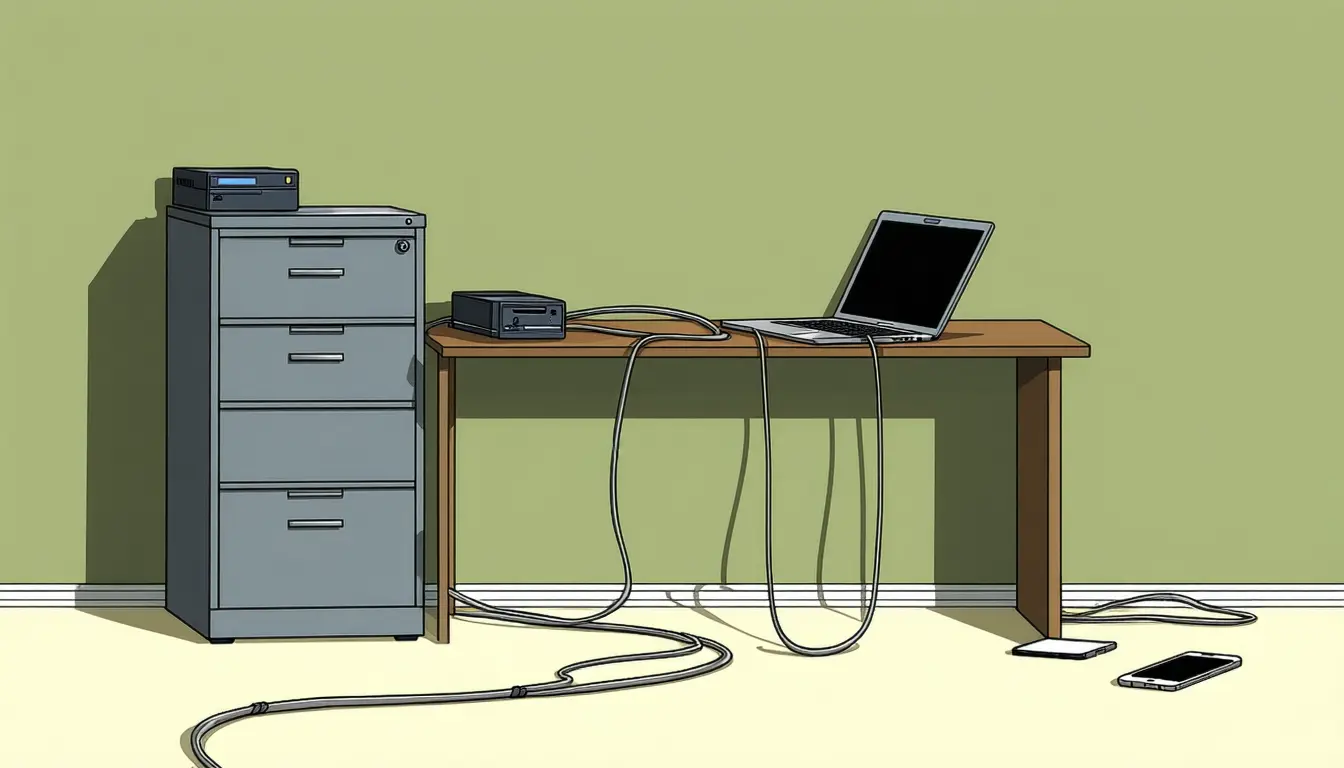
The control deciding whether an agent can touch a work machine's folders is whether an application is running. Anthropic's support documentation says a cloud session can read and write files in folders a user has connected only while the Claude Desktop app is open on that computer, and only when the session was started on desktop [8]. If the app is closed, the session keeps running in the cloud and cannot reach those files [8].
Everything that reaches the machine routes the same way. Local file access, local connectors, and browser use and computer use started from web or mobile all work through the desktop app [10]. Desktop is described as the full Cowork experience, the one surface where Claude can also use local files and the browser directly [7]. Of the four places a session can begin, one reaches the local environment on its own and three depend on that app being open on the right computer [18]. The exception is narrow: in the Chrome side panel Claude can read the tab the user is on without the desktop app, though driving a browser through a task still needs it [12].
The permission model described in the article belongs to the person who set it up, covering folders the user has connected and the permissions the user has already set [9]. Sessions and files are attached to the Claude account and follow it between devices [2]. The article points to two other documents, one for how cloud and local sessions are isolated and one for safety guidance [14]. It covers the user's surfaces and does not describe administrator or workspace-level controls [20].
There is also less of a moment where a user declares that work is agentic. In the current layout, chat and Cowork share one message box, and the user picks "Cowork" in the bottom left corner and "Chat" to go back [3]. In what the article calls the new Claude experience, that selector is gone: describe the task in any conversation and Claude takes it from there [6]. Opening the Chrome side panel starts a Cowork session with no selector at all [4]. On those two surfaces a question and a task begin the same way [19].
File reach is still limited to folders someone connected, and Cowork will not change a project's contents, so a user has to add anything worth keeping [11]. Background work continues after the laptop closes, and scheduled tasks run with no device online [5].
For this quarter the choice is narrow and practical: whether the Claude Desktop app and the Claude in Chrome extension are managed as endpoint software, since those two are where a cloud session gets to a local disk and a live browser tab [10][12]. The feature set is still moving. Cowork in the cloud is in beta with some features not yet available, computer use is in beta for Pro and Max plans, and the browser built into the desktop app was described as rolling out gradually during the week [13][15]. Artifacts are a separate case: those created on or after August 19, 2026 work on the desktop app and web, while live artifacts from before that date are desktop only [16].
What to watch
- Whether administrator or workspace-level controls for Cowork surfaces appear in Anthropic's documentation.
- Whether the browser built into the desktop app finishes rolling out, and what web and mobile sessions can drive once it does.
- Whether Cowork in the cloud leaving beta closes the desktop-only gaps in local connectors and live artifacts.