Leadership1 publisher3 min readPublished
Austin's price collapse made it the only large US metro John Burns calls fairly priced
Prices across Texas and Florida are still soft and builders are clearing inventory instead of breaking ground. For anyone placing headcount, the number that matters is the ratio of housing cost to income.
The Board Room · Leadership desk
What happened
- Austin home values remain more than a quarter below their mid-2022 peak, according to Zillow, and Cape Coral, Florida, the other emblem of the boom, is down 22% from its high.
- Year-over-year price declines across Texas and Florida metros are slowing or turning positive, and the pool of homes for sale is shrinking for the first time in a while.
- Houston, Dallas, Tampa and Jacksonville prices still sit slightly behind last year's already lackluster levels, so the turn is uneven within the two states.
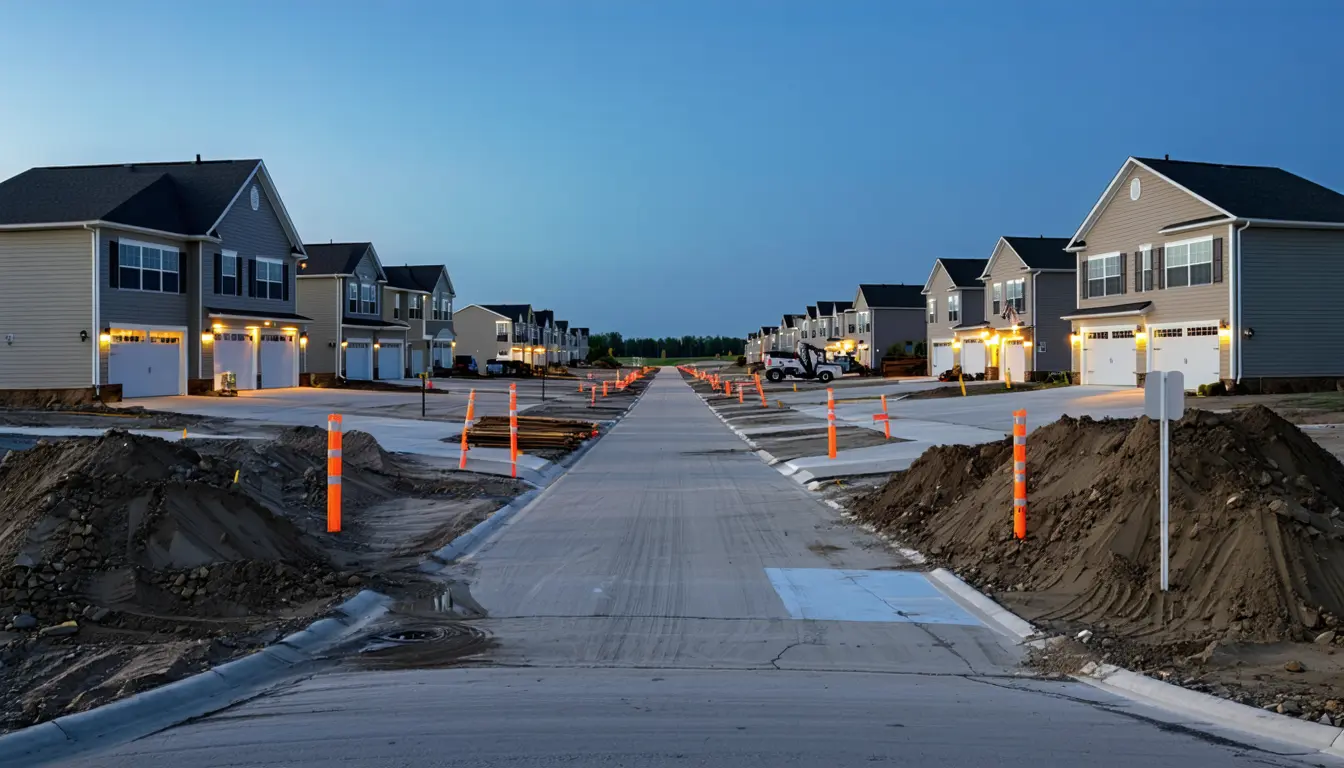
- Builders are working down existing inventory rather than opening new subdivisions, and are leaning on deal sweeteners or outright price cuts to keep sales moving.
Compiled by The Board RoomSomething wrong?How this is made
Why it matters
- decision A siting or relocation case built off peak-to-trough headlines is reading the wrong variable, since it is the cost-to-income ratio, not the size of the drawdown, that separates Austin from the metros that never built.
- constraint The condition making Austin's housing math unusual is inventory builders are actively working off, so a two-year hiring plan that assumes soft prices is betting on an absorption pace nobody in the record has dated.
- contradiction The same evidence carries both readings: declines are easing while four large Texas and Florida metros remain below last year and economists withhold the bottom call.
- precedent Phoenix and Las Vegas are on the same, milder path, which makes the Texas-Florida sequence the template other post-boom metros will be judged against.
The ranking that matters here measures a ratio rather than a price level. John Burns Research and Consulting compares the current relationship between housing costs and incomes in a metro against that metro's own long-run relationship [8]. On that basis Austin trends about 9% above its historical average, which is what earns it the only "fairly priced" label among large metros [8][9]. Indianapolis sits 43% above its own long-term figure and is labelled very overpriced [10]. The distance between the two is 34 percentage points, which puts the Indianapolis premium at close to five times Austin's [1]. That places Austin nearer its own historical norm than anywhere else of size, even though it is still not cheap in absolute terms.
The pattern underneath that ranking is about who built. Philadelphia and Chicago also sit at the expensive end, and neither saw much new construction in recent years [11]. Tampa, Houston and Dallas come out overpriced by 15% to 20% [12], six to eleven points above Austin's reading [2]. The metros that absorbed the building spree that began when demand took off in 2020 [3] now carry the smaller premiums to their own history, and the ones that constrained supply carry the larger ones. For a siting decision, that inverts the usual screen.
On whether this was a builder-made glut or a demand failure, the record says both, in sequence. Prices turned when spiking mortgage rates stalled demand from mid-2022 [13], and what sellers are working through now is the supply that arrived for a demand curve that had already moved. Palacios says the influx of supply is the biggest challenge for sellers across the region, and that all signs show it is being worked through [14]. The fundamentals he points to are well-paying jobs, young families, and slower-but-still-steady migration across Southern metros [15]. Calling the drawdown purely a builder problem understates the rate shock; calling it a demand collapse does not fit a region still adding people.
The person on the record calling Austin opportunistic works for a firm that advises big investors and builders [7], and bought a house in Dripping Springs in July before moving from California in the fall [16]. His ranking rests on a stated method others can check, and it is separate from the Zillow price series that shows the drawdown [1]. The article's own hedging is more instructive: economists will not call a bottom in more than a caveat-laden whisper [17], four large Texas and Florida metros remain slightly behind last year [5], and the most pressed sellers are simultaneously listing on the rental market to see if they get any bites [18].
This record covers housing cost relative to income, not pay. That ratio is not a compensation input on its own, and no figure here says what a transfer into Austin costs an employer against one into Chicago. What the evidence supports is narrower and still usable: the housing-cost side of an Austin move sits closer to its own long-run relationship than in any other large metro, and builders are clearing the inventory that produced that condition rather than adding to it [6]. This quarter, that favours placements in Texas and Florida while incentives and price cuts are still on offer [6]. Next quarter's consequence is the same fact read forward: the window is bounded by how fast that inventory clears, and nobody in this record has put a date on it [17].
What to watch
- Whether Houston, Dallas, Tampa and Jacksonville cross back above last year's prices or stay slightly under them.
- Whether builders move from clearing inventory to opening new subdivisions, which would rebuild the supply that made Austin's ratio look normal.
- Whether the next John Burns ranking still shows Austin as the only fairly priced large metro, or its 9% premium widens.