Invest1 publisher3 min readPublished
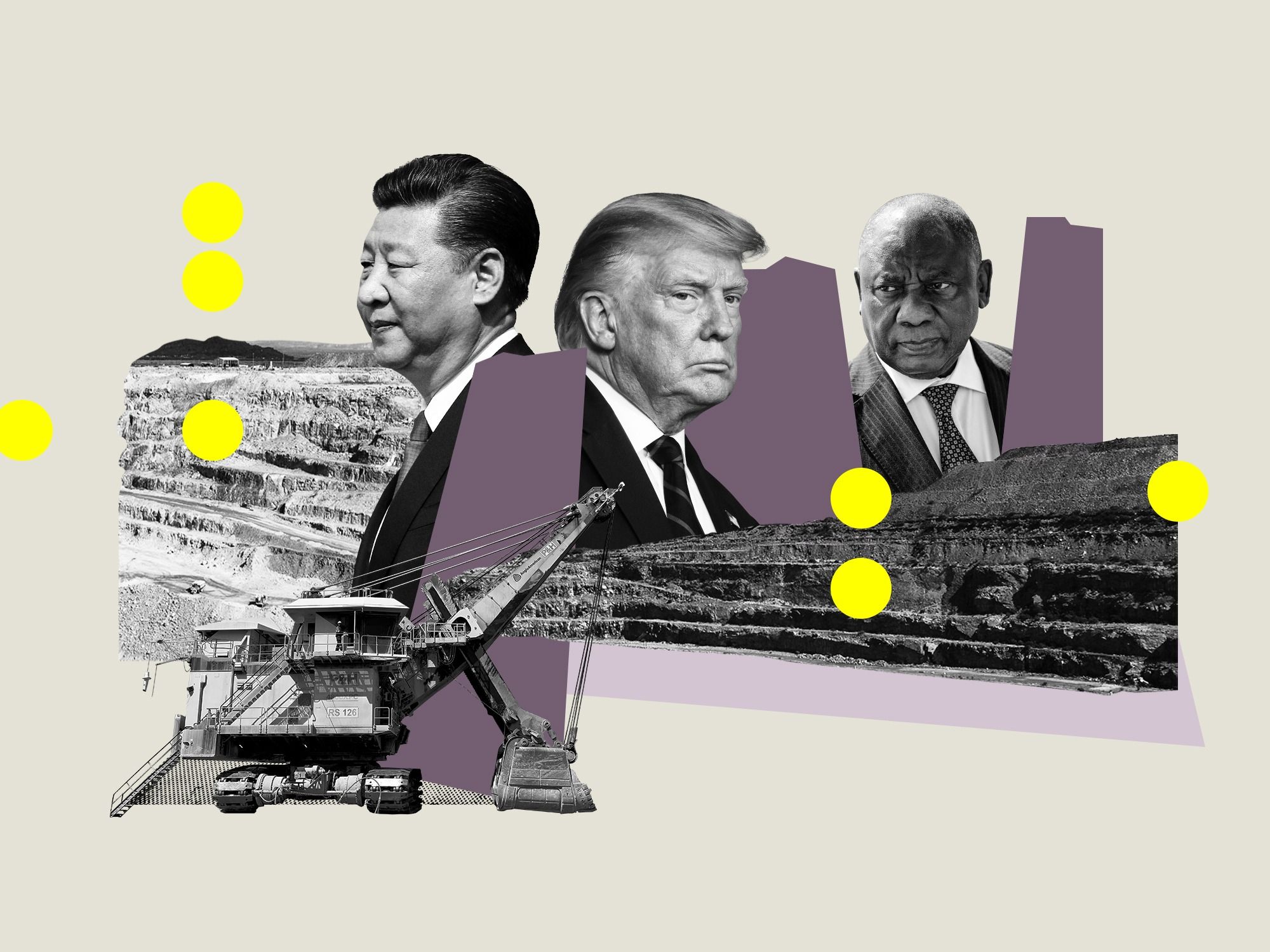
South Africa pitches its 80% share of platinum reserves to Washington and Beijing at once
Trade documents reviewed by Semafor show Pretoria selling platinum-group metals to both superpowers at the same time, and so far the pitch has returned a 30% American duty and a Chinese zero that every African exporter shares.
The Investor · Invest desk
What happened
- Semafor, reviewing South African government documents and market data and interviewing senior officials and executives, reports Pretoria is courting Washington and Beijing at the same time as a platinum supplier.
- In a May submission to the US Trade Representative, South Africa's trade ministry asked for a 15-year AGOA extension and said it supplies 12 of the 50 minerals the USGS calls critical.
- Washington imposed a 30% import duty on South African goods last year, and Semafor reports that the AGOA extension push fell short.
Compiled by The InvestorSomething wrong?How this is made
Why it matters
- constraint Russia holds the second-largest PGM reserves and sanctions keep them away from Western firms, so a buyer looking outside South Africa is choosing among much smaller deposits. That sets the floor under Pretoria's asking position.
- decision The question on Washington's desk is an investment one: whether to fund processing capacity inside Africa. Capital committed to a refinery is harder to reverse than a duty.
- exposure South African exporters pay 30% into the American market and nothing into the Chinese one. The pull on trade flows runs east until that 30-point gap closes.
- cost Courting both powers carries a price on the American side: the Beijing-led drills South Africa hosted with Iran fed Washington's anger while Pretoria was lobbying for AGOA.
Twelve of the fifty minerals on the US Geological Survey's critical list is 24% of it [18]. That is the share South Africa's trade ministry put in front of the Office of the US Trade Representative in May, when it asked for the African Growth and Opportunity Act to be extended by 15 years [9][10]. Materials such as platinum-group metals, the ministry wrote, "are important to United States production and technological advancement, and South Africa has maintained reliable supply" [11]. Business Unity South Africa, the largest trade body in the country, filed its own submission dated May 15, 2026, calling PGMs "essential to US manufacturing, defence, technology, and the energy transition" [13]. Semafor reports the push fell short [14].
The ministry also urged Washington to pursue an "investment-led trade strategy" that included local processing in Africa [12]. That asks for American capital to build refining capacity on South African soil.
Washington imposed a 30% import duty on South African goods last year as part of a wider trade-pressure strategy [4]. Beijing removed levies on South African imports entirely, and it did so while extending a zero-tariff policy across the continent [7]. Every other African exporter got the same term. The gap between the two schedules is 30 points [19].
The geological position is genuine. The Bushveld Igneous Complex, formed about two billion years ago and roughly the size of Sri Lanka, holds around 80% of the world's known PGM reserves [2]. Valterra Platinum's Mogalakwena, 150 miles north of Johannesburg, sits on top of it, and it is the world's largest open-pit mine [3]. The second-largest reserves are in Russia, functionally off-limits to Western firms because of sanctions over the Ukraine war [15]. "If you check all over the world," Sello Mashabela, a Valterra geologist, said, "you won't really find anything like this" [17]. South African output volumes and prices were not available [21].
Washington could extend AGOA or carve PGMs out of the duty, in which case the pitch was slow and not weak. It could instead keep pricing access on land expropriation, Black Economic Empowerment laws, Pretoria's criticism of Israel over Gaza, and the Beijing-led naval drills South Africa hosted with Iran this year [5][6][8], and then the minerals never enter the trade calculation. A third path skips the negotiation entirely. The demand Semafor describes, catalytic converters and defence equipment in the US, green hydrogen in China, AI data centres in both [16], tightens the market, and Pretoria's terms improve on their own.
In my view the record supports one modest reading. Pretoria has a documented strategy and no priced win from it yet, because the two outcomes on the schedules are a 30-point disadvantage in the market it most wanted to repair and a zero it shares with every African exporter [19][7].
What to watch
- Whether Washington extends AGOA or carves platinum-group metals out of the 30% duty on South African goods.
- Any commitment of American or Chinese capital to PGM processing inside South Africa, which is what the trade ministry asked for.
- Whether land expropriation, Black Economic Empowerment laws and Pretoria's Gaza position stay attached to US market access talks.