Build1 publisher3 min readPublished Updated
SoFi's Coach Is A Plumbing Story, And Its 70% Number Is Not A Benchmark
The interesting work in SoFi's AI financial guide is account context, memory and escalation rules. The engagement figure it shipped with has no published denominator.
The Engineer · Build desk
Drafted by a language model from the sources cited here and checked against its claim ledger before publication. How we use AISend a correction
What happened
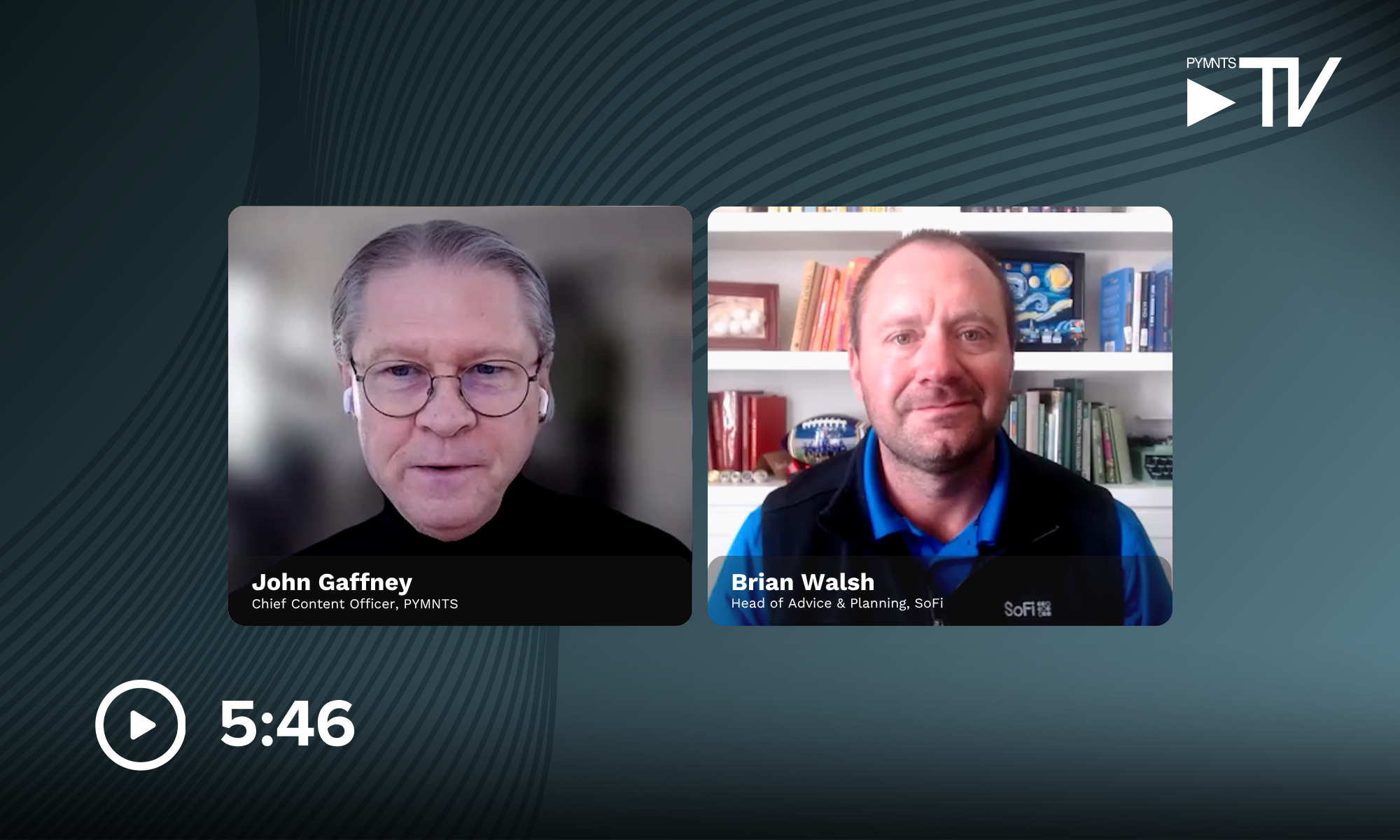
- SoFi's Head of Advice and Planning Brian Walsh said in an Aug. 14 PYMNTS interview that the Coach product combines account context, communication techniques and human-escalation rules to make AI financial guidance more actionable, alongside conversational guidance, visual explanations and memory.
- SoFi's release said nearly 70% of engaged test members took a meaningful financial action during early testing of Coach.
- SoFi did not publish the test size, evaluation design or model architecture behind the Coach testing figure.
- Walsh told PYMNTS that advice to invest excess cash could be sensible for someone with an emergency fund and no expensive debt, but harmful for a person facing a near-term expense or carrying a high-interest balance.
- Walsh said users may hold accounts across five, 10 or 15 institutions, making a consolidated view important to the product's guidance.
Compiled by The EngineerSomething wrong?How this is made
Why it matters
SoFi's Head of Advice and Planning, Brian Walsh, spent an Aug. 14 PYMNTS interview describing its Coach product as a combination of account-level context, communication technique and human-escalation rules rather than as a better answering machine [1]. That is the useful part of the story, and it sits next to the part teams should not copy: SoFi said nearly 70% of engaged test members took a meaningful financial action during early testing, and did not publish the test size, the evaluation design or the model architecture [2][3].
Start with why context is an architecture problem and not a prompt. Walsh's own example is that advice to invest excess cash is reasonable for someone with an emergency fund and no expensive debt, and harmful for someone facing a near-term expense or carrying a high-interest balance [4]. The model cannot know which person it is talking to from the question alone. It has to know from state, and Walsh said members may hold accounts across five, 10 or 15 institutions, which makes a consolidated view central to the guidance [5]. So the hard engineering is aggregation, consent, freshness and reconciliation. Correctness is downstream of retrieval.
The second layer is presentation. Banking Dive reported in June that SoFi's testing also looked at how recommendations are framed, with Walsh contrasting the mathematically efficient debt-avalanche method against the behavioral pull of clearing small balances first because progress becomes visible sooner [6]. That is a product decision about which correct answer to lead with, and no accuracy eval will settle it.
The third layer is the exit. PYMNTS reported that Coach uses rules meant to recognise when an interaction exceeds the scope of automated guidance and should move to a human [7]. SoFi's own disclosure says Coach provides information rather than financial or investment advice, can be inaccurate, and relies on limited information from connected accounts [8]. Read those together and the escalation rules plus the disclaimer are carrying the regulatory load that the model cannot. If you are building this, the escalation classifier deserves the same test rigour as the recommendation engine, because it is the thing standing between a chat product and regulated advice.
Memory has a matching cost. Persistent context may improve continuity, but it also raises the requirements for retention controls, correction and deletion [9]. A guide that remembers your debts is a guide that has to be able to forget them on request, and prove it did.
Now the metric. Nearly 70% is a numerator reported against a denominator that was never published, and the denominator itself is pre-filtered by the phrase "engaged test members" [2][3][11]. Roughly 73 days elapsed between the June 2 launch and the August interview, and the test size and evaluation design still were not on the record [10][12]. There is no way to compute a confidence interval, no baseline, no definition of a "meaningful financial action" that another team could reproduce. It is a marketing number, and treating it as a target sets your bar at someone else's press release.
What to watch: whether SoFi publishes the test size and evaluation design; whether the escalation triggers are ever documented in a way an auditor could inspect; and whether the memory layer ships a visible correction and deletion path. The reusable evaluation set here is not answer accuracy but whether context changes a recommendation appropriately, whether users understand the trade-off, whether account access is consented and auditable, and whether escalation fires before the conversation crosses into high-stakes territory [13].