Leadership1 publisher3 min readPublished
Shopper worry over curing chemicals lifts UK nitrite-free bacon spend 11.4% to £34.8m
UK shoppers spent £34.8m on nitrite-free bacon in the year to 6 September, up 11.4%, according to Worldpanel by Numerator. Retailers are widening ranges to meet concern about curing chemicals, and the producers supplying them have to replace the additive's protection against bacteria.
The Board Room · Leadership desk
Drafted by a language model from the sources cited here and checked against its claim ledger before publication. How we use AISend a correction
What happened
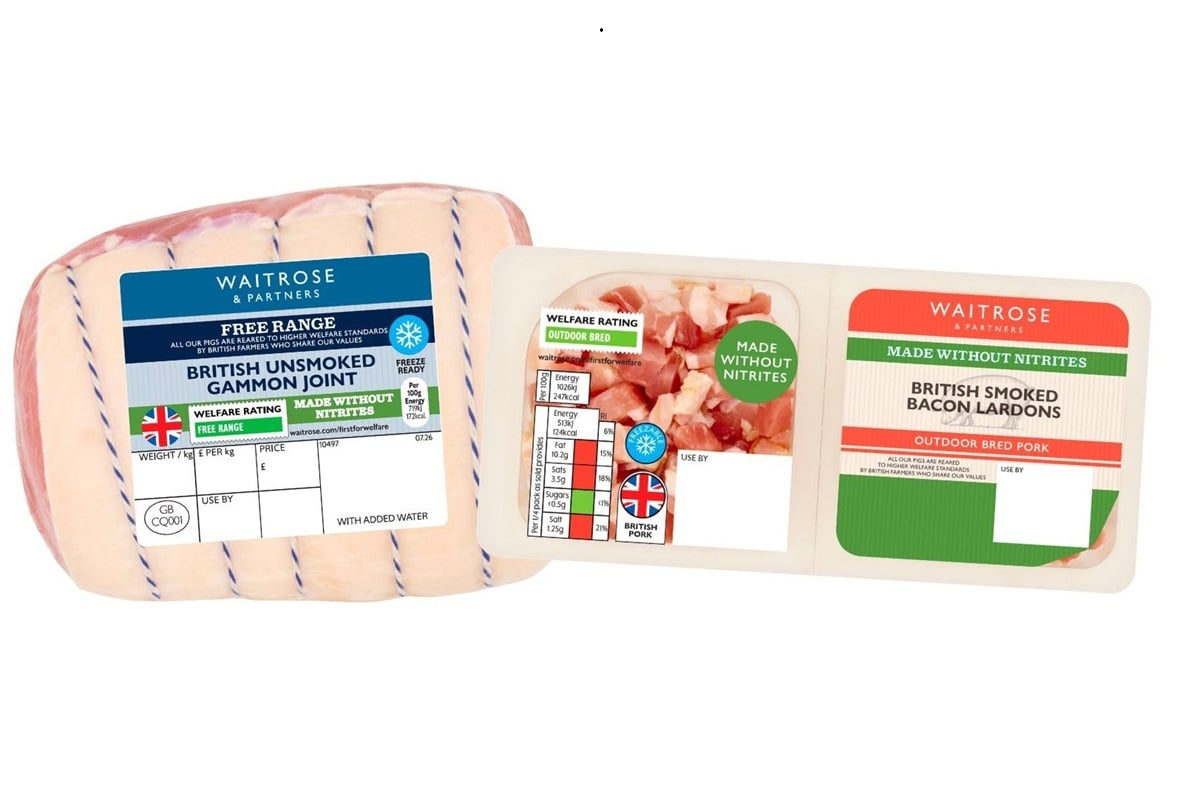
- Waitrose has doubled its Made Without Nitrites range over the past year, and sales of the range are up more than 34%.
- Waitrose's nitrite-free British roast and honey roast hams have grown sales more than 70% since launching in May.
- Denhay, a Devon dry-cure specialist, put smoked and unsmoked nitrite-free back bacon into 570 Tesco stores from 21 September at £4 for 200g.
- The Food Standards Agency says there is no evidence that processed meat made without nitrate or nitrite additives is safer.
Compiled by The Board RoomSomething wrong?How this is made
Why it matters
- exposure Brands selling on 'made without' wording are on firm ground only while the pack sticks to the ingredient; any health claim would run against the regulator's own reading of the evidence.
- cost The food safety burden of this demand falls on the curer, who must replace the additive's antibacterial role, while the retailer that asked for the product books the sales growth.
- precedent Ham outgrowing bacon at Waitrose points to the same request reaching other cured meats, which would put more producers under pressure to change how they preserve.
- decision Producers that add nitrite-free lines beside traditional cure keep their conventional business intact if demand stalls; converting a whole range gives that option up.
Spend grew faster than volume, so shoppers are paying more per kilo for nitrite-free bacon than they did a year ago. Volume rose 8.0% to 2.2m kg [5]. Dividing spend by that volume gives about £15.82 a kilo [1]. The gap between the two growth rates implies a price per kilo roughly 3% higher than a year earlier [2]. Denhay's Tesco packs sit above that average, at £20 a kilo [3]. Over the year the segment added about £3.6m of spend [4].
Retailers have responded to consumer concern about nitrites [19], and the request reached producers through them. Marlene Godwin, Denhay's managing director, said the move was prompted by retailers and shoppers [8]. "Retailers were saying customers want this, can you provide it?" she said [18]. On the cause, she said: "I can't speak for shoppers, but I think health consciousness is driving it, and consumers are more interested." [9] Waitrose frames its range around the label. "As our customers pay closer attention to on-pack ingredient lists, providing options without added nitrites gives shoppers more choice without compromising on flavour and taste," said Emer Lowry, a nutritionist at Waitrose [7].
A skeptic would say retailers are selling a reassurance the science does not supply. The FSA says no single component of processed meat has been identified as the cause of the cancer link, and that there is no definitive evidence nitrites directly cause cancer [13]. The World Health Organization's cancer agency classes processed meat as a group 1 carcinogen, though that link cannot be attributed directly to nitrites [14]. Research suggests that eating around 50g of processed meat daily, the equivalent of about two bacon rashers, is associated with a 16% rise in the relative risk of colorectal cancer [15]. I think the skeptic has the science right and the pitch wrong. Lowry's words are about ingredient lists and choice [7], and the Denhay packs are named Made Without Nitrites [1].
Taking the additive out changes the curer's process. According to the FSA, removing nitrites can pose food safety problems: nitrites help stop dangerous bacteria from growing, so another preservation method has to take their place [12]. Nutritionist Gabriela Peacock, who founded GP Nutrition, said nitrite-free products are often more expensive [16]. "That may be because they are made by smaller producers, use different curing methods or have a shorter shelf life," she said [17].
Worldpanel says the nitrite-free share of fresh bacon has risen steadily from a small base while conventional bacon declines [6]. The report does not give the share. Godwin has heard calls to go further. "One of the things people said to me was, why not convert everything? Our customers still love traditional cure, but we're offering another choice," she said [10]. For now Denhay sells both cures [10].
What to watch
- Whether Waitrose or Tesco extend Made Without Nitrites labelling to more cured lines after the ham results.
- Any FSA guidance on how 'made without nitrites' wording is used on packs, or new evidence on the safety of alternative curing methods.
- The next Worldpanel 52-week read, showing whether nitrite-free volume keeps growing as the price per kilo rises.