Science1 publisher2 min readPublished
Salk takes a one-tonne-per-hectare soybean carbon estimate out of the lab and into Illinois
The Salk Institute has $18 million from the Bezos Earth Fund to measure in four states' fields what its lab work estimated at one metric ton of carbon dioxide per hectare a year, with the first results due this fall.
The Scientist · Science desk
What happened
- An $18 million Bezos Earth Fund grant is paying the Salk Institute to test deeper-rooted crops in the field for drought resilience, how much carbon they store, how long it stays there, and how to reach farms at scale.
- Salk scientists identified 347 genes related to carbon storage and root growth, then edited plant DNA to produce plants whose roots penetrate further down into the soil.
- From earlier lab results, the team estimates that a hectare of deeper- and bigger-rooted soybeans stores an additional metric ton of carbon dioxide each year.
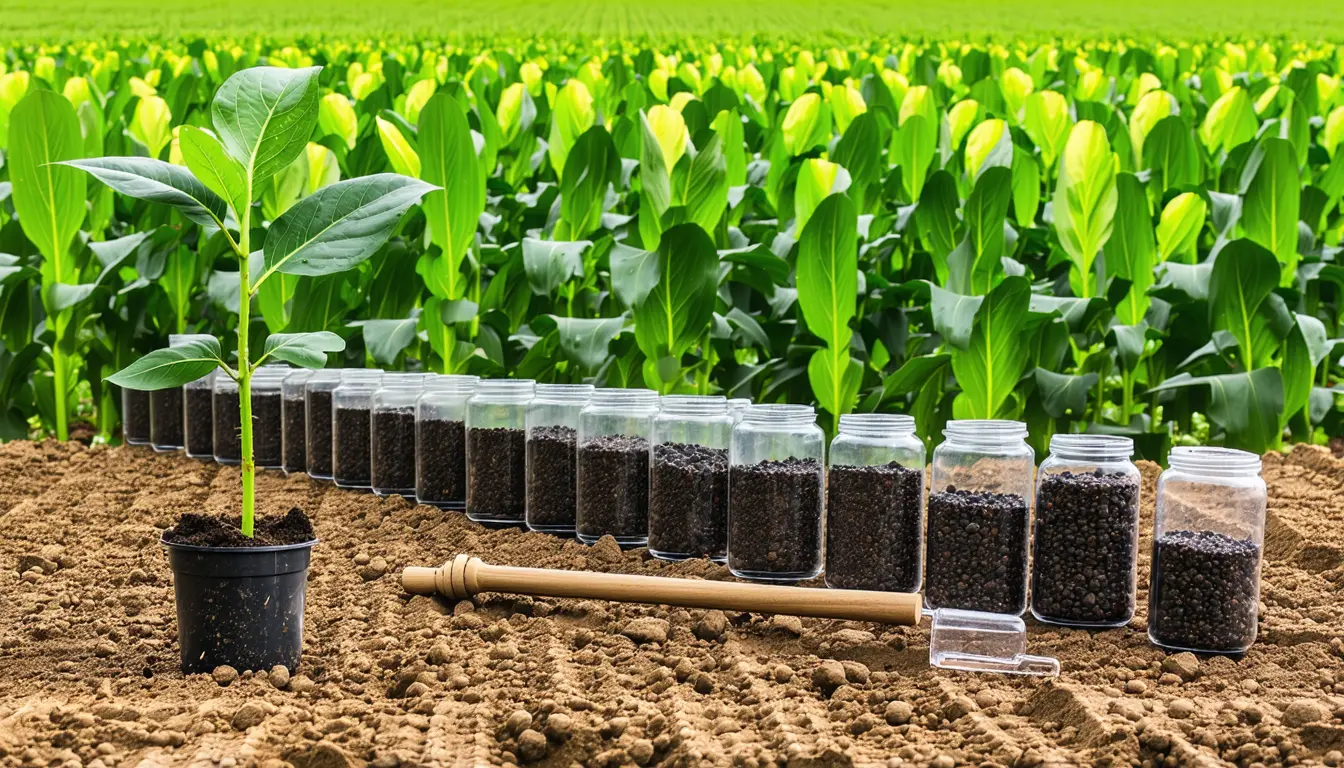
- At the University of Illinois Urbana-Champaign, the soybeans grow under a canopy that opens and closes to control how much rain reaches them, so drought becomes a treatment the researchers impose.
- Busch said initial results from the field are expected this fall, after six years of cataloguing the genomes of row crops from around the world.
Compiled by The ScientistSomething wrong?How this is made
Why it matters
- constraint Pricing an annual deposit as a durable removal takes a residence time, and Salk's answer so far is that duration depends on how deep the roots grow and on the soil around them.
- decision A grower's decision turns on bushels per acre under real farming conditions, which is one of the three things the program itself says still has to be shown.
- capability If the bigger roots also take up more nitrogen and other fertilizer runoff, as Salk scientists expect, the seed gains a selling point that stands independent of any carbon market.
- precedent Putting plant breeding forward as a removal method alongside direct air capture, ocean chemistry and reforestation invites the same tons-and-duration accounting those approaches are asked for.
Divide by 2.5 and the lab estimate comes to about 0.4 metric tons of carbon dioxide per acre per year [23]. Multiply the other way and a million tons a year requires a million hectares planted to these lines [24]. Whether the number ever reaches climate scale depends on how many farmers plant the seed.
The mechanism for durability is suberin, a cork-like substance in roots that contains carbon and decomposes more slowly than many other plant tissues [14]. They are also breeding for larger root systems, so more carbon-rich plant material is left in the soil when the crop is done [15]. Steeper roots put that material lower down, where Salk expects it to be less vulnerable to release when farmers till, and where the plant can reach water below the top layer of soil during a drought [16].
At the Illinois site, underground cameras and sensing equipment let the university's researchers track soil carbon and watch root growth in real time [12]. Sites in Missouri, Kansas and Iowa are meant to widen the range of soils and weather behind the eventual storage and yield estimates [13].
Salk spent six years sequencing hundreds of versions of row crops such as soybeans and sorghum, work that Todd Michael, a research professor at the institute, called an "encyclopedia" of plant genomes [4]. His description of the next step was breeding. "We wanted to leverage the natural variation of a given plant," Michael said [6]. "We just have to be able to make the right crosses to bring in those genetics" [7]. Salk has not said whether the plants now in the Illinois ground came from crosses or from the DNA edits.
Yield is the open question, because most plant breeders have not focused on root systems in the past [19]. "We don't really know what the real trade-off is," said Wolfgang Busch, who directs the institute's Harnessing Plants Initiative [17]. "You have to test it in the field" [18]. The researchers' working hypothesis runs the other way: more steeply shaped roots might let farmers plant more crops in a smaller area, and so raise yield [20].
Busch framed the urgency in terms of food. "It will become harder to grow enough food for enough people," he said [22].
What to watch
- Whether the fall field data reports soil carbon at depth and yield from the same plots, so the two can be weighed against each other.
- Any residence-time figure for the stored carbon, which is what would let the annual tonne be counted as a removal.
- Whether Salk says the lines going into farmers' fields came from gene editing or from conventional crosses.