Invest1 distinct publisher2 min readPublished
San Francisco's July median rose 6% on an 18.4% drop in listings, which is a supply squeeze more than a wealth shock, and the $198bn that would make it a wealth shock depends on two IPOs that have not happened.
The Investor · Invest desk

Compiled by The InvestorSomething wrong?How this is made
Take the two equity estimates at face value and they sum to $198bn [1], and because the pair is put at almost a third of the city's housing stock by value [6], the stock backs out to roughly $600bn [2], or about 124,000 homes at July's median [3]. That sum is the whole case for reading house prices as an AI pay index, and every dollar of it is paper: the $135bn is post-tax equity conditional on OpenAI listing at an expected valuation [4], the $63bn is the same species of estimate for Anthropic staff [5], and neither company has listed yet [7]. Nothing in the material ties a single closed sale to a single AI employee. The $25m that loses, roughly 15.6 homes at the July median [8], comes from one agent's account [3].
The price series does not agree with itself either. A median up 6% year over year while active listings fall 18.4% [8] is the shape of a market with nothing to buy, and the 25% twelve-month figure [2] reads better as the arc off the bottom: $1.28m in January 2023 to $1.6m is 25% exactly [4], and on that reading the city has spent three years climbing back and is still 4.8% under the $1.68m spring 2022 peak [5].
One number in the material is not San Francisco's at all. If 2.1% of March listings were affordable to a household on $75,000 and that came to 2,475 homes [12], the pool being divided is about 117,900 listings [6], which is a national count; San Francisco does not have 118,000 homes for sale.
The version where the anecdote becomes the index needs both companies to list near their expected valuations and lockups to open into a city where office vacancy was 34.4% in late 2025 [17] and where the Family Zoning Plan passed in December 2025 [16] converts that space on a construction timetable. The version the current numbers support, or rather the version with the smaller and more testable pool behind it, is that today's bidding is funded by salaries and secondaries rather than by $198bn, running against 18.4% fewer listings and a resident base that shed more than 60,000 people between 2020 and 2022 [10] and has not been rebuilt. Between those sits the case where the listings price lower, $135bn and $63bn scale down with them, and the $600bn denominator stops being interesting. Show me a median up 20% year over year with inventory rising rather than falling, or closed sales at the top end rather than bids, and the compensation story wins on its own evidence instead of on an agent's laugh.
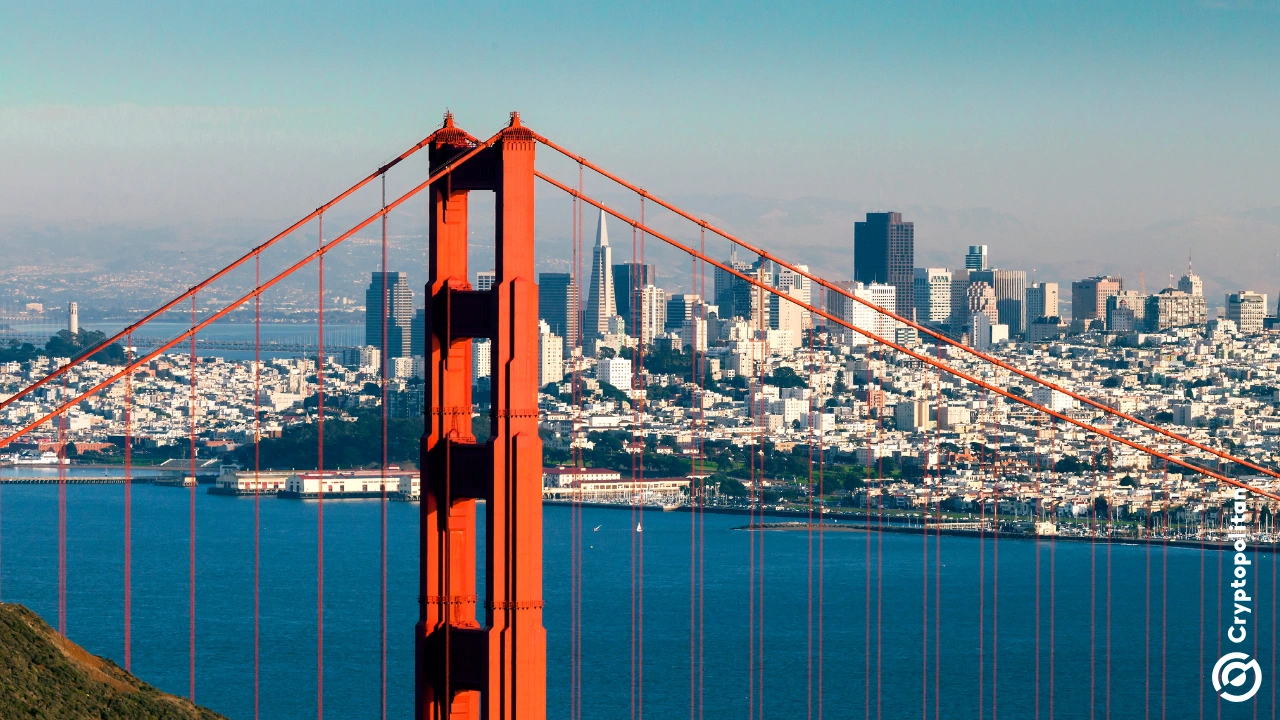
Ranked by verification strength, evidence, and original report placement.
Real estate agent Paul Kitchen said certain San Francisco listings have drawn up to 50 offers and described top-end buyers offering $25 million in cash who still end up without a home: "You have to laugh just because it is so ridiculous and so beyond the pale."
Both OpenAI and Anthropic intend to list on the stock market, and each has leased about 1 million square feet of office space in San Francisco in the last two years while getting employees back into the office.
San Francisco's July median sale price jumped 6% year over year to $1.6 million while active listings dropped 18.4%, the sharpest inventory drop in the country.
The median San Francisco sale price was $1.28 million as of January 2023, down from a $1.68 million high the previous spring.
San Francisco lost over 60,000 residents from 2020 to 2022 as remote work surged.
Average San Francisco rent has risen by over $1,000 in a year to around $4,600, making it the most expensive rental market, just above New York, with some young highly paid tech workers paying $10,000 a month.
Distinct publishers with included, body-backed reporting in this cluster.
1 article · September 4, 2026
Follow any of these and your For You feed starts watching them — no settings page required.
invest
Behind-the-meter gas is the data center buildout's real cost: 318 Mt a year1 distinct publisher
product
Trump administration files in support of OpenAI's fair-use defence in the Times case3 distinct publishers
invest
Big Tech marks up its private AI stakes by $160bn in a single quarter1 distinct publisher
product
Meta budgeted up to $10bn a year with Anthropic even as Zuckerberg warns against rival AI labs1 distinct publisher
Evidence-backed comparisons of source perspectives and observed adoption signals. Read the methodology
Which Builder, Operator, and Investor concerns the observed source mix emphasized—not a truth score.
Evidence, demonstrated adoption, hype gap, incentives, and confidence are assessed independently, each on its own current evidence. How these are measured.
Secondhand figures that disagree with each other
Every number in this story is a retelling. Compass supplies the 25% and, through NPR, the bidding anecdote; Redfin supplies the July median, the listings drop and the Seattle comparison; Realtor.com and the National Association of Realtors supply the affordability share. Cryptopolitan never checks them against one another, and two pairs fail that check: a 25% twelve-month rise cannot coexist with a 6% year-over-year July median, and 2,475 homes as 2.1% of listings implies a pool near 118,000, which is a national count carrying a city's label.
Real leases, equity still private
The confirmed activity is a pair of roughly million-square-foot office leases, staff back at desks, and a December 2025 rezoning aimed at 34.4% empty office space, while the $198bn figure the story turns on depends on a listing neither OpenAI nor Anthropic has made, so that sum stays on paper and no purchase in the market can be traced to it here.
Mansion shortage on a 6% median
The framing is a mansion shortage manufactured by AI money. The firmest supporting number is a 6% year-over-year median paired with an 18.4% fall in listings, which describes owners declining to sell. The $198bn that would make this a wealth shock is conditional on IPO valuations the piece never names, and the 50-offer listings come from one agent's own market.
Scarcity sourced to people who sell into it
The scarcity is described by parties who benefit from it being believed: a Compass agent recounting his own bidding wars, Compass data behind the 25%, and Redfin's research head supplying the framing that ties two metros into one AI narrative. Cryptopolitan closes with a newsletter pitch and an investment disclaimer, which says plainly enough what the page is for.
Direction plausible, arithmetic shaky
San Francisco housing tightening while Seattle softens is consistent across the brokerage figures quoted, but the magnitudes clash: one price series contradicts another, the affordability count belongs to a different geography, and the $198bn rests on valuations nobody states. With a single outlet and no primary documents, there is nothing here to raise that.