Product1 distinct publisher3 min readPublished
ETNews says Samsung added a million units to its launch run after the passport-shaped Z Fold8 took most of the lineup's preorders, which leaves accessory and app roadmaps designing for two hinge geometries instead of one.
The Product Desk · Product desk

Compiled by The Product DeskSomething wrong?How this is made
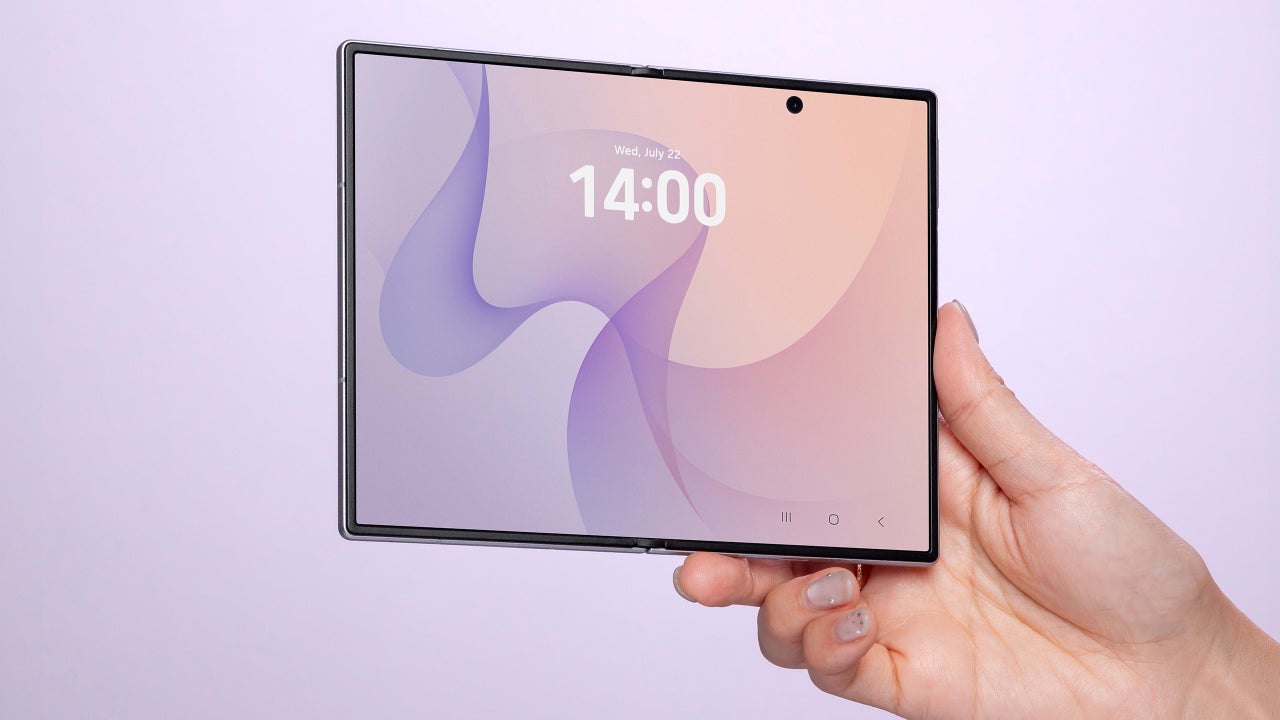
Unfold a Z Fold8, turn it sideways, and you are holding a 7.6-inch 4:3 screen close in size and shape to the iPad mini back when it still had a home button [4]. The cover screen is wide rather than tall, roughly the dimensions of a passport, where the Fold8 Ultra keeps a near-square inner panel [3]. Sam Byford, writing for Fast Company from Tokyo, names the two payoffs: less of a video lost to black bars, and a lot of Android apps behaving better in portrait than they do on a square [5][17]. The Ultra answers a different question. Its cover screen is shaped like an ordinary phone, so the reason to open it is two full-size phone apps side by side, plus room for a telephoto lens, still the 10-megapixel 3x module Samsung has shipped for years [6][7].
Two jobs, then, and the preorder split reads as a first verdict on which one people pay for. If the Fold8 took around 70% of preorders, everything else in the lineup divides the remaining 30%, which puts the wide body ahead of the rest combined by roughly 2.3 times [15]. ETNews reports Samsung answered by ordering an extra million devices for the launch run [9]. Worth being precise about what that 70% covers: it is preorder share across the latest foldable lineup, and the head-to-head Byford describes is the new wide body against the book-style Ultra.
Teams tell themselves users multitask with a foldable, but the money so far says they buy the one shaped for watching things. Preorders report intent to try, and Byford flags the early-adopter caveat himself [11]. Neither device has a published retention figure, a published usage-depth figure, or a count of how often the inner screen gets opened in week six. Reviews were near-universally positive, but that measures the first hour of use, not the second month [10].
The Fold8's own compromises point at the risk. Audio comes out of only one side of the open screen, and the fingerprint reader sits awkwardly in tablet mode [8]. A phone bought mainly for video but playing sound from one edge means its experience depends on earbuds sold separately.
Apple is expected next month with a folding phone that reports and leaks describe as taking the same widescreen approach [13], which is why this shape stops being a Samsung question. The difference is the software. Android never built a strong ecosystem of tablet-designed apps [14], so the wide body wins largely by making phone apps look correct, while Apple would arrive with tablet layouts already written.
The test that separates one roadmap from two: for every screen your product has, name the fold state it must be usable in, whether that is closed at passport width, open in landscape 4:3, or open square with another app taking half the panel. A feature that only survives in one of those states is built for one SKU in a lineup that now has two shapes. The hardware version of the same test is whether your case, protector or mount tooling quietly assumes a single hinge width.</body_markdown> </invoke>
Ranked by verification strength, evidence, and original report placement.
Samsung this year is launching a new foldable form factor competing directly against an existing one, which Fast Company frames as an A/B test of which one the public will go for, occurring as Apple approaches its entry into the category.
The genuinely new device is called simply the Galaxy Z Fold8, while the expected iterative update to Samsung's book-style foldable line has been named the Galaxy Z Fold8 Ultra and positioned as a product aimed at power users.
The Z Fold8 has a wider, squatter outer display roughly the size and dimensions of a passport and folds out into a landscape 4:3 orientation, as opposed to the square-ish inner screen on the Ultra.
The Z Fold8's 7.6-inch inner screen is very close in size and shape to the iPad mini's from the era when it still had a home button.
Compared with the Ultra, the Z Fold8 loses less of the screen to black bars when watching video, and many Android apps work more naturally in portrait orientation than on a square screen.
The Ultra remains the better device for multitasking: its outer screen is closer in dimensions to a regular smartphone, and the key advantage of its inner screen is running two full-size phone apps side by side.
Distinct publishers with included, body-backed reporting in this cluster.
1 article · August 29, 2026
Follow any of these and your For You feed starts watching them — no settings page required.
product
Samsung's Fold8 moves the foldable compromise, it does not remove it1 distinct publisher
product
Samsung fixed the crease. The Fold8 and Fold8 Ultra now sit $200 and one zoom lens apart.2 distinct publishers
product
Carrier gatekeeping keeps three of the world's top five phone makers off the US test bench1 distinct publisher
invest
Apple's foldable enters a 1.6% market at $2,000-plus, minus telephoto and Face ID1 distinct publisher
Evidence-backed comparisons of source perspectives and observed adoption signals. Read the methodology
Which Builder, Operator, and Investor concerns the observed source mix emphasized—not a truth score.
Evidence, demonstrated adoption, hype gap, incentives, and confidence are assessed independently, each on its own current evidence. How these are measured.
First-hand on the hardware, secondhand on the numbers
Two very different grades of evidence sit in the same piece. Everything about how the phones behave — 4:3 versus square, one-sided audio, the fingerprint reader in tablet mode, the recycled 10-megapixel 3x telephoto — reads as Byford handling the devices, and it is specific enough to be wrong in checkable ways. The claims doing the persuading are not his: the 70% preorder share and the added million units come from ETNews at one remove, with no unit base, and 'near-universally positive reviews' names no review at all.
Preorder mix, not sell-through
Something real is being measured — a manufacturer does not add a million units to a launch run on a hunch, and a 70/30 split within a lineup is a strong directional signal about which shape people reach for. But preorders are the softest demand data there is, the figure covers one launch window with no region or unit count attached, and Byford concedes novelty-seeking could be part of it. Adoption of the wide body by app and accessory makers, which is what would make the shape durable, is not observed anywhere in this coverage.
'Surprise hit' outrunning its receipts
The headline calls the Z Fold8 a hit and the closing line has Samsung drawing the blueprint for Apple. Underneath that sit one secondhand preorder percentage, unnamed reviews, and leaks about a phone Apple has not announced. The overshoot is moderate rather than egregious — the hardware observations are concrete and the piece names its own caveat about novelty buyers — but 'blueprint for the category' is a much bigger claim than 70% of one lineup's preorders can carry.
Newsletter growth, and a review unit nobody accounts for
The piece opens with a subscription pitch for Multicore before it opens with news, and its syndication on Fast Company serves that funnel — a mild pull toward the confident, shareable verdict rather than the hedged one. Set against that, Byford spends real paragraphs on where the new body is worse and calls Samsung's telephoto module stale, which is not how sponsored enthusiasm reads. What is missing is provenance: side-by-side hands-on comparisons imply devices supplied by someone, and that arrangement is never disclosed.
Trust the shapes, hold the share loosely
Split your confidence by claim type. The physical description of the two bodies would survive contact with the devices, and the history of Samsung's earlier foldables is uncontroversial. The demand story would not survive a second outlet asking ETNews for the unit base, and the Apple half is a forecast about an unannounced product. With a single publisher in our coverage and no corroboration available, nothing here can be raised above the level of a careful first read.