Invest1 distinct publisher3 min readPublished
The Education Ministry's rewritten defence course spends half of its weekly hours on armaments and combat first aid, and the pupils sitting it cannot be conscripted for another five years, so its payoff lands in the 2030s.
The Investor · Invest desk

Compiled by The InvestorSomething wrong?How this is made
There is a five-year lead time on this purchase: that is how long passes before the first pupil sitting the weapons half of the course is even eligible for the one year of service every Russian man owes at 18 [3][8][17]. It does nothing for this year's recruiting round.
What it is sized against is a run rate. Western estimates put Russian army killed and wounded above 1.5 million [7] across a war the report describes as in its fifth year [5], which works out near 333,000 a year if you treat four and a half years as elapsed, against the roughly 400,000 recruits Moscow says it seeks annually [6], leaving about 20% of headroom over losses [18]. Or rather, the more interesting version of that arithmetic: the intake target sits close enough to the loss rate that the system needs volume every year whatever happens at the front, and a course whose first candidates mature in five years is being bought for that steady state rather than for the current gap.
The conversion mechanism is narrow and worth naming precisely. Conscripts cannot be sent to Ukraine, so enlistment officers and military instructors press draftees early in their year to sign lucrative professional contracts, which is what makes them deployable [9], and many young men avoid or delay the draft altogether [8]. So the classroom is not adding bodies to the pool; it is working on the probability that one particular 18-year-old signs. Put plainly, this is a change aimed at raising a conversion rate, and the cash it is meant to generate will not show up for five years.
How much of the programme is actually taught is partly answerable from the state-sponsored Knowledge Society's survey of more than 2,600 school leaders and teachers, where 95% of schools report hosting events about the war while nearly 75% report running special lessons on it [11]. That 20-point gap [19] tracks the cost of each item: an invited veteran is an afternoon, a rewritten lesson plan is a term, and the cheaper thing is the one at 95%.
There are a few ways to read this. One is that it's a genuine throughput programme, in which case the contract sign-up rate among first-year conscripts should move in the early 2030s. Another is that it's legitimacy spending, with the recruitment yield real but small. A third is that it's simply capacity-bound, since more than 80% of schools inviting combatants to speak [11] is not the same as staffing them as instructors, and Vyacheslav Volodin's wish for veterans in every single school [10] needs qualified bodies that a decree does not create. This is probably wrong, but I read it as the second reading carrying a modest dose of the first: Soviet schools ran gas mask drills, march practice and rifle assembly for decades under a deterrence framing built on 27 million dead [13], and Irina Lukyanova, a teacher who researches the system, is quoted in the Fortune report saying the ideology now is militarism where it was once fear of war [15]. What would prove me wrong is establishment tables: funded military-instructor posts inside schools, rather than guest speakers and Zarnitsa squads of ten with their drone operators and sappers [16], would mean Moscow is paying for throughput and not for atmosphere.
Ranked by verification strength, evidence, and original report placement.
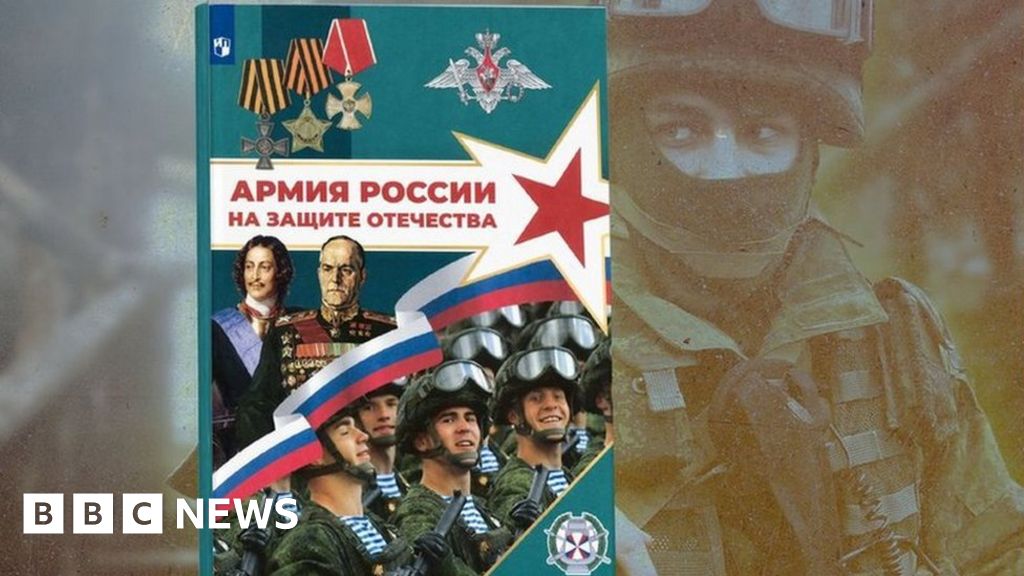
Russia's Education Ministry ordered a revamped curriculum requiring half of the weekly classes in the course "Fundamentals of Security and Defense of the Motherland" to focus on basic military training.
The mandatory classes include learning about main types of armaments including machine guns, anti-tank weapons and hand grenades, as well as emergency field medicine and general military discipline.
Some of the skills were previously taught in limited high school modules, but the new version escalates the training to children as young as 13.
The basic military training also covers Russia's national security doctrine and the structure of the armed forces, plus mines and explosive hazards, first aid for combat injuries, chemical and radiation exposure, acute stress, survival training and procedures for operating in conflict zones.
Students return to Russian schools next week, and the war in Ukraine is now in its fifth year.
Distinct publishers with included, body-backed reporting in this cluster.
1 article · August 29, 2026
Follow any of these and your For You feed starts watching them — no settings page required.
invest
Moscow Exchange to list BTC and ETH perpetuals in September as Russia's digital currency law lands1 distinct publisher
invest
Moscow refuses a shipping-only truce, and the Black Sea premium stops being seasonal1 distinct publisher
invest
Seoul's first read on a second North Korean deployment: preparation yes, movement no1 distinct publisher
Evidence-backed comparisons of source perspectives and observed adoption signals. Read the methodology
Which Builder, Operator, and Investor concerns the observed source mix emphasized—not a truth score.
Evidence, demonstrated adoption, hype gap, incentives, and confidence are assessed independently, each on its own current evidence. How these are measured.
Every number checkable, no document in sight
The story's central fact — half of a mandatory course's hours reassigned to weapons drill — comes to us as Fortune's paraphrase of a ministry order that is never quoted, dated or linked. The syllabus detail is specific enough to be credible and specific enough to be verified, yet nobody has verified it here. The casualty figure carries the weakest attribution in the piece: "according to western estimates," with no estimator named.
The apparatus arrived before the syllabus did
This is the part of the story that is already measured rather than announced. Before a single new lesson is taught, 95% of schools were running war-related events, veterans were speaking in more than 80% of them, cadet-track enrolment had nearly quadrupled since 2018, and the youth war games are budgeted to triple to 2.5 million children this year. The curriculum change is the formalisation of something operating at national scale — which is why the penetration numbers, not the ministry order, are the strongest evidence in the piece.
Inputs counted, output assumed
Everything countable here is an input: hours, rubles, headcounts, percentages. The conclusion — a stream of recruits running from classroom to army — is a causal claim with no enlistment data behind it, and the pupils in question cannot be drafted for five years, so no such data can exist yet. Fortune is restrained in tone and does not inflate its figures; the overstatement is structural, in treating a spending and timetabling programme as a demonstrated recruitment machine. The reporting also leaves the money incomplete in a revealing direction, quantifying youth-programme budgets while the contracts said to pull draftees toward the front are described only as lucrative.
A state surveyor and two exiles walk into a classroom
The penetration statistics that make the story stick come from Znanie, a state-sponsored body reporting on the success of state programming — an organisation whose funding case improves as the numbers rise. Volodin's call for veterans in every school is a politician's position, offered to an audience of students. On the other side, the two educators giving the story its moral framing are a critic of the system and an exiled teacher with an Oscar-winning documentary to his name. Fortune notes Znanie's sponsorship and Talankin's exile plainly, which is the right disclosure; the interests still point in opposite directions and nobody neutral is in the room.
Firm on the machinery, soft on the payoff
We can be reasonably sure about what has been ordered, funded and enrolled; the descriptions are consistent, internally coherent and arithmetically checkable — the five-year gap to conscription age and the intake ambition running a fifth above the implied loss rate both fall straight out of figures in the same account. Confidence drops where the story reaches for consequence, since a single outlet paraphrasing an unseen order and quoting a state-run poll cannot settle whether any of this will fill the ranks in the 2030s.