Product1 publisher2 min readPublished
Raytron puts the thermal alarm's interpretation step inside the camera
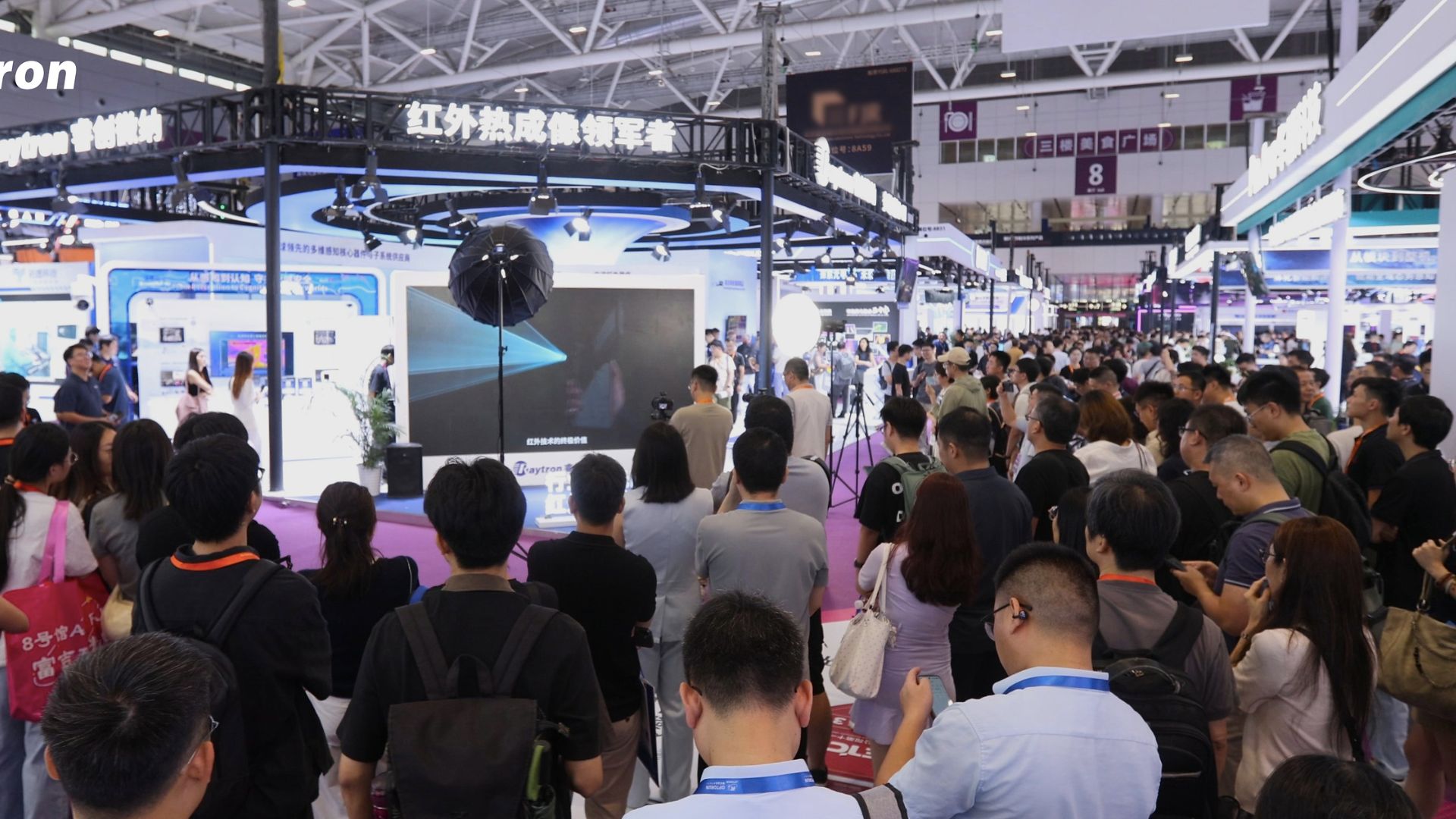
At CIOE 2026 the company showed an infrared vision-language model trained on more than five million of its own thermal samples, built to describe gas plumes and electrical faults on the camera's own chip.
The Product Desk · Product desk
What happened
- Raytron unveiled an Infrared Vision-Language Model at CIOE 2026, built around a dedicated infrared visual encoder instead of the visible-light image datasets most vision-language models are trained on.
- The company says the model is supported by more than five million proprietary multimodal infrared samples covering industrial temperature measurement, night vision and gas detection.
- Gas-detection training covers methane, sulfur dioxide, ethanol, R-134a, R-152a and sulfur hexafluoride, with the model also trained for electrical inspection and perimeter monitoring.
- Raytron says the technology runs locally using hardware acceleration on edge chips, so thermal data does not have to stream continuously to a cloud AI service.
- The same announcement introduced Falcon 500, Raytron's third-generation infrared AI image-processing chip for thermal imaging systems.
Compiled by The Product DeskSomething wrong?How this is made
Why it matters
- decision The control room's job changes from reading a thermal frame to accepting or overruling a model's sentence about it, and that sentence is what lands in the incident record.
- constraint Gas coverage is bounded by six trained compounds, so a site whose hazard gas is outside that list buys detection hardware without the description layer that justifies the upgrade.
- exposure With inference on the camera, the model that wrote a wrong description is a firmware question, and correcting it means touching devices in the field.
- capability Unattended sites with a poor link can get first-pass triage at the pole instead of shipping frames somewhere for a person to look at later.
An operator on a night shift sees a pale patch on a flange in a thermal feed and has to decide whether it is a leak, steel that sat in the sun all afternoon, or a bearing running hot behind the pipe. Raytron's claim is that the camera takes a first pass at that decision, and that a thermal system can interpret and understand what it sees [1].
What the announcement describes is narrower than understanding. The output is a higher-level description of the scene, or an automatic anomaly flag, in place of an image that an operator or a separate piece of software reads afterwards [9].
Split evenly across the three application areas Raytron names, the five million samples come to about 1.7 million each, and if the gas share divides again across the gases in the training data, each gas gets roughly 280,000 samples [15]. The even split is an assumption. Raytron did not publish the sample breakdown, accuracy or false-alarm rates, latency figures, pricing or availability for either the model or the chip [13].
The gas list is the most checkable part of the announcement. Six named compounds is a real commitment and a real boundary, so a plant whose hazard gas is not among them sits outside the training data the company described [6][14]. The harder claim is about everything else in the frame. Raytron says the model accounts for plume patterns, dispersion behavior and background interference [7], and pulling a meaningful infrared signature out of those surrounding conditions is the part that fails on an industrial site [8].
Running the model on the device cuts latency and limits how much sensitive imagery leaves the camera, according to the company [11]. It also means a field camera can recognize an abnormal temperature or an unusual pattern without a live cloud connection [16], and whatever firmware is on the pole is what writes the sentence that ends up in an incident record.
For anyone weighing this on a live site, the check is cheap: the last quarter of thermal alarms, sorted into four boxes. The camera missed it and a person found it later; the camera flagged it and the operator correctly waved it off; the camera flagged it and the operator wrongly waved it off; the camera flagged it and somebody acted. A description layer touches the second and third boxes, where interpretation time and wrong dismissals live. Where the cost sits in the first box, the question to put to Raytron is about detection sensitivity, and this announcement answers on description [9].
What to watch
- Customer or third-party false-alarm numbers for the six trained gases. Those numbers would test the description claim against an operator's own false-alarm history.
- Whether the trained gas list widens past the six named compounds, and how a new gas gets added to a camera already in the field.
- Pricing and availability for Falcon 500, and which Raytron camera lines ship with the model running on board.