Build1 publisher2 min readPublished
Firing 4.8% of the weights per token still leaves 125GB to keep resident
Alibaba's Qwen3.8-Flash-Next preview activates 6B of its 125B parameters per token. Per-token compute drops to under a quarter of the dense 27B's, and about 125GB of weights still has to stay on device.
The Engineer · Build desk
What happened
- Alibaba released Qwen3.8-Flash-Next on August 26, 2026, publishing open weights including an FP8 variant on Hugging Face and ModelScope and describing it as an early preview of the Qwen4 architecture.
- The main model holds 125B parameters with only 6B active per token, alongside a separate 51B-parameter N-gram embedding table.
- The design combines Gated DeltaNet and Qwen Sparse Attention layers with a four-branch gated residual stream, and training used a refined Muon optimizer.
Compiled by The EngineerSomething wrong?How this is made
Why it matters
- constraint Sparse activation cuts compute per token, not bytes on device, so the cheapest machine that can serve this model is a multi-GPU one.
- decision Teams standardising on one Qwen model now choose by hardware topology: the dense 27B for a single card, Flash-Next for a multi-GPU box or a rented endpoint.
- cost The one-ninth figure is Alibaba's training bill. Anyone who wants the serving economics has to measure tokens per second and price on their own traffic.
- precedent Qwen says Qwen4 will be built on this architecture, so operators planning local deployments should expect the open-weight releases they care about to keep drifting past one-card budgets.
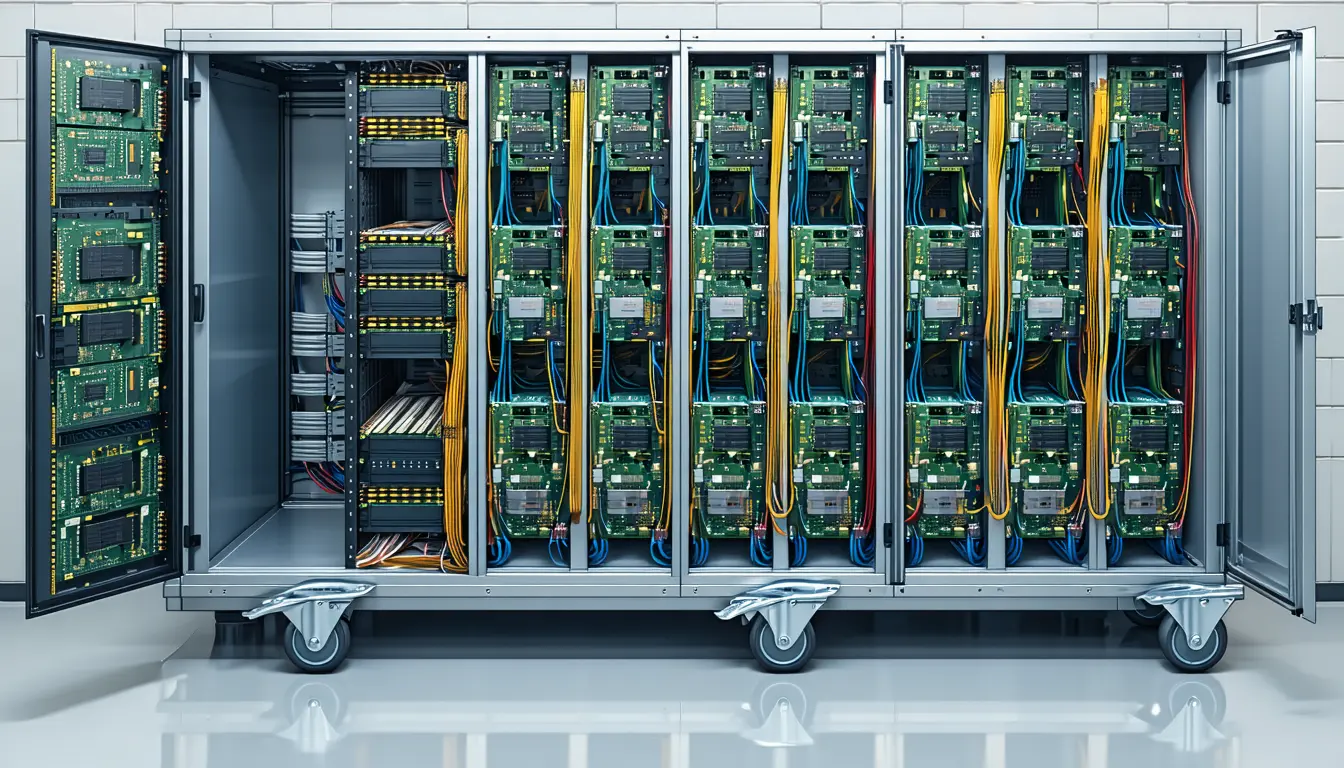
Qwen published an FP8 variant of the weights on Hugging Face and ModelScope [2]. FP8 is one byte per parameter, so the main model's 125B parameters [1] come to roughly 125GB resident before a single KV cache entry [2]. A 24GB consumer card holds 24GB, so the main weights alone need six of them [3].
The 51B N-gram table is the part that can live somewhere cheaper. Per Qwen's release blog, it is a lookup rather than a matrix multiply, so it can be offloaded to host memory and prefetched asynchronously [6]. The routed expert weights do not get that treatment. Which slice of the model fires is decided per token [1], so the fetch cannot begin before the router has chosen.
Against the dense sibling, the two costs move in opposite directions. Qwen3.8-27B fires all 27B of its parameters on every token and fits in roughly 17-19GB of VRAM quantized [12], so Flash-Next does about 22% of the per-token parameter work [4] while carrying roughly seven times the resident footprint [5].
The headline score is 62.5 on SWE-bench Pro, which the write-up labels vendor-reported [9]. For that to transfer you need the same harness, the same attempt budget, and issues that resemble SWE-bench Pro's; the post reports neither the harness nor an absolute training cost. The cost figure is vendor-reported on the same terms: Qwen reports training at roughly one-ninth of Qwen3.7-Plus alongside stronger coding and office-task results [10], and the one-ninth figure is Alibaba's training cost either way. The dev.to post says to "treat that as a vendor claim until independent replication" [13].
Context is 262,144 tokens natively and extensible to 1M with YaRN-style scaling [8]. The reason the long end is tractable is the hybrid attention: Gated DeltaNet layers compress history into a fixed-size state in linear time, and Qwen Sparse Attention uses a lightweight indexer to attend only to the micro-blocks of context that matter. Full attention, the thing being avoided here, grows quadratically with sequence length [5]. The post's pitch for the 1M configuration is that chunking, embedding and ranking collapse into one prompt against the raw corpus [11]. Anyone taking that trade moves spend out of a retrieval stack they operate and into context they pay for on every call.
On the single-card case the post is direct. It says Flash-Next is not for single-24GB-GPU local inference, because the weights footprint is far beyond consumer cards [7], and its recommendation is: "If you want a reliable local coding assistant on one consumer GPU, stay dense for now." [14]
What to watch
- Independent replication of the 62.5 SWE-bench Pro figure under a named harness and attempt budget.
- Whether serving providers publish tokens-per-second and per-token prices at 262K context for the FP8 weights.
- Whether the shipped Qwen4 keeps the offloadable 51B N-gram lookup, or folds that capacity back into parameters that must stay on device.