Invest1 publisher3 min readPublished
Putin stretches Russia's Kaliningrad nuclear warning to cover "maybe some other territories"
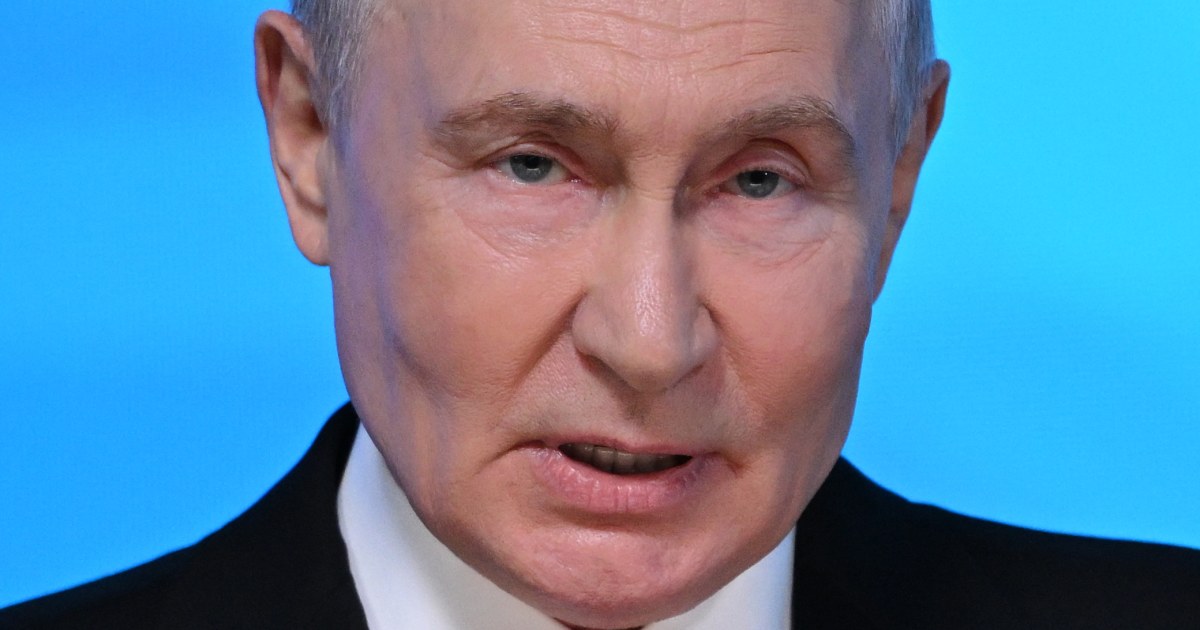
Vladimir Putin said a "direct attack" on Kaliningrad "or maybe some other territories" would put the use of all Russia's weapons on the agenda. This week his embassies tied nuclear use to one observable event, NATO cutting the exclave off from Russia; Putin's wording lets Moscow decide what counts.
The Investor · Invest desk
Drafted by a language model from the sources cited here and checked against its claim ledger before publication. How we use AISend a correction
What happened
- Several Russian embassies in Europe said this week that Moscow has information NATO is preparing an air and naval blockade of Kaliningrad.
- NATO spokesperson Allison Hart confirmed Russia had sent the alliance a written message and denounced "any irresponsible nuclear rhetoric."
- Kaliningrad sits between Poland and Lithuania and hosts Russia's main Baltic navy base and nuclear-capable Iskander missiles.
- NATO allies have run military exercises in the Baltic Sea region in recent months and have more planned for October.
Compiled by The InvestorSomething wrong?How this is made
Why it matters
- contradiction Moscow now states two triggers, an observable NATO move to isolate the exclave and a "direct attack" on territory the Kremlin defines, so a risk desk can monitor the first but must take Moscow's word on the second.
- exposure Routine NATO activity now sits inside Moscow's stated frame: October drills and Baltic Sentry patrols guarding cables and pipelines are things Russia can describe as blockade preparation.
- constraint Because NATO denies planning any blockade, a quiet October cannot show whether the threat was real, since Moscow can credit its warning with preventing one.
For anyone pricing Baltic risk, the useful part of the embassy statements was the condition. The Russian Embassy in Ireland said on Tuesday that "Russia would be ready to use all its arsenal, including nuclear weapons, to defend its territory if NATO countries try to isolate (the) Kaliningrad region from the rest of the country" [2]. Moscow's written message to NATO made the same link, according to Fortune, warning that Russia would not hesitate to use nuclear weapons if alliance members tried to cut the exclave off [17]. Isolation can be observed, since ships and aircraft either reach Kaliningrad or get stopped.
On Thursday, two days after the Ireland statement [1], Putin said at the Valdai Club that "everything is written correctly" in the warning to NATO [3]. Then he restated it in looser terms. "If it comes to a direct attack on the Russian Federation," he said, the question of using "all weapons at the disposal of our country will appear on the agenda" [4]. He set the scope in the same sentence: "in this case we mean Kaliningrad, or maybe some other territories" [4]. A blockade is something NATO would have to do in public; a direct attack on unnamed territories is whatever the Kremlin later says it was. Putin did not say whether nuclear weapons were meant, only that Russia has arms that "no one else has" and would decide which to use [5].
October is the first test, with more NATO exercises planned in the Baltic [11]. If they pass with statements only, the embassy condition stays unmet. If Moscow wants an example of isolation, Putin has already listed Baltic Sea drills and the seizure of Russian vessels among the West's escalations [6]. An Aug. 18 exercise over northern Poland and the Baltic used an EA-37B Compass Call, an American plane that can jam communications and radar [15]. NATO also launched Operation Baltic Sentry last year to protect cables and pipelines in the same sea [12]. A third outcome is the hardest to disprove. NATO says none of its "activities or exercises pose a risk to any part of Russia" [8], so if no blockade appears, Moscow can say its warning stopped one it claimed to have "information" about [1].
Fortune's report does not cite any market reaction to the exchange. I think the embassy wording is the trigger to track. It is the only version tied to an event outside Moscow's own description, and Putin endorsed the written warning to NATO that carries the same condition [3]. The counter-case is his own phrase, "or maybe some other territories" [4]. It leaves the Kremlin room to call a jamming flight or a ship seizure an attack. If Moscow describes any October exercise as the blockade its embassies warned of, the narrow trigger was never the operative one, and a watch list has to cover routine NATO operations.
Western military officers have said key installations in Kaliningrad would be a likely first target if Russia ever attacked a NATO ally [14]. NATO Secretary-General Mark Rutte said the alliance's answer to Russia's message was "short and concise" [9], and he told Euronews how allies should respond: "Calm, carry on, keep the support for Ukraine going. That's how we deal with it" [10].
What to watch
- Whether Moscow describes any of NATO's October Baltic exercises as the air and naval blockade its embassies said was being prepared.
- Any new seizure of a Russian vessel in the Baltic, and whether Moscow frames it as an attempt to isolate Kaliningrad.
- Whether Russia publishes the "information" its embassies cite on blockade preparation, or sends NATO a second written message.