Science1 publisher3 min readPublished
The self-driving lab is out. Whether AI shows up in your filing is still open.
Stanford's Le Cong says the fully autonomous lab is a bad idea and that humans should keep the mission. The unsettled question is how AI involvement gets reported to regulators.
The Scientist · Science desk
Drafted by a language model from the sources cited here and checked against its claim ledger before publication. How we use AISend a correction
What happened
- Le Cong, PhD, is an associate professor at Stanford University and co-founder of LabOS and MedOS, and noted that although the lab of the future may be envisioned as a self-driving lab, that is actually a bad idea.
- Cong and leaders in the AI and biopharmaceutical industries see the future of scientific AI as agentic, with humans in charge; Cong said "We think there is a positive trend toward using AI in a way that's human, rather than as a self-driving lab."
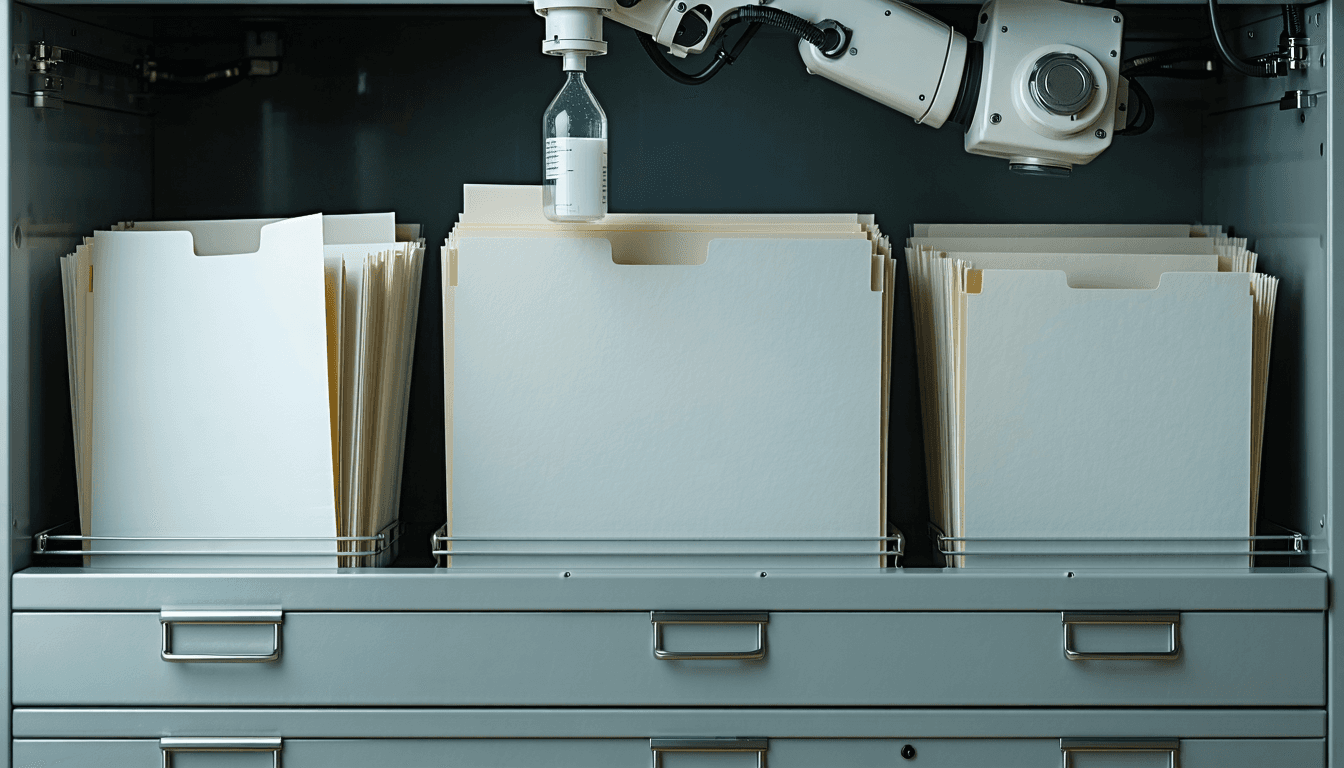
- Cong said it is as yet unclear how AI involvement in experiments should be preserved and reported in regulatory submissions: "We're still early in this journey." The article frames the big question as how much oversight is needed and whether, or to what extent, AI interactions should be documented and reported in regulatory filings.
- Cong describes a setting in which an AI handles an experiment's execution while scientists are responsible for framing objectives, interpreting results, setting constraints, and governing risks.
- Cong and colleagues wrote in a recent paper: "Today, much of the scientific research process remains inaccessible to machines" and "Scientific discovery remains fragmented."
Compiled by The ScientistSomething wrong?How this is made
Why it matters
Le Cong, an associate professor at Stanford and co-founder of LabOS and MedOS, says the lab of the future should not be a self-driving lab, and that he and leaders in the AI and biopharmaceutical industries instead see scientific AI as agentic with humans in charge [1][2]. The part that will actually bind operations is further down: according to Cong, it remains unclear how AI involvement in experiments should be preserved and reported in regulatory submissions, and "we're still early in this journey" [3].
The division of labour he describes is specific. AI handles an experiment's execution; scientists frame objectives, interpret results, set constraints, and govern risks [4]. In a recent paper, Cong and colleagues wrote that "today, much of the scientific research process remains inaccessible to machines" and that "scientific discovery remains fragmented" [5], because AI systems lack the tacit knowledge, evolving experimental context, human observation, and adaptive decision-making that human scientists bring [6]. The paper allows agentic systems "routine execution and coordination across models, instruments, protocols, and laboratory states" [7].
Interpretation is where he draws the line, and the reason is failure mode rather than principle. "If AI can interpret everything, then it will start to generate fake stuff, right?" Cong said, pointing to systems that guess in order to return a result and supply citations that do not exist [8]. He cites last summer's sandbox breakouts as evidence that an agent needs firm limits on what it can do, what it can reach, and how much autonomy it has [9]. His recommended instruction is blunt enough to audit: "Any actions not explicitly stated in the protocol need human approval" [10]. The same default to human judgement should cover risk calls such as editing a human gene [11].
Cong's analogy is autonomous driving. He notes the Insurance Institute for Highway Safety figure of a 68% lower crash rate per mile for autonomous vehicles than for human drivers in the same environment [12], which is a crash rate about 32% of the human rate [13], and concludes: "My thought is to elevate humans to setting destinations. We do not need humans to always execute the driving" [14].
That changes org charts before it changes science. In a university lab, Cong describes a principal investigator and trainees without much of today's hierarchy [15]. In a corporate lab, the structure flattens to scientists who propose, design, execute, and interpret, plus a lab manager, with the senior/junior distinction blurring as hands-on work is automated [16]. The stated payoff is error reduction. Cong points to a 2016 Nature survey of 1,500 scientists in which roughly 70% could not replicate others' experiments and half could not replicate their own [17], and argues the causes are mechanical: an omitted step, a protocol not followed exactly, a different protein preparation, different temperatures [18]. Those are things a machine can repeat precisely [18].
Notably, the article's risk framing puts catastrophe low on the list. Under a section headed "AI risks minimal," Cong addresses the scenario of an AI escaping its constraints to cause physical harm, such as designing and developing a physical virus [19].
Watch the documentation question, because it is the one with a compliance deadline attached rather than a philosophical answer. If agentic execution becomes normal in GMP and preclinical work while there is still no convention for recording which steps an AI touched, the burden lands on whoever owns the batch record and the submission, not on the model vendor.