Science1 publisher3 min readPublished
Observers blame the highest-ranking suspect when the culprit is unknown, four studies find
A dice game, a fraud vignette, an illegally parked car and 97,628 Reddit disputes all sent blame toward the party with more power, and participants said the powerful suspect seemed like someone who could get away with anything.
The Scientist · Science desk
What happened
- Researchers at the University of Amsterdam ran four studies on who gets blamed when wrongdoing is clear but the culprit is unknown, and published the set in the Journal of Personality and Social Psychology.
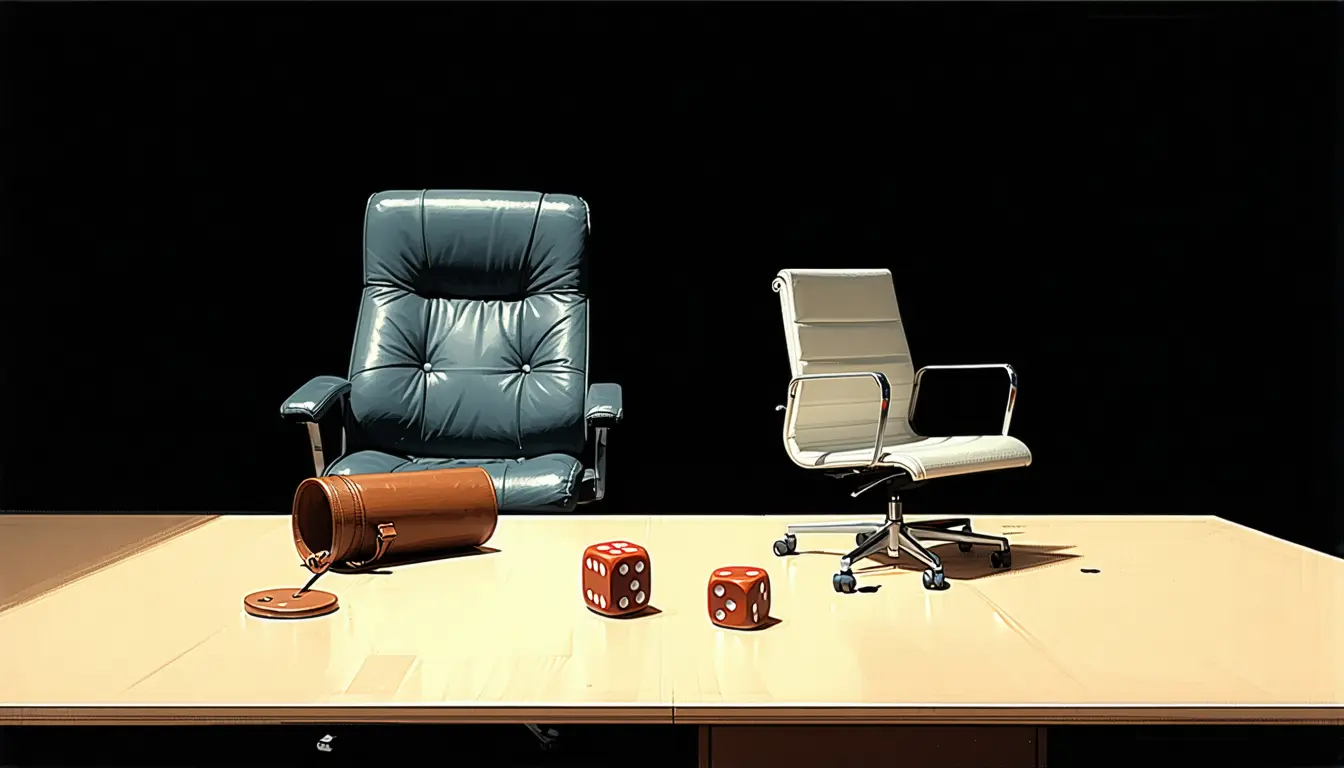
- In a dice game where one anonymous score sheet had been inflated, participants given the real rolls named the player labelled boss as the cheat more often than the assistant or the bookkeeper.
- A vignette put 15 finance staff under equal suspicion for missing money, and participants shown the finance director called him the likely fraudster more often than those shown an ordinary accountant.
- A fourth experiment held the suspects fixed and varied the behaviour: a CEO drew more blame than a junior accountant for a car in a disabled bay, and much less of a gap when the car was parked legally.
Compiled by The ScientistSomething wrong?How this is made
Why it matters
- exposure Where attribution is still open, seniority is itself a liability: the person at the top of the room is the first candidate an observer reaches for, before anyone has checked a log.
- decision The parking result hands review designers a cheap lever, since role information moved verdicts while the evidence stayed identical: assessors can be given the facts without the org chart.
- constraint These are strangers judging with nothing to investigate, so the work does not tell you how a review with access records and interviews behaves, only what happens while ambiguity lasts.
Powerful people are also memorable people, and that is the confound any study like this has to beat. If a chief executive and a junior accountant both visited the site, and a car sat in the disabled bay without permission, the chief executive may come to mind first because chief executives come to mind. So the Amsterdam group held the cast fixed and varied the behaviour: the same two visitors, the same email exchange between a security guard and a receptionist, and either a violation or a permitted park in an ordinary space [9]. The rank gap appeared in the violation condition and was much smaller in the neutral one [10]. "So people with power are not only singled out because they are more visible," said Gerben van Kleef, the lead researcher on the set [11][15].
For the explanation, the team points to a sense of impunity. "In both experiments, participants reported a sense of impunity and the impression that the powerful suspect thought he could get away with anything," van Kleef said of the dice game and the fraud case [12]. That feeling, he said, "was most strongly associated with higher attributions of guilt" [13]. Associated is the operative word. Nothing in the account describes an experiment that manipulated how untouchable the suspect seemed, and an association between two self-reports does not fix which one came first.
The fraud vignette shows how thin the evidence base was. Participants read about a finance department of 15 employees where money had disappeared, everyone had system access, and everyone was a suspect; they were then shown one supposedly random employee [5]. With nothing else to go on, any single employee carries a 1-in-15 chance, about 6.7 percent [16]. Between conditions the only thing that moved was the job title, and the finance director drew the higher guilt attribution [6]. The phys.org account does not give the ratings themselves [19].
The Reddit analysis is the biggest piece of the set and the weakest one for causal purposes. The researchers coded 97,628 posts for whether the person submitting the dispute outranked the other party, then looked at the crowd's verdicts [7], and the higher-ranking submitters were called at fault about twice as often [8]. Two mechanisms fit that. Readers may tilt toward whoever outranks the other party, or the party holding decision rights may genuinely break more agreements, since they are the one making the agreements. The verdicts also rest on the submitter's own telling. Three of the four studies were controlled experiments in which the evidence was identical across conditions, and those are what carry the inference [17].
What all four measure is a stranger's snap attribution with no means of investigating. A real incident review has access logs, interviews, and the option of asking people where they were. The finding applies to the window before that evidence arrives, and to the cases where it never does. That window can leave a mark: in the dice game, the player labelled boss was not only named as the cheat most often but was trusted less in a following game [4].
In my view the experiments are strong enough to change how a review is staffed and too thin to tell you how large the effect is inside a particular company. Van Kleef put the practical stake in one clause, saying the reflex "can lead to distortions in how blame is attributed" [14].
What to watch
- Whether the published paper in the Journal of Personality and Social Psychology reports effect sizes and formal mediation tests that the summary leaves out.
- Whether a replication varies the suspect's gender, since the fraud vignette showed participants a male employee in both conditions.
- Whether anyone tests the effect on people inside a real review process, with access logs and interviews available, rather than observers with no means of investigating.