Science1 distinct publisher3 min readPublished
Ground-motion models are fitted to a century of recordings that omit the largest events. Physics-based simulations can supply them, and remain nearly absent from national hazard models.
The Scientist · Science desk

Compiled by The ScientistSomething wrong?How this is made
The probabilistic chain is where the limit lives. Fault models supply the set of possible ruptures and the magnitudes they can generate, and a ground-motion model turns each rupture into expected shaking at a site with probabilities attached [6]. That second step is a curve fitted to recordings rather than a calculation of rupture and wave path [7], so it speaks confidently only about combinations of magnitude and distance that appear in the recording set. The Physics World account puts the worst gap at higher magnitudes and shorter source distances, because only a handful of large earthquakes have occurred since instrumental recording began in the last century [8][9]. That corner of the space is also the design case for anything sited near a major fault.
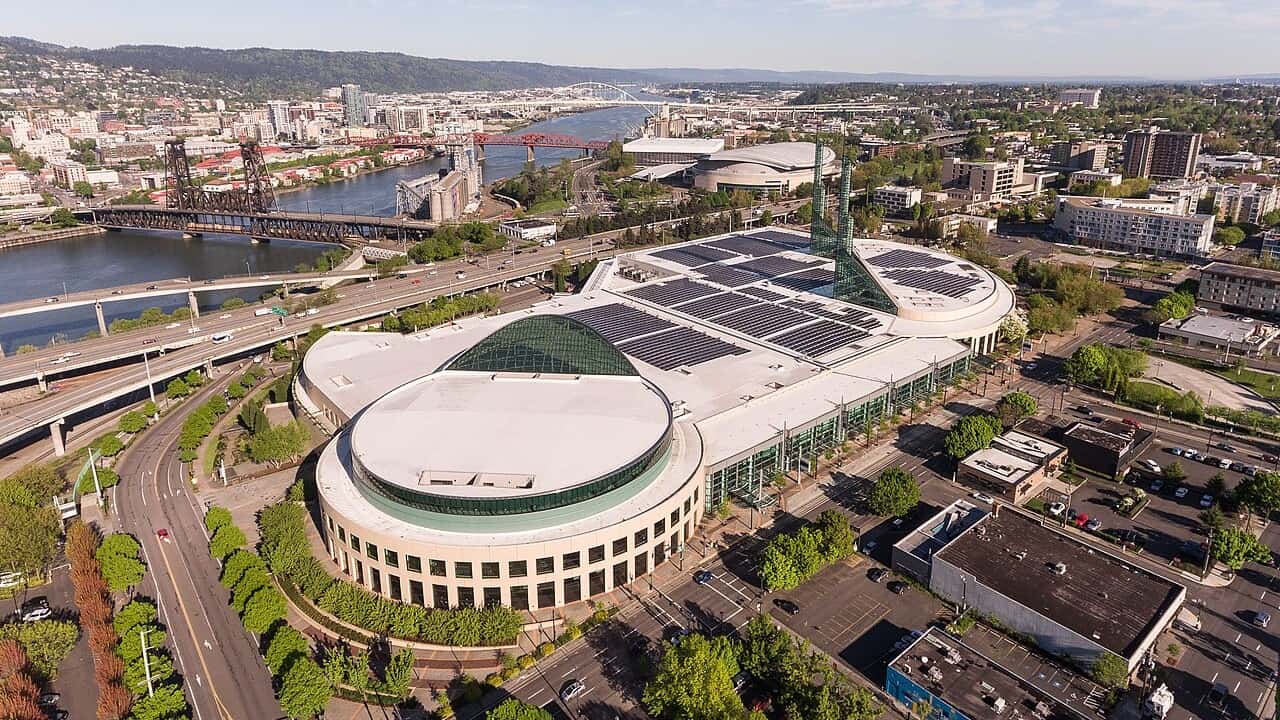
Cascadia shows what the gap costs. The subduction zone runs for hundreds of kilometres along the coast of the US Pacific Northwest and southwestern Canada [10], and lies about 200 km west of the Portland venue where the workshop was held [11]. It has produced no magnitude 9, and no significant earthquake at all, during the century of recording [12], while the geological record holds several large events across thousands of years [13]. The scenario a designer has to survive therefore has zero entries in the dataset the design number is fitted to [20]. Simulating it, the author's PhD subject [14], is the only route to a shaking field for that case, and the same simulations carry through to the landslides and tsunamis that follow [19].
The adoption problem is not a computing problem, and a line from the workshop states it neatly. Greg Deierlein of Stanford said simulations are most useful when they provide different answers compared with conventional methods [15]. Taken as an adoption criterion, the useful case and the awkward case are the same case: a simulation that reproduces the empirical model adds a confirmation, while one that departs from it asks a committee to publish a number no recording supports [21]. Nothing in the present arrangement rewards that, which fits the observation that simulations sit outside most national hazard models and appear at negligible scale where they are used [16].
What closes the gap is unglamorous. It is documented evidence that simulations represent complex fault geometry and rupture mechanism, that velocity structure models are reliable, and that simulated motions reproduce empirical data [17], because trust among researchers and practitioners is built on testing and validation [18]. That is benchmark work with citable results, not a bigger machine, and it competes for time with running more simulations. One caveat on provenance: this is a first-person column by a researcher who works with physics-based ground motions, reporting one workshop [22], so it describes the community's stated obstacle rather than measuring it.
Ranked by verification strength, evidence, and original report placement.
With advancing computational capacities and geophysical understanding of earthquake cycles, development and application of physics-based simulations have seen a surge of activity in the last few years.
Physics-based simulations remain unused in most national seismic hazard models, and where they are used the scale is negligible.
The missing ingredient is trust: whether simulations can represent complex fault geometry and rupture mechanism, how reliable velocity structure models are, and whether simulations can reproduce empirical data.
Trust within the community of researchers and practitioners is built on testing and validation.
That research and others showed a nuanced understanding can be gained of how ground shakes, how it impacts the built environment, and how it cascades into landslides and tsunamis after an earthquake.
Earthquake ground-motion predictions rely on statistical models built on historical records: measurements taken during previous earthquakes are used to predict the effects of future ones.
Follow any of these and your For You feed starts watching them — no settings page required.
Evidence-backed comparisons of source perspectives and observed adoption signals. Read the methodology
Which Builder, Operator, and Investor concerns the observed source mix emphasized—not a truth score.
Evidence, demonstrated adoption, hype gap, incentives, and confidence are assessed independently, each on its own current evidence. How these are measured.
First-hand conference reporting, no primary data
Everything rests on one first-person column by a participant researcher. It is specific and attributable where it quotes named experts (Deierlein, Stewart) and describes a named workshop at a named venue, which supports the descriptive claims about the field's current debate. But no validation metrics, datasets, model inventories, or citations to the underlying studies are supplied, and the central adoption assertion is stated rather than enumerated, so the load-bearing claims cannot be independently checked from the supplied material.
Near-zero use in hazard models and codes
The only adoption evidence in the cluster is a disclosure of non-adoption: simulations are unused in most national seismic hazard models, negligible in scale where used, and rarely applied to engineering or code development. Offsetting that slightly, there is documented research-community activity — a dedicated validation workshop, daily conference sessions, and the author's own presented portfolio study — indicating real uptake inside research practice but not in production hazard or code workflows.
Promise slightly ahead of validation, self-disclosed
The framing that simulations 'can meaningfully augment' datasets and improve conventional models runs ahead of what the cluster evidences: no standardized validation protocol exists yet, one quoted expert says trust in absolute amplitude is low, and adoption in hazard models is near zero. The overstatement is mild because the same column discloses the trust deficit, the absence of adoption, and the validation agenda explicitly rather than concealing them, and because the underlying data-gap argument for high magnitudes at short distances is straightforwardly documented.
Author is a participant advocate in the field described
The account is written in the first person by a researcher who works with physics-based ground motions, whose PhD depends on a simulated M9 Cascadia scenario, and who presented at the very conference being reported. The piece therefore argues for wider adoption of the method the author practises. The incentive is disclosed openly rather than hidden, and the column carries a critical quote about low amplitude trust, but no independent or opposing stakeholder — code body, hazard-model maintainer, or insurer — is given voice.
Single participant source, uncontested but uncorroborated
Internal consistency is good and the descriptive facts about the conference, Cascadia's record, and the recorded-data gap are plausible and specific. Confidence is held down by structural limits: one publisher, one item, an author with a stake in the conclusion, and a central adoption claim about 'most national seismic hazard models' that no supplied document verifies.
science
Seismometers in Louisiana read Hurricane Isaac's eyewall, and the wind term was wrong1 distinct publisher
science
The self-driving lab is out. Whether AI shows up in your filing is still open.1 distinct publisher
science
A centuries-old Coulomb's law test could out-search accelerators for millicharged particles1 distinct publisher
science
The sharp crystal seed was never there: 8,000 nuclei imaged atom by atom, all gradients1 distinct publisher
Distinct publishers with included, body-backed reporting in this cluster.