Invest1 publisher3 min readPublished
SCA sold Alex Karp 15,000 hectares it rated suboptimal for forestry at about 15,700 kronor each
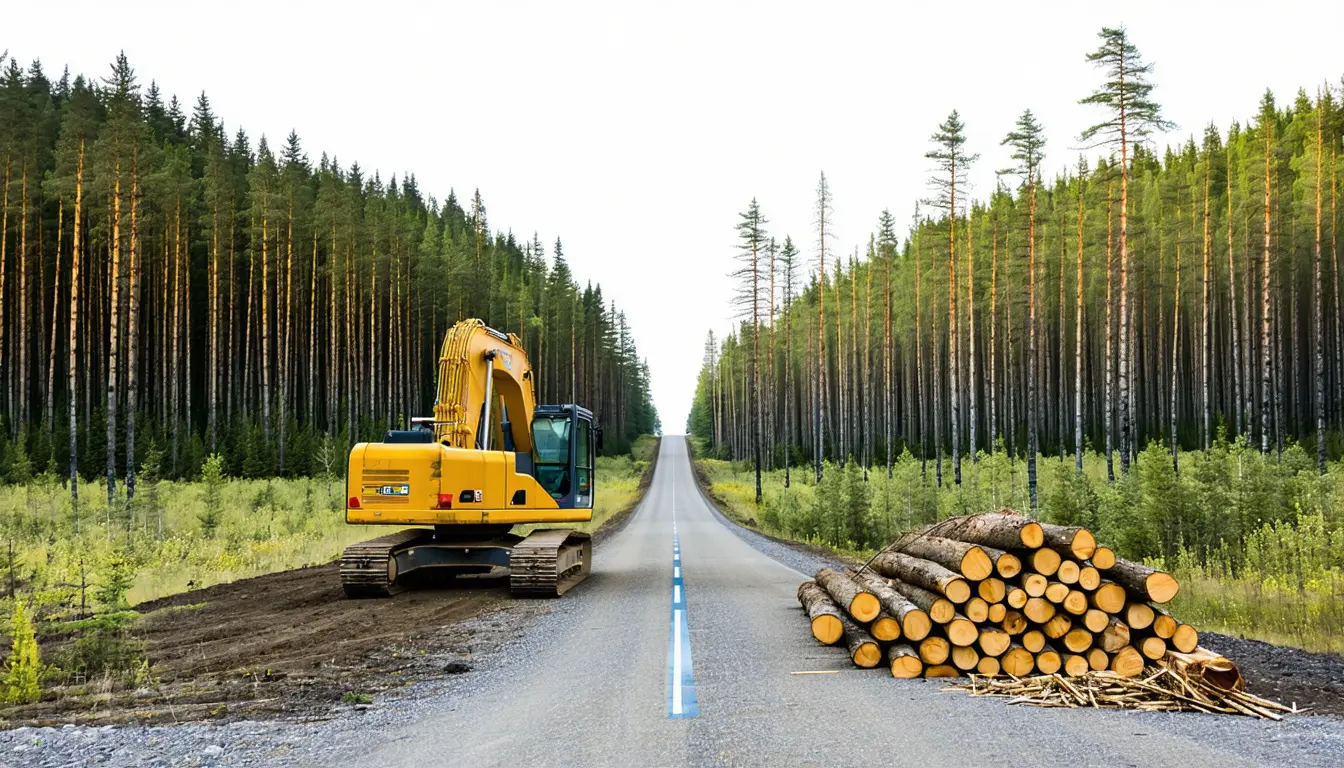
Palantir CEO Alex Karp's Cladonia Skog paid SCA a reported 235 million kronor for 15,000 hectares of Swedish forest the seller rated suboptimal for forestry. At about 15,700 kronor a hectare, Karp paid a paper company's valuation for a forest his side talks about mostly in terms of preservation.
The Investor · Invest desk
Drafted by a language model from the sources cited here and checked against its claim ledger before publication. How we use AISend a correction
What happened
- Hunters who leased the land south of Storsjö Kapell received letters saying they could no longer hunt there, Tidningen Härjedalen reported.
- Cladonia told Swedish media it would use the land to carry out forestry and other related activities.
- Cladonia board member Jenny Lopes Da Silva is also a sales manager at Scandinavian Trust, the firm that brokered the deal.
Compiled by The InvestorSomething wrong?How this is made
Why it matters
- exposure By SCA's own description of its sales process, a hunting lease on SCA land ends whenever the company sells, whoever buys.
- contradiction If the leases simply lapsed, as SCA describes, Cladonia can re-lease them; if the ban is a contract term, as Fortune reports, locals face a condition the buyer agreed to at purchase.
- precedent SCA has set a price of about 15,700 kronor a hectare for land it rates suboptimal for forestry, sold to a buyer who values it on other grounds.
Divide the reported price by the area and Cladonia paid about 15,700 kronor a hectare [1]. Fortune's report does not include prices for comparable forest sales in Härjedalen, so that figure cannot be checked against the local market. The record does allow a comparison with Karp's own purchases. His Colorado monastery compound, 3,700 acres that sold for $120 million according to The Wall Street Journal [11], works out to roughly $32,400 an acre [3]. The Swedish forest comes to about $595 an acre on Fortune's dollar conversion [2]. That is ten times the land [4] for about 18% of the money [5]. (The Colorado price included water rights to irrigate 1,500 acres [11], so the two are different kinds of asset.)
The two parties describe the same land differently. SCA, the paper manufacturer that owned it, said it sold because the property was suboptimal for forestry [4]. Cladonia told Swedish media it would use the land to "carry out forestry and other related activities" [7]. Both can be true if the buyer's return does not depend on timber yield. For SCA, the sale turns land it rates poorly into roughly 235 million kronor [2]. What it gives up, by its own account, is the right to lease hunting there [6].
At this price there are three plausible uses. Cladonia could run low-intensity forestry, as it says. It could hold the forest for carbon credits, which Fortune notes have made owning forests more attractive [12]. Or the land could become a private estate like the Colorado compound. The buyer's side talks about preservation and recreation. Jenny Lopes Da Silva, a Cladonia board member who is also a sales manager at Scandinavian Trust, the firm that brokered the deal [8], said: "The new owner of the forest property is committed to the beauty of the land and its preservation" [9]. She described the landscapes as "serving as a place for recreation and restoration" [10].
The two accounts differ on hunting. SCA wrote to Tidningen Härjedalen that "The transaction has already been completed" and that terminating hunting agreements linked to the land is "a natural part of the sales process, as we can only grant hunting rights on land we own" [6]. On that reading the leases lapse with any sale, and a new owner can grant them again. Fortune reports something stronger: banning hunting was part of the sales agreement [5]. A ban written into the contract is a term one side negotiated for. Hunters south of Storsjö Kapell found out from letters in the mail [3].
I think Karp paid a paper company's price for a private preservation estate, and the hunting clause was part of what he bought. The evidence backs the narrower version of the local complaint: hunting leases on 15,000 hectares ended [1][3]. It does not show other local uses being cut off. The counter-case is that Cladonia runs commercial forestry at returns SCA would not accept, and the ban is temporary. If Cladonia harvests at scale or offers leases back to local hunters, that view is wrong.
What to watch
- Whether Cladonia offers new hunting leases to local hunters, which would mean the ban was temporary.
- Any felling notices or forestry plans Cladonia files for the Härjedalen land, the test of its stated forestry use.
- Further SCA sales of land it classes as suboptimal for forestry, and the price per hectare they fetch.