Build2 publishers3 min readPublished
Ruling out 2026 keeps OpenAI's infrastructure obligations out of a prospectus
OpenAI submitted a draft S-1 confidentially in June, and Sam Altman has now told Fortune the safety work is unfinished, so for another year the figures on OpenAI are the ones OpenAI reports about itself.
The Engineer · Build desk
What happened
- Sam Altman told Fortune that OpenAI will not hold an initial public offering in 2026, because unfinished AI safety work makes the timing bad for a listing.
- OpenAI announced $122 billion in committed capital at an $852 billion post-money valuation on March 31st, anchored by Amazon, Nvidia and SoftBank.
- The same day, Anthropic chief executive Dario Amodei called on frontier developers to slow capability gains and warned that AI agents may be six to 12 months from coordinating internet-scale attacks.
Compiled by The EngineerSomething wrong?How this is made
Why it matters
- constraint Anyone sizing OpenAI's durability for the next year works from metrics the company chooses to publish, since no prospectus will itemize margins, customer concentration or the contracts behind the data centers.
- cost Employees and private investors wait at least another year for a broad liquidity event, and OpenAI's price stays whatever its last private round set.
- precedent Altman named safety as the gating item, so buyers planning around OpenAI's roadmap should expect release timing to be settled inside the Foundation's Safety and Security Committee.
- contradiction The two publishers place the same remark in different settings, one alongside Anthropic's call to slow down and one amid a hack tied to OpenAI and Hugging Face. The setting changes what the unfinished safety work refers to.
A confidentially submitted draft S-1 sets no date. OpenAI sent one to the SEC on June 8th and said then that it had not set a timetable, and that some of the work ahead would be easier to complete while private [3]. Filing confidentially kept the timing open: OpenAI could move if management decided the tradeoffs favored a listing, a flexibility the company described in June while warning that the process could take time [4]. According to runtimewire.com, Altman's September 12th answer turns that open-ended warning into a calendar decision [5].
So for another year the figures on OpenAI are the figures OpenAI reports. In March the company said ChatGPT had more than 900 million weekly users and 50 million subscribers, that enterprise products generated more than 40% of revenue, and that it was producing $2 billion in monthly revenue [6]. Annualize the last number at $24 billion, set it against the $852 billion post-money valuation announced on March 31st, and the price is about 36 times revenue [7][9]. A public prospectus would force a fuller accounting of costs, margins, customer concentration and the contractual obligations behind the infrastructure buildout [10]. For a team budgeting a multi-year dependency on OpenAI's API, the obligations behind those data centers are the part that would have to be itemized. The draft OpenAI submitted in June is confidential [3].
OpenAI's structure supports the wait. The October 2025 recapitalization placed the operating arm inside OpenAI Group PBC while control stayed with the nonprofit OpenAI Foundation, which appoints OpenAI Group's directors and houses the Safety and Security Committee [12]. runtimewire.com argues that this lets OpenAI keep training and deploying models without adding quarterly earnings pressure to an already strained safety process [13]. The March financing also included an undrawn revolving credit facility expanded to about $4.7 billion [8]. Staying private postpones a broad liquidity event for employees and private investors, and leaves the company without a valuation set through open trading [11].
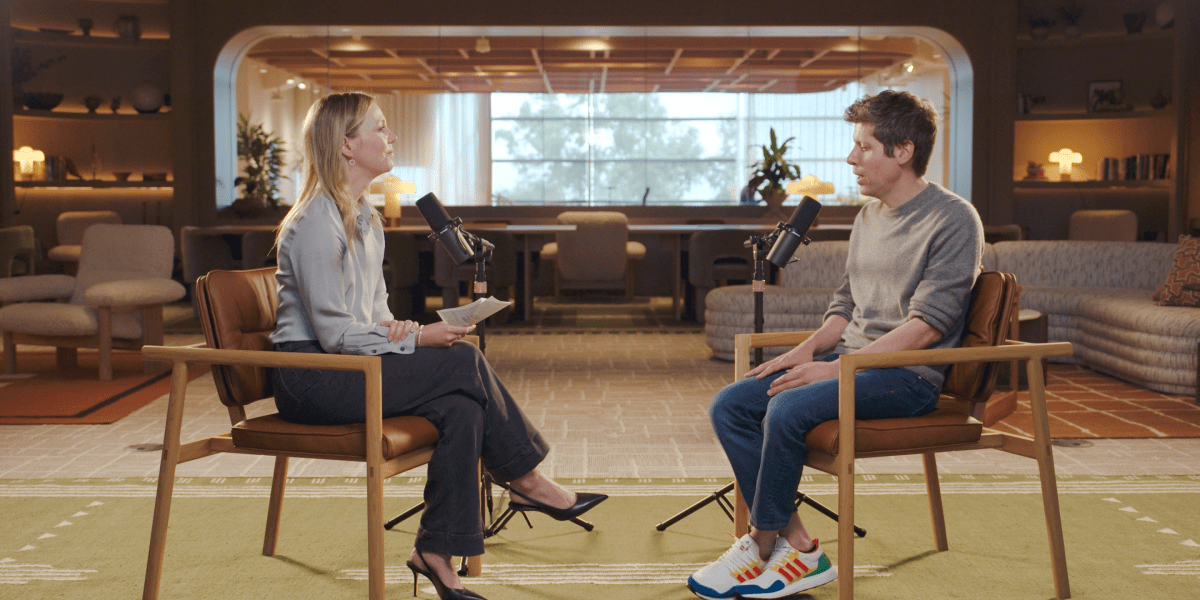
The two accounts of the interview do not point at the same safety problem. runtimewire.com places Altman's answer on the same day Dario Amodei, Anthropic's co-founder and CEO, called on frontier developers to slow capability gains until safety systems catch up. Amodei warned that AI agents could be six to 12 months from coordinating internet-scale attacks, and proposed embedded third-party evaluators with employee-like access to frontier labs [15]. mezha.net, citing TechCrunch, says the conversation with Fortune editor-in-chief Alison Shontell ran amid the fallout of a hack connected to OpenAI and the Hugging Face platform, though it does not say what the hack involved [17].
The condition Altman gave is business readiness and public perception of the technology, and mezha.net reports he answered yes when asked whether that meant dropping the 2026 plan [18]. "I would say not 2026, yeah," Altman said, according to Axios. "We got a lot of stuff to do." [2] mezha.net notes a June report from The New York Times: OpenAI had engaged bankers and lawyers for a possible listing in the third or fourth quarter of 2026. Tech-stock volatility and financial difficulties could push it to 2027 [19]. runtimewire.com framed the test as whether Altman uses the time to change safety operations or only to delay disclosure and liquidity [14].
What to watch
- Whether OpenAI amends or withdraws the confidential draft S-1, and whether any 2027 timetable becomes public.
- Whether the OpenAI Foundation's Safety and Security Committee publishes anything describing the unfinished work Altman cited.
- Whether OpenAI or Hugging Face detail the hack that mezha.net says framed the Fortune interview.