Product1 distinct publisher3 min readPublished
The asks were made to foreign trade ministers rather than to Congress. Waiting for them was a paper, the Carolina Principles, that would commit signatories to a hands-off approach no EU-facing compliance checklist recognises.
The Product Desk · Product desk

Compiled by The Product DeskSomething wrong?How this is made
The practical form of Wednesday is a row in someone's release checklist: each jurisdiction a feature ships into, and beside it the regulator who can stop it. The North Carolina programme deleted no rows from that sheet [1].
OpenAI's own week shows the asymmetry. On Monday the European Union classified ChatGPT as a "very large online search engine," putting the company under stricter scrutiny in the bloc [5]. Two days later its chief executive was on a stage with Commerce Secretary Howard Lutnick telling trade ministers that adopting AI was non-negotiable, comparing the technology to electricity [3][1]. The softer venue produces no paperwork, while the harder one produces all of it, and that is the venue the team filing the assessment answers to.
It is worth separating what was pitched from what was on the table. Altman said he wanted sufficient constraints to avoid catastrophic risks while respecting the ministers' sovereignty, adding that he does not like everything people do with electricity either [4]. The document the administration reportedly hopes those ministers will sign, the Carolina Principles, is a cross-border pact to take a hands-off approach and to strengthen commercial AI opportunities [11]. The fireside chat offered sovereignty. The paper asks ministers to spend that sovereignty before they have used it.
Jensen Huang's contribution was the more operational one. He asked officials to refrain from regulating "hypothetical, theoretical harm" and said companies should take it upon themselves to develop the technology safely [6], and separately pressed for looser rules on the infrastructure buildout [8]. Read as a buyer rather than as a minister, the picture is different. The industry's preferred safety regime is voluntary at the vendor. Anything a customer needs to rely on therefore has to sit in the order form as documentation, indemnity and audit rights, because the statutory version is precisely what the vendors travelled to North Carolina to discourage.
Anthropic co-founder Tom Brown went further, endorsing the president's line that opposition to data centers is a mistake and that objectors would end up "backwards and poor" [10]. That is an awkward argument to carry into a county hearing where residents are citing utility bills and water shortages [9]. Critics of the hands-off case say weak rules mainly enrich the model providers while compounding the risks [13]; the administration's stated reason is beating China [12].
The forcing function for Monday has two axes. One: whether the feature ships into a jurisdiction that has already named your vendor or its category, as the EU has now done with ChatGPT [5]. Two: whether your contract carries the vendor's safety and copyright posture as an obligation rather than as a conference position. Permissive market plus thin contract is the only cell where this week is good news, and it is good news that depends on Lutnick's view holding, which Axios reports his own co-host at the White House science office does not share [16]. Strict jurisdiction plus strong contract means you already have what a review asks for and the ministerial is background noise. Strict jurisdiction plus thin contract is the expensive cell: you are holding the risk personally, and no pact signed by trade ministers moves it off your desk. The useful thing about the axes is that neither of them is affected by how enthusiastic anyone was about a new model [17].
Ranked by verification strength, evidence, and original report placement.
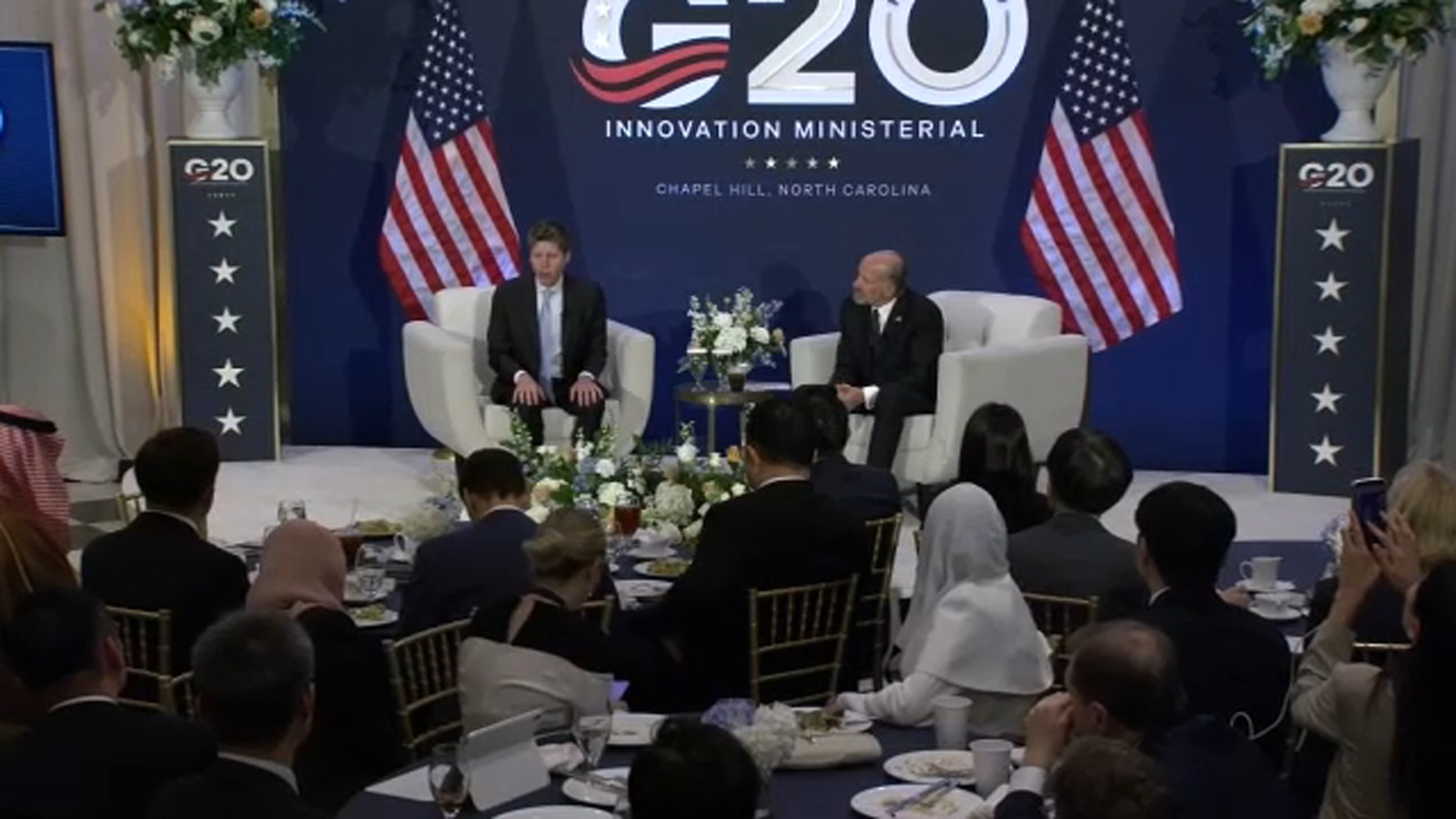
On Wednesday, trade and commerce ministers of the world's largest economies gathered in North Carolina for the G20 Innovation Ministerial, hosted by Trump's Commerce Secretary Howard Lutnick.
Executives from OpenAI, Nvidia and Anthropic attended the ministerial, ready to help the Trump administration persuade world leaders to back away from strict AI regulation.
OpenAI CEO Sam Altman joined Lutnick for a fireside chat and told the assembled ministers that adopting AI was "non-negotiable", repeatedly comparing the technology to electricity.
Altman told the ministers: "We want to put sufficient constraints on our system to avoid catastrophic risks, but we really do wanna respect all of your sovereignty and that you're going to use it in very different ways, and we personally may not always like it, but I don't like everything that people do with electricity either."
OpenAI faces stricter regulatory scrutiny in the European Union after the bloc deemed ChatGPT a "very large online search engine" on Monday.
Nvidia CEO Jensen Huang, in a fireside chat with Lutnick, urged officials to refrain from regulating "hypothetical, theoretical harm" and said companies should instead "take it upon themselves to develop the technology safely".
Distinct publishers with included, body-backed reporting in this cluster.
1 article · September 2, 2026
Follow any of these and your For You feed starts watching them — no settings page required.
invest
Washington pitches Carolina Principles to G20, urging no new AI rules or bodies1 distinct publisher
product
Washington's secret AI test is coming for open weights, and release dates go with it2 distinct publishers
invest
OpenAI's 14 exits land on the two seats a $1T listing has to defend1 distinct publisher
build
Zuckerberg tells G20 ministers Meta cannot hire the tradespeople its own buildout needs1 distinct publisher
Evidence-backed comparisons of source perspectives and observed adoption signals. Read the methodology
Which Builder, Operator, and Investor concerns the observed source mix emphasized—not a truth score.
Evidence, demonstrated adoption, hype gap, incentives, and confidence are assessed independently, each on its own current evidence. How these are measured.
One reporter's transcript, two borrowed facts
The quotes are strong: Altman on electricity and sovereignty, Huang on hypothetical harm, Brown on communities ending up backwards and poor all come with wording attached. Everything beyond the stage is thinner. The copyright appeal is Reuters', the administration rift is Axios', the pact itself is hedged as reported, and no document in the story has been read by the newsroom reporting it.
Asks delivered, nothing signed
Measured as uptake of the thing being sold — a hands-off cross-border commitment — adoption is close to nil. Ministers listened; not one is reported agreeing. The only binding action anyone took that week runs the other way: the EU pulled ChatGPT into a stricter category on Monday. The filing supporting OpenAI is real movement, but it is domestic and judicial, not the international alignment the stage was built for.
Superlatives outrunning the record
The gap is in the promises, not the reporting. An unnamed model is billed as the greatest boom in entrepreneurship in human history; data centers are said to make communities richer while opponents go backwards and poor; adoption is called non-negotiable. Set against that, this story contains no output figure, no poll, no siting outcome, and no country agreeing to anything. The reporting is appropriately dry about it, which is why the overshoot sits with the speakers.
The asks map onto the askers
Rarely is the alignment this legible. Three companies were handed a G20 stage by the cabinet secretary co-hosting it, and each request tracks its own balance sheet: Nvidia wants the buildout rules loosened, OpenAI wants sovereignty language rather than binding thresholds while facing fresh EU scrutiny, Anthropic's co-founder defends the siting of the facilities that train its models. Lutnick's copyright advocacy landed the same day his administration filed for OpenAI in court against a newspaper suing over training data.
Solid on what was said, blank on what follows
What people said into a microphone is well established here and unlikely to be revised. Everything downstream — whether the Carolina Principles acquire signatories, how deep the Lutnick-Kratsios disagreement runs, what the EU designation costs OpenAI in practice — rests on hedged relays from other newsrooms and could move in either direction as documents surface.