Build1 publisher2 min readPublished
OpenAI's hardware head calls Jalapeno's nine months from RTL to tapeout the new baseline
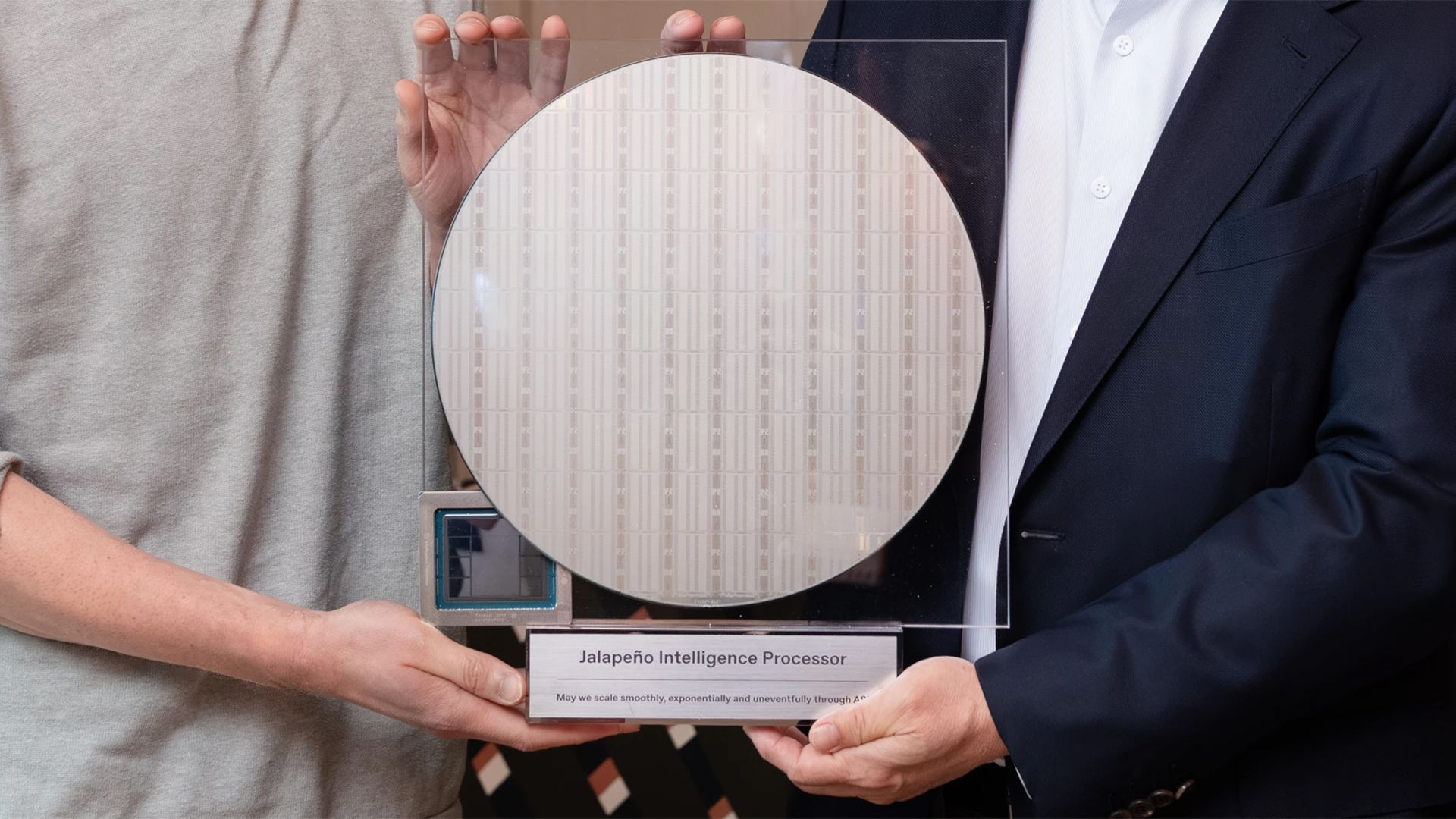
OpenAI took its Jalapeno chip from RTL to tapeout in nine months with its own AI models, against a norm its hardware head puts at 18 to 24 months. The count stops at first tapeout, before a B0 stepping reported to be up to 25% more efficient per watt.
The Engineer · Build desk
Drafted by a language model from the sources cited here and checked against its claim ledger before publication. How we use AISend a correction
What happened
- From first concept to public reveal, Jalapeno took less than two years, according to Tom's Hardware.
- AI was used across the whole program, including writing and optimizing kernels as well as the hardware design, according to Tom's Hardware.
- Engineers got Kimi and DeepSeek models running on the chip in the two months between the A0 sample and OpenAI's Hot Chips presentation.
- Clive Chan, a key Jalapeno engineer and OpenAI's second hardware hire, left in June to join Anthropic's hardware team.
- Ho said the industry has shown "a lot of interest" in the design process and that "we'll see more about that quite shortly."
Compiled by The EngineerSomething wrong?How this is made
Why it matters
- decision Chip programs quoting schedules against Jalapeno now have to state whether they count to first tapeout or to the stepping that meets their efficiency target.
- constraint Ho ties the co-design to model research IP he says would leak if shared with a merchant silicon vendor, so teams without in-house frontier models can adopt only part of the method.
- exposure A rival lab's hardware team now employs a key engineer from the program Ho is promoting as the industry's new baseline.
Ho's old baseline comes with a qualifier that helps OpenAI's case. "In the old baseline, you're talking 18 months to two years, roughly. Often that's even with some existing IP or some more legacy architecture design," he told Tom's Hardware [3]. Jalapeno started with none of that. "We're starting from scratch here. We had nothing. There's not a line of code here to refer to," Ho said [4]. On the headline figures alone, nine months is half of 18 months and 37.5% of two years [1][1].
AI-assisted chip design is older than large language models. Cadence and Synopsys have sold AI design tools for several years [5]. OpenAI's difference is the model layer: its own internal models, run alongside existing EDA tools [6]. According to Ho, the team worked mostly in Codex, with Sol, the model before Sol, and now Astra [7]. The tools also changed mid-project. "Even from when we started that work, back in November 2025, to when we taped out, the models improved enormously," he said [8]. A team starting now would begin with later models than OpenAI had in its first month [7][8].
The nine months also ends at the first tapeout. According to Tom's Hardware, the B0 stepping delivers up to 25% better performance per watt than the A0 [9]. The publication calls that closer to a generational gain than a stepping fix, and says it suggests design oversights in the first stepping [10]. Whether AI or people made them is, in its words, anyone's guess [10]. Asked what drove the project, Ho said, "It was efficiency" [11]. The second stepping moved that metric by up to a quarter [9]. The sources do not give a date for the B0 tapeout.
Ho stops short of promising the figure falls further. "Now, does it get shorter? It depends on what you're trying to do," he said [12]. He also puts the team at the center of the claim. "With a smaller team of really good engineers with a lot of this AI stuff, you could do things faster and better than you could otherwise," Ho said [18]. I'd treat the nine months as a measurement of one program. For it to transfer, another program would need the same inputs: a from-scratch inference chip, a small team Ho rates highly, and models the company trains itself and upgraded mid-project [4][6][7][8].
What to watch
- A tapeout date for Jalapeno's B0 stepping, which would give the time from RTL to the more efficient silicon.
- What Ho meant by "we'll see more about that quite shortly", including whether OpenAI offers its AI-assisted design flow to other chip teams.
- The first rival program, Anthropic's included, to publish an RTL-to-tapeout figure with its IP reuse stated.