Science1 publisher3 min readPublished
Dropping one 40-child trial erases Prozac's outsized benefit in two child-depression meta-analyses
Florian Naudet's team re-ran two Prozac meta-analyses without one 2006 trial of 40 Iranian children, and the drug's large edge in child depression vanished. The authors want guideline committees to re-weigh Prozac's recommendation but are not asking doctors to stop prescribing.
The Scientist · Science desk
Drafted by a language model from the sources cited here and checked against its claim ledger before publication. How we use AISend a correction
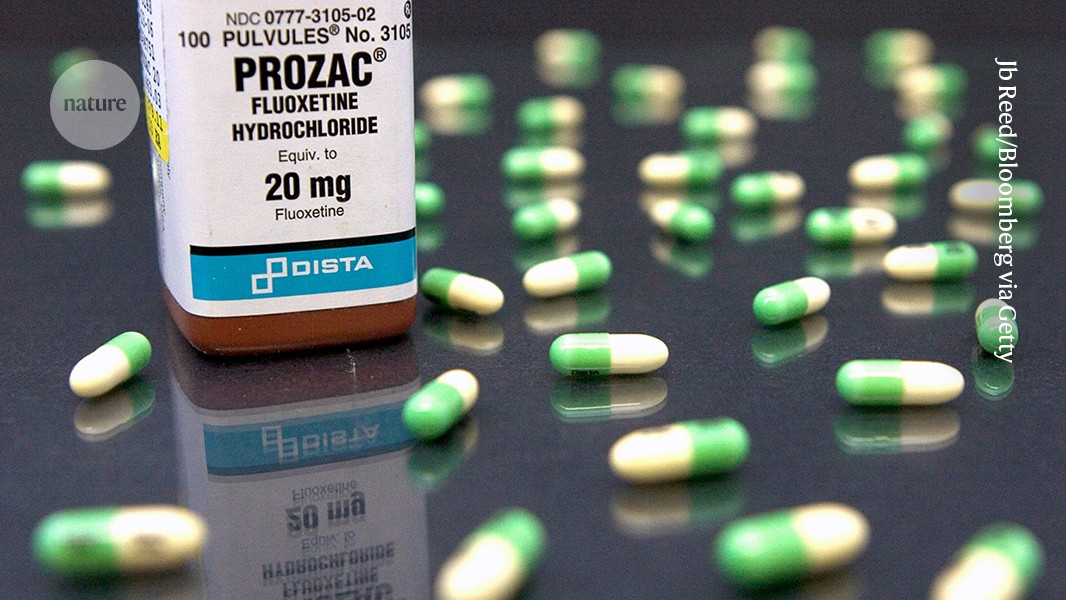
What happened
- Many national prescribing guidelines base their Prozac recommendation for children on a 2016 Lancet meta-analysis that found the drug beat placebo.
- No other trial of Prozac in paediatric depression has reported an effect close in size to the one in the 2006 Iranian study.
- The 2006 paper does not describe how the trial obtained ethics approval.
- MedKnow, the journal's publisher, has asked the editorial team to look into the trial and expects delays because of the situation in Iran.
Compiled by The ScientistSomething wrong?How this is made
Why it matters
- decision Guideline committees that cite the 2016 and 2020 analyses now have to decide whether Prozac's paediatric recommendation still stands on a benefit closer to the 2021 Cochrane figure.
- exposure On the reanalysis's account, reviews that pool trials without checking whether the reported data are plausible can carry one implausible result into national guidance.
- constraint Until MedKnow's inquiry ends, the 2006 paper stays in the published record, open to inclusion in any future meta-analysis that does not screen it out.
Forty children is a small denominator for a recommendation about one of the antidepressants most often prescribed to children [1][6]. The trial appeared in 2006, a decade before the 2016 Lancet meta-analysis [1]. It did not test Prozac against placebo. It compared the drug with another antidepressant, nortriptyline, and reported an enormous advantage for Prozac [10]. That result still shaped the placebo comparisons. With it removed, Prozac's outsized benefit in the 2016 and 2020 analyses was gone [12].
The first objection was the size of that advantage. Martin Plöderl, a clinical psychotherapist at Paracelsus Medical Private University in Salzburg and a co-author of the reanalysis, said the effect was so big as to be unheard of in biomedical science [10]. "It's the kind of effect size you only get if you ask people whether they prefer chocolate or faeces," he said [11]. The report does not give the figure itself.
The second objection was about spread. According to the reanalysis team, the reported data imply that every child on Prozac shifted on the depression score by a similar amount, and that the nortriptyline group moved in the same uniform way [16]. Such an orderly shift is rare in clinical trials [16]. Florian Naudet, a psychiatrist at the University of Rennes and another co-author, said the case shows how a single 'zombie' trial, one with data too flawed to trust, can corrupt the evidence base for a frontline treatment [4].
The control came by accident. The 2021 Cochrane review left the Iranian trial out because it excluded studies comparing Prozac with the antidepressant class that contains nortriptyline [13]. That review found only a 'small and unimportant' advantage over placebo, with Prozac probably no better than other antidepressants [8]. Naudet's team traced the disagreement among the three reviews to that single inclusion decision [9][7].
The thing this doesn't tell you is that Prozac fails in children. Removing the trial takes away the outsized benefit, and what is left looks like the small advantage the 2021 review reported [2]. Richard Lyus, a consultant child and adolescent psychiatrist in Cambridge, UK, and a co-author of the study in Cochrane Evidence Synthesis and Methods [19], said "guideline committees should review their recommendations, acknowledge the evidence we have clarified and go through their process of weighing up whether use can still be justified" [3].
I think committees should do what Lyus asks. The objections come from the trial's own reported numbers, and the one review that excluded it, for reasons unrelated to its data, reached the smaller estimate [16][13][8]. That view depends on the reanalysis's reading of the data holding up. The trial's authors have not answered it. They did not respond to repeated emails from Naudet's team, did not get in touch after the team posted a medRxiv preprint last September, and did not reply to Nature [5]. Elia Abi-Jaoude, a psychiatrist at the Hospital for Sick Children in Toronto, called the paper a "slam-dunk study" and said "I hope it will get wide exposure" [14].
What to watch
- The outcome of MedKnow's inquiry into the 2006 paper, whether a retraction, a correction or an expression of concern.
- Whether guideline bodies that rely on the 2016 Lancet meta-analysis open a formal review of their Prozac recommendation for children, as Lyus asks.
- Whether the 2006 trial's authors respond to the reanalysis or release participant-level data that could test the uniform score changes.