Loading today’s stories
Invest1 distinct publisher3 min readUpdated
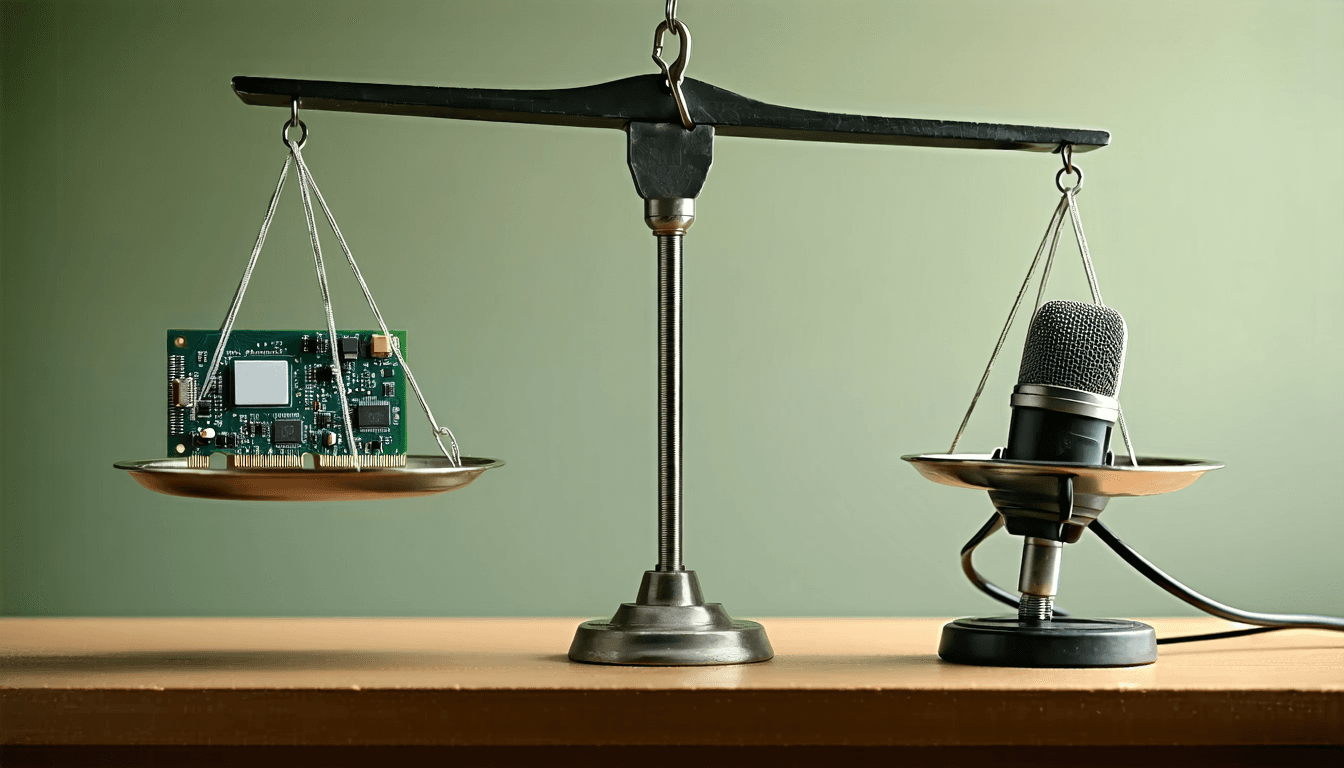
Two judges, 42 hours: Nvidia's print and Warsh's first keynote price the same trade
Consensus has Nvidia doubling revenue while the chip index falls on yields. One source's calendar puts the earnings verdict and the rate verdict less than two days apart.
The Investor · Invest desk
What happened
- Nvidia reports quarterly earnings after the bell on August 26.
- Wall Street expects Nvidia to post approximately 100% year-over-year growth in both revenue and earnings per share.
- The Philadelphia Semiconductor Index dropped 5.5% in the prior week, dragged lower by rising long-term Treasury yields and a capital rotation out of momentum and tech stocks.
- Kevin Warsh's Jackson Hole keynote on August 28 at 10 a.m. ET will be his first major public address as Fed Chair.
- Warsh assumed the role of Federal Reserve Chair on May 22, 2026, advocating for a communications framework that eliminates the detailed forward guidance typical of his predecessors.
Compiled by The InvestorSomething wrong?How this is made
Why it matters
A semiconductor stock is priced on two separate inputs: how much cash the buildout throws off, and the rate you discount it at. This week sends those inputs to two different judges. Nvidia addresses the first after the close on August 26 [1]. Kevin Warsh addresses the second, or pointedly declines to, at 10 a.m. Eastern on August 28 [4]. Working from the closing bell, that is roughly 42 hours apart, with one full trading session in between [13].
The consensus number makes the earnings leg awkward rather than easy. Doubling revenue and earnings per share in a year [2] is not something a bear can argue with on the merits. It is also what was already in the price while the Philadelphia Semiconductor Index fell 5.5% in a week, dragged by rising long-term Treasury yields and money leaving momentum tech [3]. The chips did not sell off because GPU demand came into question. A print that clears the sell-side bar does not automatically clear the bond market's.
Warsh's stated positions cut both ways for anyone long the trade. According to the cryptobriefing.com account, he has spoken favourably about AI's potential to lift productivity while criticising the Fed's balance sheet expansion [6]. Those views are compatible with each other and hostile to each other in a portfolio: a chair can believe the earnings and still compress the multiple that pays for them. The same source says any signal on the inflation target, guidance methodology or a faster pace of quantitative tightening could push yields up and risk assets down [15].
The inflation arithmetic narrows his options before he speaks. July PCE is expected at about 3.6% year over year [7] against a 2% target [8], which is 1.6 points of overshoot, or 80% above the objective [12]. He arrives having argued for a communications framework that strips out the detailed forward guidance his predecessors used [5], and if the August dates sit in the same calendar year as his May 22, 2026 appointment, he is 98 days into the job [17]. A chair with less between-meeting guidance to give has more riding on the set-piece text.
Two caveats worth pricing. The entire calendar here rests on a single aggregator post that credits another site [14], so the 3.6% is an expectation reported at second hand rather than a print. And the corroboration this week is thin by design: CrowdStrike and Salesforce also report, as secondary reads on enterprise tech spending [9], with the same source arguing that three disappointments together would turn the rotation from a theory into a position [16]. Nvidia's guidance is the closest thing available to a live read on how hard Microsoft, Google and Amazon are still spending on data centres [10], which is the number that actually decides whether the buildout funds itself.
Loading topic controls
Loading related stories