Science1 publisher2 min readPublished
Windows in a NIF ignition cylinder released the brightest X-rays yet made in a lab
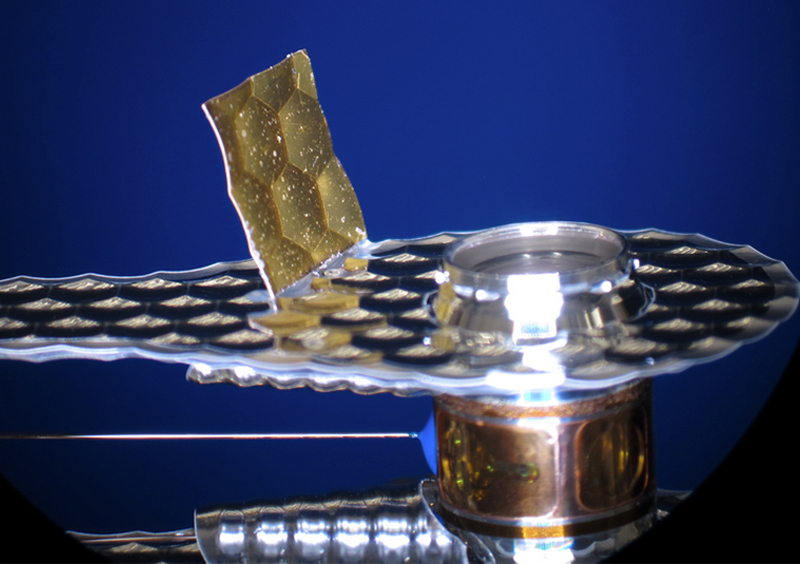
Ryan Lester and colleagues put windows in the gold cylinder that confines a National Ignition Facility shot. The escaping pulse reached tens of trillions of watts, on a par with the brightness of some red dwarf stars.
The Scientist · Science desk
What happened
- Researchers added windows to the small gold cylinder in which National Ignition Facility shots ignite, letting out what New Scientist reports as the brightest X-rays yet created in a laboratory.
- The shot fired 192 laser beams into a gold cylinder about the size of a pencil eraser holding a carbon capsule of heavy hydrogen. The resulting X-ray bath compressed and heated the fuel to ignition.
- The windows evaporated once ignition began and let the X-rays out at tens of trillions of watts, a level the account compares to the brightness of some red dwarf stars.
- The facility first achieved ignition, a fusion reaction energetic enough to sustain itself, in 2021 at Lawrence Livermore National Laboratory in California.
Compiled by The ScientistSomething wrong?How this is made
Why it matters
- capability Studies of these energies have run mostly on computer simulations, and a windowed shot gives experimenters a direct measurement to check codes against, with the sun's opacity the first candidate.
- constraint The cylinder's function is confining radiation, so diagnostic access costs some of the confinement the shot depends on.
- decision By Berzak Hopkins's criterion, each ignition has to teach something new if fusion is to become an efficient energy source.
The gold cylinder exists to keep radiation in. Lester described the machinery behind ignition as a highly refined, highly optimised system for keeping the radiation in, keeping it warm and controlling capsule symmetry, "so that all the things line up in a perfect row and ignition can occur" [9]. Windows are openings in exactly that. An experiment that wants the photons outside has to let some of them out. This shot ignited with the openings in place. Laura Berzak Hopkins of the Princeton Plasma Physics Laboratory said achieving ignition in the first place was a generational accomplishment. She said it is significant that ignition could not only be repeated but repeated with a modified cylinder [10].
Tens of trillions of watts works out to ten thousand gigawatts or more [15]. But power is not energy. The New Scientist account does not report how long the pulse lasted, so the total X-ray energy that came out through the windows cannot be recovered from that figure [16].
"We are the hottest point in the local solar system," Lester said [8]. The two uses the account names for that condition are mimicking how the sun absorbs radiation and testing how materials that could improve future fusion reactions hold up to nuclear blasts [14]. Lester works at Los Alamos National Laboratory in New Mexico [3].
He said he hopes the experiment will help design later ones, including a more detailed view of what happens when very low-density foams are added to the capsule. Foams have been theorised to stabilise the reaction and make it more efficient, and Lester said such experiments could start as early as next year [13].
What to watch
- A peer-reviewed paper reporting pulse duration and spectrum would fix the total X-ray energy the windows released.
- Any published comparison of ignition performance between windowed and standard cylinders.