Science1 publisher3 min readPublished
Cutting rural mail trucks to one a day could add up to 55,000 rejected ballots, Brookings estimates
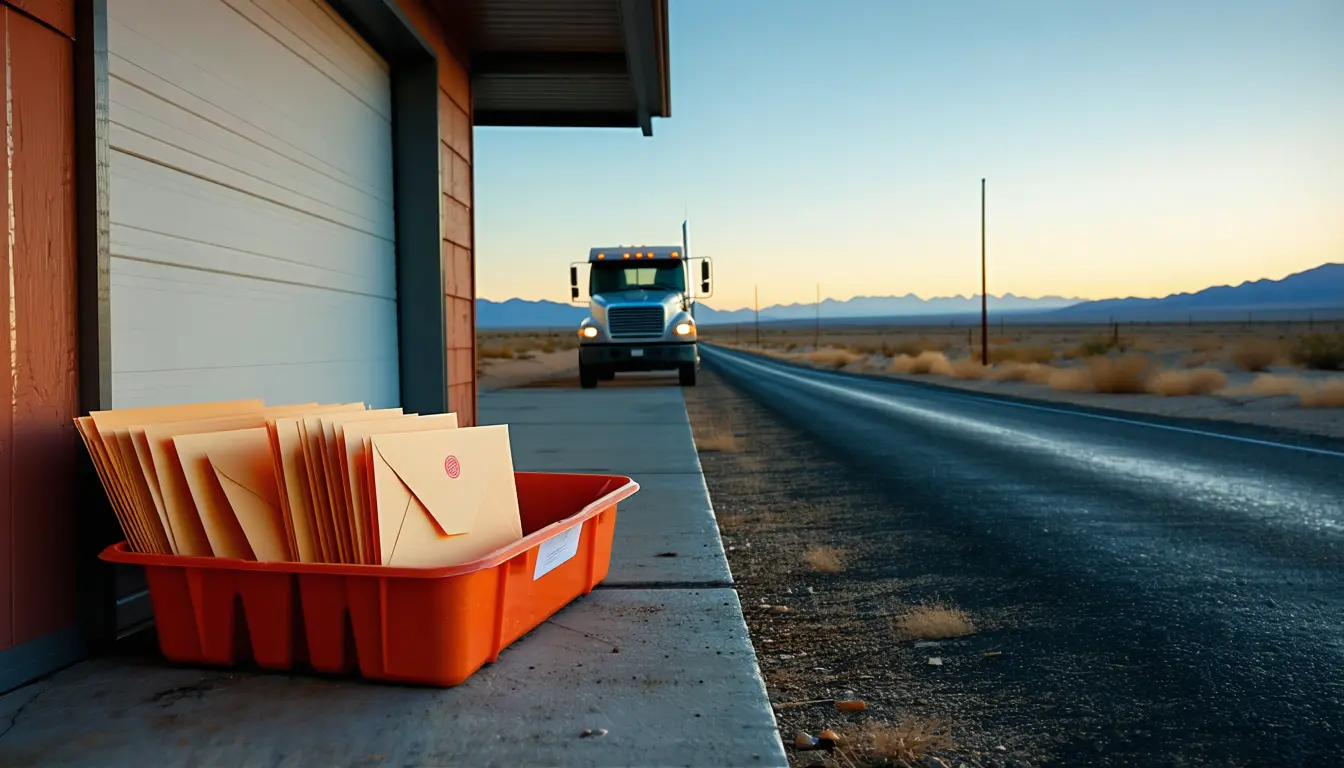
Brookings' Elena Patel estimates the Postal Service's one-truck rural schedule could add 43,000 to 55,000 mail-ballot rejections in November. It builds on this year's primaries in three states and puts the heaviest risk on rural Western voters.
The Scientist · Science desk
What happened
- The Postal Service's Regional Transportation Optimization cuts post offices more than 50 miles from their processing plant from two truck visits a day to one.
- About 121 million of the 253 million voting-age adults in the contiguous states and Washington, D.C., live nearest a post office moving to once-a-day pickup.
- In those three states, the schedule change doubled the rejection rate for mail ballots, according to her analysis.
Compiled by The ScientistSomething wrong?How this is made
Why it matters
- constraint Rural voters in covered areas lose a day of slack at the end of the voting window, and fewer states now forgive a ballot that arrives after the deadline.
- exposure Voters in the rural West's automatic-mail states carry most of the added risk, because they vote by mail by default in the places where service is thinning most.
- decision Election offices in covered counties now have to pick and publicize an earlier safe mailing date, the step Patel recommends alongside telling voters to mail early.
- cost Part of the price of the Postal Service's cheaper truck network is paid in rejected ballots, and voters bear that cost while the agency keeps the savings.
Patel chose California, North Carolina and Washington for a practical reason. Each reports, county by county, how many mail ballots came back, how many were rejected and why, with late arrival counted as its own category [7]. All three published the same detail for their 2022 and 2024 primaries, held before the new schedule took effect [8]. That allowed two comparisons at once: this year against earlier years, and heavily exposed counties against lightly exposed ones [8].
Running both comparisons together is the strong part of the design. Anything that hit a whole state in 2026, such as a new ballot rule or a different mix of primary voters, would move rejections in exposed and unexposed counties alike and drop out. With that design, Patel found the schedule doubled the mail-ballot rejection rate in the three states [9]. For scale, the overall rate was around 1 percent in California and Washington and several times higher in North Carolina [10].
The thing this doesn't tell you is whether something else changed for remote counties alone. Exposure was not assigned by lottery. The rule covers post offices more than 50 miles from the plant that processes their mail [3], so the treated counties are the far-flung ones. Any other change between 2024 and 2026 that fell mainly on them would be credited to the trucks.
There is a plain reason to expect a real effect. Carriers still collect on the same schedule. In many rural offices, though, the mail now goes to the sorting center once a day, and anything posted or picked up later in the day loses a day [4]. That lost day matters most at the deadline. The Postal Service has said a postmark may no longer reliably show when mail was sent [13]. According to the Phys.org account, the Supreme Court has ruled that a postmark can be used as proof a voter met the deadline [14]. Several states have also ended the grace periods that used to absorb late ballots [15].
Scaling up needs more care. About 40 percent of mail ballots in recent elections came from places the rule covers [12]. Applied to the roughly 48 million mail votes in the 2024 general election [11], that is about 19.2 million ballots [1]. Patel's range of 43,000 to 55,000 [1] works out to 0.22 to 0.29 percent of them [2]. If a 1 percent baseline doubled across that whole pool, the added rejections would be near 192,000 [3]. The Phys.org summary does not explain how the three-state doubling became the national range, or whether the doubling applies to all rejections or mainly to late arrivals.
The evidence comes from primaries in three states. The forecast covers a general election everywhere the rule reaches. Patel expects the sharpest effects in the rural West, where service is most likely to thin out and many states mail ballots to registered voters automatically [2]. Against roughly 158 million voters, 55,000 is small, though many races are extremely close [17].
The Postal Service built the schedule to run its trucks more efficiently as letters disappear: single-piece first-class mail fell from 57 billion pieces in 1997 to 12 billion in 2023 [5]. The rule is separate from the Trump administration's mail-voting provisions, which a federal injunction bars the Postal Service from carrying out [18]. Patel's first recommendation is for voters to mail early. Her second is for states and counties to publicize the change widely [16].
What to watch
- County-level November results from California, North Carolina and Washington, with late arrival reported separately, will show whether the primary-season doubling holds in a general election.
- The full Brookings report's method for turning a three-state doubling into a national range of 43,000 to 55,000.
- Whether any states restore grace periods, or USPS changes pickup schedules in covered areas, before ballots go out.