Product1 publisher3 min readPublished
ENEOS will study whether XL Batteries' organic flow battery is worth deploying at scale
The memorandum starts with a joint feasibility study covering utility-scale storage, microgrids, data centers and industrial users. Neither company has named a project, a capacity or a date.
The Product Desk · Product desk
What happened
- The companies did not disclose a specific project, a deployment capacity or a commercial timeline.
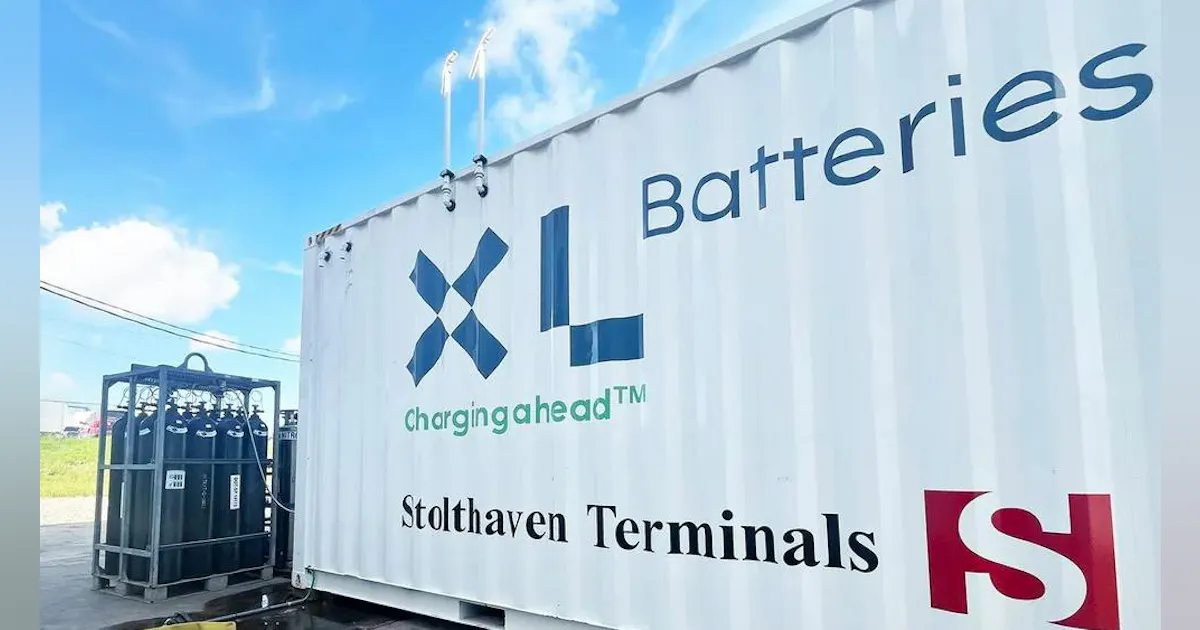
- XL Batteries says its proprietary organic electrolytes are abundant and non-toxic, and that the chemistry is designed to replace scarce and corrosive materials used in some flow battery systems.
- ENEOS Holdings, the parent company behind one of Japan's largest energy firms, intends to examine the commercial potential of the technology and assess opportunities for larger deployments.
Compiled by The Product DeskSomething wrong?How this is made
Why it matters
- constraint The chemistry has no nameplate power and energy rating, so it cannot enter an interconnection application or a storage procurement model. A planner can only track it.
- capability Because tanks set duration and the stack sets power, a buyer sizing for long discharge can price hours separately from megawatts.
- decision For storage buyers this changes supplier qualification: how many engineer-hours to spend on a chemistry whose first announced milestone is a study.
- precedent A study-first agreement with a large incumbent energy parent is the credential non-vanadium chemistries will now be expected to show before utilities take them seriously.
A planner sizing eight hours of storage for a data-center campus keeps two columns: which chemistry, and who signs the warranty. This agreement is about the first column, and the second one stays open.
What a storage buyer can do with a memorandum of understanding is add a row to a tracking sheet. What a slide built on this news will say is that a large Japanese energy group has validated the chemistry. ENEOS Holdings, the parent company behind one of Japan's largest energy firms, intends to examine the commercial potential of XL Batteries' technology and assess opportunities for larger deployments [11].
The chemistry claim and the commercial claim come from different places, and it is worth keeping them apart. The chemistry claim is XL Batteries': the company says its proprietary organic electrolytes are abundant and non-toxic, and that its organic chemistry is designed to replace the scarce and corrosive materials used in some flow battery systems [4][5]. The commercial claim is a joint feasibility study that could lead to future commercial deployments [2]. "XL Batteries' technology is purpose-built to meet the growing need for long-duration energy storage, and this collaboration with ENEOS HD will help accelerate our ability to scale," said Tom Sisto, CEO and co-founder of XL Batteries [9].
The architecture is the part a buyer can reason about without trusting anyone's deck. Flow batteries keep their energy-storing electrolytes in external tanks and pump them through an electrochemical cell to generate electricity [6]. Power capacity follows the size of the electrochemical equipment and duration follows the size of the tanks, and the two scale somewhat independently [7]. For a procurement team, that separation is what makes a four-hour quote and a twelve-hour quote variations on one product.
Count the announced steps: a memorandum, then a joint feasibility study, then exploration of large-scale commercial opportunities [1]. All three sit before anyone signs for hardware. The companies have not announced a specific project, deployment capacity or commercial timeline [3]. XL Batteries was founded in 2019 by scientists who discovered the chemistry behind its patented battery system [12].
The demand side is not in dispute. Electrification, industrial electricity demand and data centers are adding pressure to power networks, and long-duration storage can supply electricity when solar and wind are unavailable [13][14]. That pressure explains why utilities take the meeting.
Here is the test I would apply tomorrow, in two questions. Can the vendor give you a nameplate rating you could put in an interconnection application? Can it name who warranties cycle life? Two yeses and it belongs in a bid. One yes puts it in qualification, with a diligence budget capped at a few engineer-hours. Neither, and you have a tracking row. That is where this sits until the study produces figures. The named markets are utility-scale storage, microgrids, data centers and industrial users [8], and the two companies will focus first on the feasibility study before exploring potential large-scale commercial opportunities [15].
What to watch
- Whether the feasibility study produces a named project with MW and MWh figures attached to it.
- Whether ENEOS funds a pilot in Japan or the relationship stays at the study stage.
- Whether XL Batteries publishes cycle-life or warranty terms a utility buyer can price.