Science1 publisher3 min readPublished
Mine My Phone plots the extraction sites behind 10 metals in a handset
An open-access hub built by the refurbishment company Back Market with nine outside experts links cobalt, lithium and eight other metals to the places they are dug out of, alongside a six-country survey of what buyers know.
The Scientist · Science desk
What happened
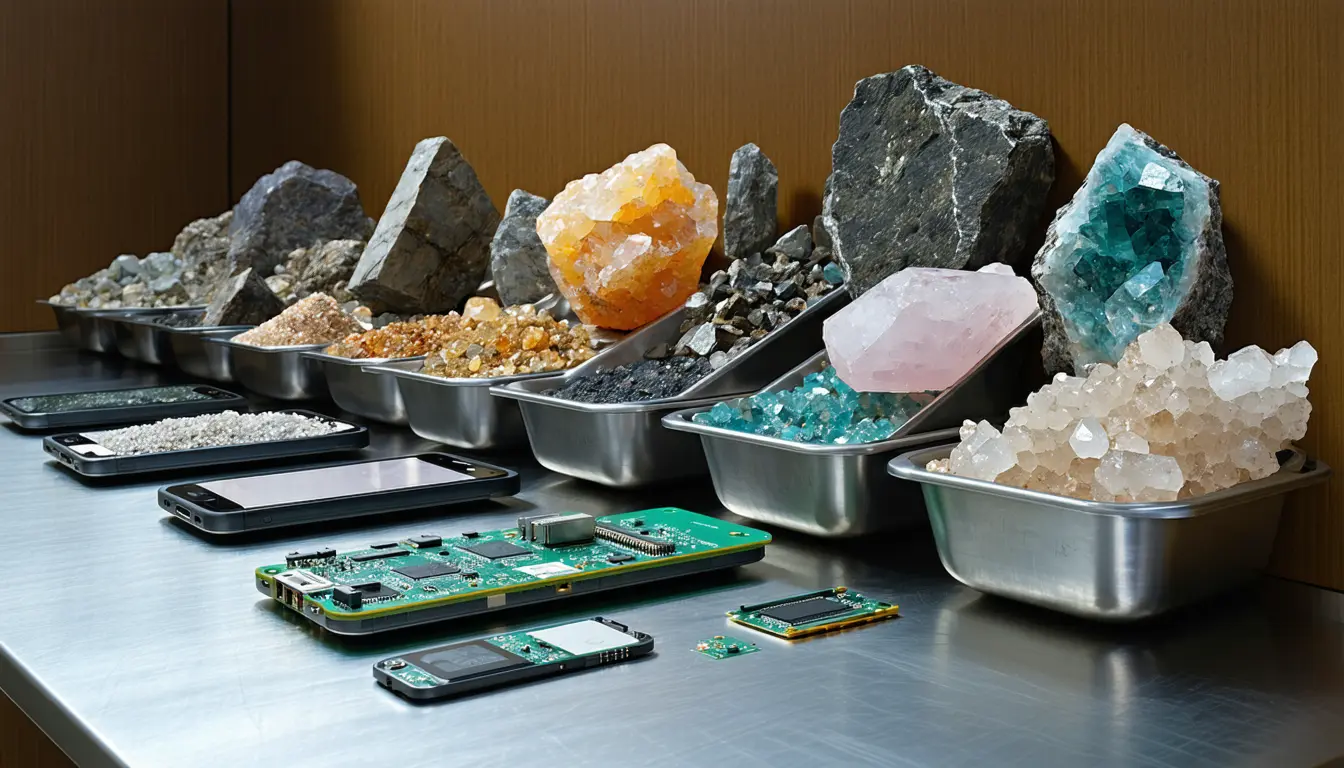
- Mine My Phone, an open-access hub, maps global extraction sites and ties them to 10 metals used in smartphones, among them cobalt, lithium, tantalum, gallium, graphite, gold, tin, copper and indium.
- A single smartphone contains more than 70 raw materials and more than 50 metals, many of which have to be mined out of the ground.
- The article estimates that 80% of a phone's negative environmental impact happens before its first minute of use, that is, before the box is opened.
- A survey of 6,000 adults in the UK, US, France, Germany, Spain and Japan, commissioned by Back Market, found more than half could not name one raw material in their smartphone.
- The DRC holds 50% of world cobalt reserves, most of its output ships to China, and more than 75% of global cobalt supply is refined there for phone and EV batteries.
Compiled by The ScientistSomething wrong?How this is made
Why it matters
- exposure If pure cobalt output turns down after 2030 and the gap reaches about 50,000 tonnes a year by 2040, every battery buyer is bidding into the same handful of deposits.
- decision Anyone pricing repairability now has a number for stated willingness to refuse a new phone over child labour, and has to decide how much of a paid-for intention survey to believe.
- precedent The hub's builders set its own success test as regulation of upgradeability and repair, so the project will be judged by what governments require.
More than 200kg of raw material extracted for a 200g handset is a ratio of about 1,000 to 1 by mass [7]. The comparisons the article offers for that 200kg are 100 bricks, or one adult grizzly bear [5]. A mass figure says how much was moved. The next question is whose valley it came out of.
The hub answers the second question at the level of countries and sites. It keys 10 metals to extraction locations and lets a user filter by environmental, human or geopolitical impact, with expert interviews and investigative reports attached [1][3]. Ten is at most a fifth of the more than 50 metals in a phone [8]. One of the 10 entries is not a metal but a set of 17 of them: the rare earths are common in the crust, and only deposits holding 5% of the metals by weight are financially viable at present [17].
The article invites readers to trace their phone's materials back to their sources [18]. A map keyed to metals and places can show where the world's cobalt is dug and which communities were displaced for the pits, and it lists Argentina, Chile, Bolivia, the Democratic Republic of Congo, Ecuador and the Philippines among the countries where that has happened [23]. Which mine supplied the cell in one particular device is outside what it can show [1]. So a buyer gets the countries a bill of materials probably touches, and has to put the question of which ones it does to the vendor.
Cobalt is the case the article develops, because almost all mobile phone batteries use it [26]. Two methods feed the same supply: industrial open-pit mines with heavy machinery, and artisanal mines where workers dig by hand with crude tools and little protective equipment [14]. Some of the cobalt in a phone could have been mined by children as young as 6, according to the article [15]. As the richest deposits are used up, production of pure cobalt is expected to start falling after 2030, and by 2040 supply could fall short of demand by around 50,000 tonnes a year [16].
The awareness numbers come from a survey the refurbishment company paid for [9][2]. Only 1 in 4 respondents felt confident they knew what goes into their phone, and 7 in 10 had never thought to investigate where the device came from [10]. Seven in 10 said child labour would make them less likely to buy a new phone, and nearly two-thirds said they were interested in seeing how materials are extracted and processed [11]. The article says awareness of the consequences of mining can influence consumers' decisions [12]. What the survey measured is what people say they would do, asked by a company whose business is selling phones that have already been made. The article does not say how the sample was drawn or how the 6,000 respondents split across the six countries [25].
The author discloses being one of the nine experts who built the hub with Back Market [20], and its stated aim is to get consumers lobbying governments for phones that are upgradeable, repairable, reusable and recyclable [19]. On the supply side the article names one example of a different profit model, the Dutch firm Fairphone's modular designs, and says the industry's big players have yet to engage [21]. Its own longevity standard is at least 10 years for a smartphone, set against the 12 to 28 years it gives for cars [22].
What to watch
- Whether the hub extends past extraction sites to the refining and smelting stages, where supply concentrates.
- Whether any large handset maker publishes mine-level sourcing that can be checked against the hub's country entries.
- Whether an awareness survey with no refurbishment company paying for it finds the same stated willingness to skip a new phone.