Product1 publisher3 min readPublished
The AtlasROVER went to an unnamed customer in Asia-Pacific in numbers XTEND will not state, which leaves the operating layer, rather than the chassis, as the part of the deal a buyer can actually assess.
The Product Desk · Product desk

Follow any of these and your For You feed starts watching them — no settings page required.
product
NEURA hands the 4NE1 humanoid's compute modules to a Tuscan board maker running Qualcomm silicon1 publisher
product
Unitree's Post-IPO Halving Exposes Physical AI's Missing Software1 publisher
product
XPENG's robotics unit banked $900M against a December deadline it set itself1 publisher
leadership
Instacart's real bet is not delivery. It is owning the grocery aisle's missing data1 publisher
Compiled by The Product DeskSomething wrong?How this is made
One useful starting point is the operator who already knows one of XTEND's aerial systems well enough to fly it tired. XOS, as XTEND describes it, is supposed to hand that person a ground vehicle without a second control regime to learn: shared AI features, shared mission applications, shared operator workflows, with each platform keeping its own hardware [5][6]. That is a training-cost claim dressed as a robotics claim, and it is the one worth testing.
What the delivery itself can carry is narrower. XTEND has not said who bought the AtlasROVER, where in Asia-Pacific it went, how many units shipped, or what mission the contract covers [4]. Interesting Engineering, which reported the deployment, says it offers limited information about the platform's operational role [16]. A first-of-kind delivery with the unit count withheld could be one vehicle on evaluation or a working fleet, and those two situations say very different things about whether the shared-software argument held up against a real ground task.
"Hardware-agnostic" is also doing a lot of load-bearing work here [5]. AtlasROVER is the first Atlas robot to run XOS [2], and Atlas is a company XTEND bought earlier this year [3]. Every platform named as running XOS is a platform XTEND builds or owns; the disclosed material contains no case of XOS driving a chassis XTEND does not sell [17]. That does not make the architecture claim false, but it does leave it unproven in the direction buyers care about, because an operating system that only runs its parent's hardware is a product line with a consistent interface, which is worth money, but is not portability.
Staffing is the next thing worth checking. XTEND employs close to 300 people, more than half of them in Israel [9], and runs manufacturing in the UK, Singapore and Latvia alongside production in Tampa [10]. Halve the headcount and spread the remainder across those four production locations and you average under 40 people per site [13], and those people are not only building robots. Deployed-unit totals tell you what shipped, not how many of those units fly in a given week, and not how long it takes an operator certified on air to run a ground mission unsupervised. The second figure is the one the single-OS pitch actually rests on.
So the forcing question set for anyone sizing a mixed air-and-ground fleet this year has two parts, scored separately. First, name a platform running your operating system that you neither built nor acquired. Second, give the median time for an operator certified on the air platform to complete a ground mission solo, plus the sample size behind it. A vendor who answers the first with an architecture diagram is selling a portfolio; a vendor who answers the second with a demo video is selling a chassis with a good interface on it. Both are legitimate purchases, but they carry different switching costs three years out, and the price of standardising is paid by the training budget, not the hardware line.
On the disclosed evidence, XTEND got a ground platform onto its aerial software stack in under a year from the acquisition that supplied the hardware [15], with European engineering and manufacturing capacity coming along with it [12]. That is quick portfolio work, but it is not yet evidence that the operating layer travels.
Ranked by verification strength, evidence, and original report placement.
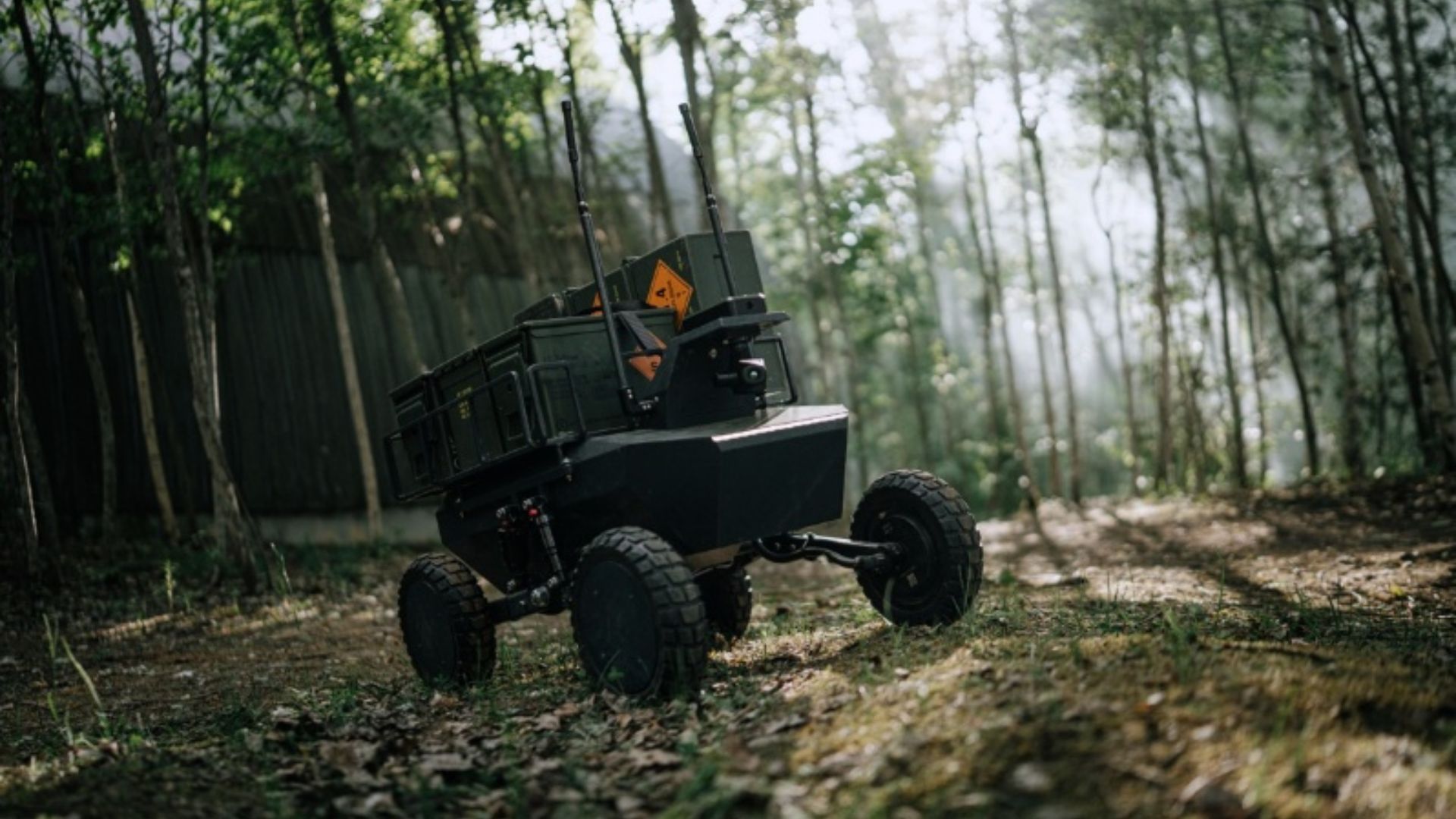
Israeli physical AI firm XTEND has expanded from flying systems to ground-based machines with the first delivery of its AtlasROVER robot to a customer in the Asia-Pacific region.
The AtlasROVER is the first robot from Atlas to use XTEND's XOS operating software.
The deployment is the first XOS-powered AtlasROVER system XTEND has delivered since acquiring Latvia-based robotics company Atlas earlier this year.
XTEND has not disclosed the identity or location of the customer, the number of robots delivered, or the specific mission covered by the contract.
XTEND describes XOS as a hardware-agnostic operating system for physical AI and human-guided autonomy, intended to provide a common framework for AI capabilities, mission applications and operator workflows rather than separate software environments per platform.
According to XTEND, XOS allows different robotic systems to operate through a shared software architecture while retaining their platform-specific hardware and capabilities.
Publishers with included, body-backed reporting in this cluster.
1 article · September 7, 2026
Evidence-backed comparisons of source perspectives and observed adoption signals. Read the methodology
Which Builder, Operator, and Investor concerns the observed source mix emphasized—not a truth score.
Evidence, demonstrated adoption, hype gap, incentives, and confidence are assessed independently, each on its own current evidence. How these are measured.
One outlet relaying one company
Everything checkable here — the delivery, the fleet totals, what XOS does — traces to XTEND, with Interesting Engineering as the only publisher and no second party attached to any figure. The reporting is candid that customer, quantity and mission are missing, which is to its credit, though naming a gap does not close it.
One shipment of unstated size
XOS on ground hardware currently amounts to a single first delivery, to a buyer XTEND will not name, in a quantity it will not state. The company's 12,500-system total is not broken out by platform or software version, so it cannot stand in for uptake of the shared layer across air and ground.
Agnostic claim, one owned platform
The framing reaches to maritime systems; the evidence reaches to one ground vehicle from a company XTEND bought. Shapira's common software layer is a coherent engineering goal and the AtlasROVER port is real work, but no published case shows XOS driving a robot XTEND did not build or acquire, which is precisely what the word agnostic invites a buyer to expect.
Launch announcement, lightly re-voiced
The material advances XTEND's repositioning from drone maker to software platform, a distinction that changes how the company is valued, and the specifics that would let anyone audit it are the withheld ones. Interesting Engineering supplies the caveat about limited operational information but sources nothing beyond the company, including the combat-zone claim.
Solid on the announcement, unproven on the substance
What XTEND said, and when, is not in question, and the arithmetic on staffing and timing holds on the disclosed figures. Whether XOS is portable past XTEND's own chassis rests on assertion alone; one named customer, or one outside account, would move this a long way.