Science1 distinct publisher3 min readPublished
The Stanford tool is less than half the size of comparable CRISPR activators by amino acid count, which is what lets one virus carry it along with the guides that aim it, and in injured mouse retinas it preserved partial vision.
The Scientist · Science desk

Compiled by The ScientistSomething wrong?How this is made
The constraint is arithmetic inside a capsid. A viral vector does not carry a finished protein, it carries the DNA instructions for the cell to build one, and by this account the instructions for CRISPR hardly fit inside a single virus [3]. Whatever a bulky activator spends on itself is space the guide RNAs cannot have, which is why tuning several genes at once has meant shipping components in separate vectors, an approach the study's account calls complicated and inefficient [4]. Zhiquan Liu, the lead author, puts the limit plainly: existing CRISPR activation tools are very powerful, he says, but their size makes them "not suitable for the classical adeno-associated virus delivery" [12].
TIGRa works by the same basic mechanism as the tools it is meant to replace, just built smaller. Like the CRISPR-based activators it stands in for, it finds the target sequence and recruits the cell's own transcriptional machinery to raise expression [5], which senior author Yang Sun frames as switching on genes that otherwise lie dormant in our bodies [17]. The targeting logic is inherited: change the guide RNA, change the address [10]. What is new is the chassis, TIGR-Tas, described only last year by Broad Institute researchers in parasitic bacteria and viruses, its native function still unclear [9].
The screen is the part I find most interesting. Liu built more than a dozen prototypes on different targeting systems, expecting the usual trade of smaller protein for weaker activation [13][14]. One of the smallest won on efficiency [13]. That is a result about a comparison set, and the set was his own prototypes measured against comparable CRISPR activators: the size advantage comes with a number, less than half by amino acid count [7], while the efficiency and versatility advantages come as descriptions [6].
What this result does not tell you is how large the mouse effect actually was. The design is clean enough, injuring retinal ganglion cells and comparing animals given two activated protective genes against those that were not [15], and the reported outcome is partial vision retained versus near blindness [16]. No cohort size, no acuity measurement, no follow-up interval appears in the account [21]. Sun's stated reason for working in the eye, that you can tell right away whether it sees while you cannot say the same of a liver [18], is also why the result travels less far than it first appears.
Set the timelines beside each other. CRISPR has had nearly 15 years of re-engineering into editors, activators and inhibitors [11]; TIGR-Tas has had about one [8]. That is roughly a fifteen-to-one gap in accumulated engineering time [20], and it is where the uncertainty sits, because fifteen years produces a literature of failure modes and one year does not. My view is that the target is right: cargo capacity, not targeting accuracy, is what has kept multiplexed in-body gene tuning in cell culture [3][4], and halving the coding cost of the activator [7] is a direct answer to it. The caveat I would hold onto is this: a categorical result in a mouse retina is not yet evidence about human eyes.
Ranked by verification strength, evidence, and original report placement.
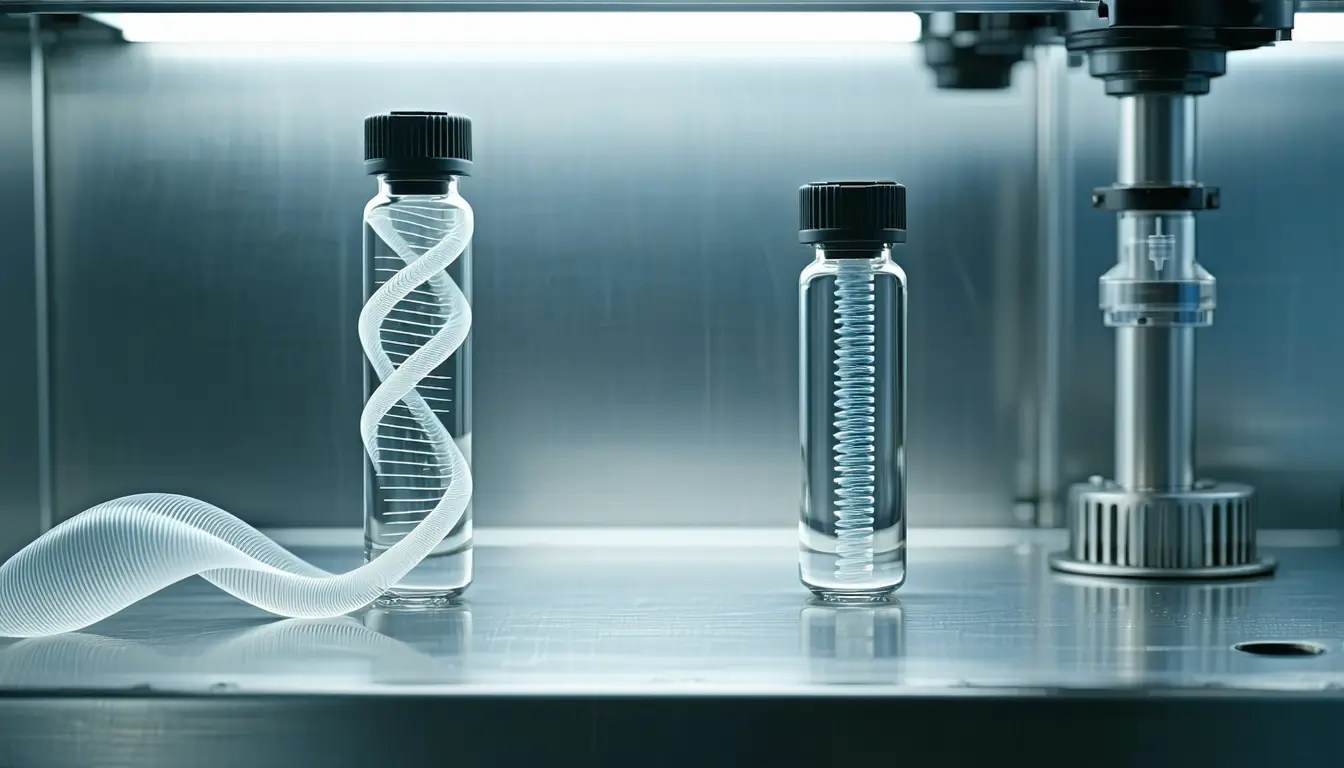
TIGRa is small enough that its short DNA instructions can be packed inside viral vectors with room to spare.
Compared with its CRISPR counterparts, TIGRa is more versatile regarding which genes it can target and more efficient at activating multiple genes at once.
TIGRa is less than half the size, as measured by the number of amino acids, of comparable CRISPR gene activators.
Stanford Medicine scientists have developed an ultracompact gene activation tool called TIGRa, in a study published in the journal Cell Stem Cell.
Standard molecular tools for tuning genes, such as the CRISPR system, are too bulky to package and deliver into the body's cells; when delivered by viral vectors carrying the DNA instructions for cells to build CRISPR themselves, those lengthy instructions hardly fit inside a single virus.
For therapies that may require adjusting multiple genes, delivering multiple CRISPR components separately becomes complicated and inefficient.
Distinct publishers with included, body-backed reporting in this cluster.
phys.org
1 article · August 31, 2026
Follow any of these and your For You feed starts watching them — no settings page required.
science
A genetic switch for gut Clostridia: TMA and DCA turned on and off inside live mice2 distinct publishers
science
Stanford says blood immune cells enter the aging brain and become microglia1 distinct publisher
product
Two deaths, one pathway: gene therapy's risk story is about oversight, not the edit1 distinct publisher
science
Brain organoids with a front and a back, and a fragile X gradient that flattens2 distinct publishers
Evidence-backed comparisons of source perspectives and observed adoption signals. Read the methodology
Which Builder, Operator, and Investor concerns the observed source mix emphasized—not a truth score.
Evidence, demonstrated adoption, hype gap, incentives, and confidence are assessed independently, each on its own current evidence. How these are measured.
One lab, one release
Every figure that matters — half the size, 70% efficiency for the Mini, six of nine genes, a third of vision, twofold cell survival — is spoken by the paper's own two authors inside Stanford Medicine's announcement, which Phys.org reproduces. The Cell Stem Cell paper is named but not read here, no second group appears, and the text we hold stops mid-sentence at 'The treated mice still showe' — the exact place a caveat was starting. Peer review lifts this above a preprint claim; it does not make it independently checked.
A dish, then one mouse eye
Usage on record: cultured cells and a single intravitreal experiment in mice, all inside the lab that built the tool. No other group, clinic, company, or product touches TIGRa anywhere in this reporting, and the enzyme family it descends from is about a year old. That is not a criticism of the work — it is the honest stage of it.
Headline outruns the retina
'May do what CRISPR cannot: work inside the body' is carrying more weight than injured mouse eyes can bear, and the modal 'may' is what makes it defensible. Underneath, the writing is comparatively disciplined: the vision benefit is called partial and put at about a third, the Mini variant's efficiency loss is disclosed, and the win rate against CRISPR is given as six of nine rather than rounded up. The overstatement is in the leap from one organ in one species to 'in the body', not in the size claim, which is concrete and arguably undersold.
The announcement is the marketing
A university tells the world about its own paper; an aggregator distributes it; the two people quoted are the two people whose careers the result advances. That arrangement reliably produces accurate sentences and a selective set of them. Absent, as always in this format: who funded the work, whether anything has been filed or licensed, and what a competing lab makes of the comparison. The Broad Institute is credited for TIGR-Tas but is not treated as a party with its own interest in where that system goes next.
Plausible, unreplicated
The mechanism is ordinary enough to believe, the journal is real, the size claim is the kind of thing that cannot hide for long, and the animal result comes with an effect size attached. Confidence stalls in the middle because all of it arrives through one channel, the counts and durability that would let anyone stress-test the eye experiment are missing, and a tool derived from year-old enzymes has not yet had time to disappoint anybody else.