Science1 publisher2 min readPublished
NASA funds 12 space biology studies at roughly $583,000 an award
Six of the selections target off-planet food production and six target astronaut physiology, with more than $7 million committed across fiscal years 2026 to 2030 and nine awards going to investigators new to the program.
The Scientist · Science desk
What happened
- NASA selected 12 investigations to support human explorers in space, six on producing food off-planet and six on how the conditions of space exploration affect astronaut health and physiology.
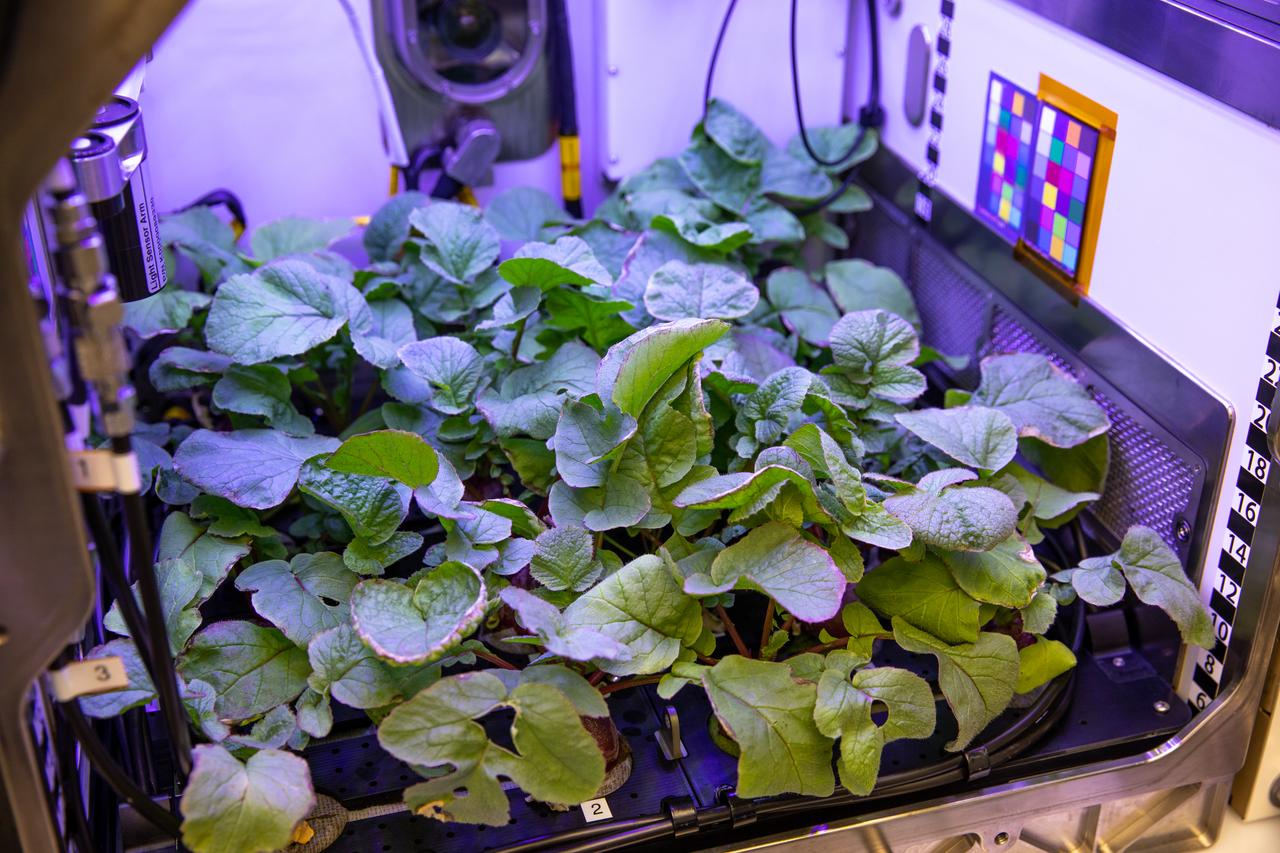
- Four of the six food awards, made under the agency's Space Crops grants, examine how edible plants, their physiology and their microbial communities respond to conditions in space or on other planetary bodies.
- In the precision health set, one award studies how lunar dust exposure affects respiratory, immune and inflammation responses, and another identifies repurposed drugs that could blunt spaceflight's effects on physiology.
- More than $7 million will be awarded across fiscal years 2026 through 2030, in response to proposals submitted to the ROSES-2024 Space Biology Research Studies element.
- The principal investigators come from 10 institutions across eight states, and NASA says the health work will also develop early-warning detection systems to notify crew of potential concerns.
Compiled by The ScientistSomething wrong?How this is made
Why it matters
- constraint An average near $117,000 per award per year sets the ceiling on what these teams can attempt: bench, greenhouse and simulation work, not flight validation of a crop or a countermeasure.
- exposure Because the commitment runs to fiscal 2030, most of the money sits in budgets Congress has not passed, and a first-time grantee that staffs up on year one carries that risk.
- capability Nine investigators new to the Space Biology Program means nine more labs that will know its protocols and reporting requirements, capacity that outlasts these particular projects.
- precedent Aging language sits in half the precision health titles, so the next round of proposals is likely to be written, and reviewed, in geroscience terms.
Split twelve ways, the commitment comes to about $583,000 an award [1]. Across the five fiscal years it covers, that is roughly $117,000 per award per year [2]. NASA describes the total as more than $7 million, so both figures are floors [13]. The release does not state how many proposals were submitted, so there is no selection rate to quote [26].
The project titles say more about the crop half than the summary does. Miranda Haus at Michigan State University will study legume crop rotations and microbial interactions in regolith simulants [15]. At Ohio State University, Christopher Taylor is after the genetic determinants of water- and plant-associated microbial survival in a low-carbon, high-radiation environment [17]. Shuyang Zhen's award, at Texas A&M AgriLife Research, covers environmental optimization and cultivar selection for dwarf tomatoes [16]. Jannell Bazurto at the University of Minnesota takes plant-microbe dynamics for space farming [27]. All four name microbes or growing conditions [7].
Robert VanBuren at Michigan State holds the resurrection-plant award, which NASA frames as understanding how those species withstand extreme, dry conditions, under a title that points at space bioregenerative systems [4][19].
The sixth crop award, to Andrew Settles at NASA's Ames Research Center, works on Chlamydomonas [18]. NASA says it builds on earlier space station studies to uncover the functions of algal genes whose expression spaceflight modifies, and that such work can feed biological components into life-support systems [5]. The station results showed expression changing, and the function work has to settle which of those changes matters for survival or output.
On the health side, several designs pair stressors instead of isolating one. One stressor at a time cannot show whether two effects add or interact. Sanghee Yun at the Children's Hospital of Philadelphia will combine spaceflight-relevant hypercapnia with radiation and social isolation, reading out multiple aging hallmarks [20]. Brain-heart axis aging and a search for repurposed drugs against it go to Satoshi Okawa at the University of Pittsburgh [21]. From the other direction, Andrij Holian at the University of Montana asks what aging contributes to particle-induced chronic inflammation [22]. Grace O'Connell at the University of California will study persistent spine impacts after recovery from microgravity and radiation, a design with a post-return timepoint [24].
One of the twelve is computational. Mert Gur, also at Pittsburgh, will run all-atom molecular dynamics simulations of pathogenic mutations under spaceflight-relevant stressors [23].
Twelve awards across ten institutions means two institutions hold two each, and they do: Michigan State and the University of Pittsburgh [4]. Nine of the twelve investigators are getting Space Biology Program money for the first time, three quarters of the slate [12][5].
What to watch
- Whether NASA publishes per-award amounts or the proposal count for Program Element E.9, which would give a selection rate for this round.
- Whether any of the 12 gets station or free-flyer time; only the Chlamydomonas award is described as building on flight data.
- Whether the fiscal 2027 through 2030 tranches survive appropriations, since the commitment spans five budget years.