Product1 distinct publisher3 min readPublished
Flock says its license plate readers operate in 6,000 communities in every state but Alaska, and candidates in both parties are now pledging bans, funding pauses and warrant rules, which turns a signed municipal contract into an election-year liability.
The Product Desk · Product desk

Compiled by The Product DeskSomething wrong?How this is made
Somewhere a public safety director is looking at a renewal date and a map of pole-mounted cameras that a council waved through in one meeting. That used to be procurement work: unit price, and who else gets to query the data. The new part of the job is working out whether the authority to keep the cameras switched on will still exist when the term ends.
The moves so far have not come from the bodies that signed the purchase orders. According to Fast Company, Rhode Island's Democratic governor, Dan McKee, paused installation of new cameras [15]. David Crowley limited Flock use in Milwaukee County through an order he issued as county executive [12]. Tom Tiffany, his Republican opponent in the Wisconsin governor's race, proposes a pause on state funding plus a task force covering misuse penalties and data retention limits [13]. Funding, executive orders and installation permits all sit above the department, and none of those levers asks the department first.
The company's answer to all of this is national and cumulative. MoMo Zhou, Flock's vice president of communications, says the technology has helped solve approximately one million crimes and reunite roughly 10,000 missing people with their families, and asks critics to engage with "the crimes solved, the families reunited, the safeguards already in place" [6][7]. Spread over the 6,000 communities across 49 states where Flock says its cameras run, a million crimes works out to about 167 per community, and the statement attaches no time window to the total [1][17][18]. That figure answers a national question. The council chamber asks a local one.
What agencies assume the search box is for: an officer types a plate from a stolen vehicle report and gets a hit. What Fast Company reports news outlets have documented is officers also using the technology to stalk personal connections [10]. Those cases establish the failure mode without establishing how often it happens, and nothing in the record here counts queries per agency [19]. Police call the cameras an invaluable crime-fighting tool while critics call their pervasiveness unconstitutional warrantless mass surveillance [8]. A cumulative national total does not adjudicate that.
Which leaves the renewal memo turning on two things an agency either has or does not. One is whether the deployment survives the loss of state or grant money. The other is whether it can produce, inside a day, a search-level log naming the officer behind each query and the case it was attached to.
Self-funded and logged is the defensible corner; the meeting is survivable and the contract likely renews. Self-funded without logs is weaker, because the local numbers needed in that meeting do not exist yet and cannot be reconstructed afterward. Grant-funded and logged is a budget exposure rather than a credibility one, which makes termination-for-funding-loss language and a data deletion clause worth more at signing than another two cameras. Grant-funded without logs means the decision belongs to people whose names are printed on ballots, and this campaign season is supplying plenty of them [3].
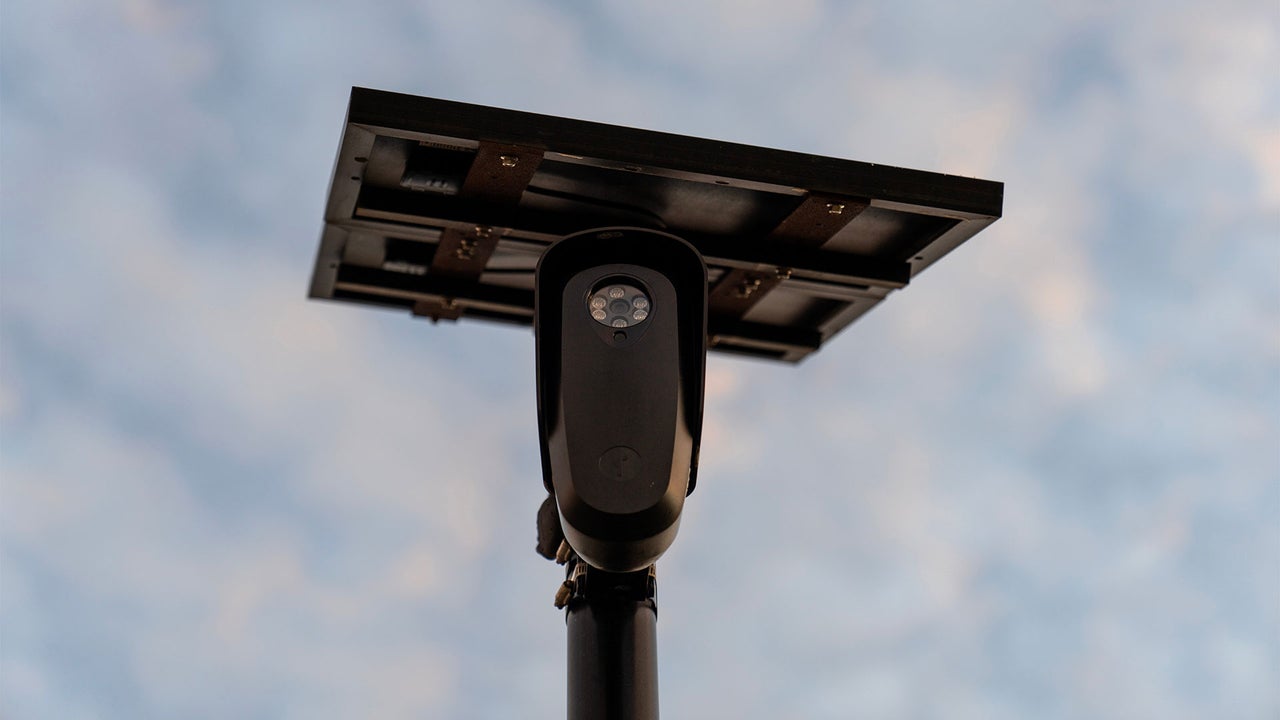
Ranked by verification strength, evidence, and original report placement.
Flock Safety, based in Atlanta, has said its cameras are running in 6,000 communities in every state but Alaska.
Flock's product is an AI-powered nationwide network of automated cameras that record license plates and other characteristics of all passing vehicles, allowing law enforcement agencies to search and share that data.
Candidates from both parties, up and down ballots, are increasingly attacking Flock cameras, which candidates and strategists see as part of a backlash against powerful technology companies and connected to debates over AI and data center construction.
Wisconsin's candidates for governor want to limit the cameras, Pennsylvania's say they support a ban, a Michigan congressional candidate called them 'un-American,' and a Florida Senate candidate is selling merch opposing them.
Michael Soyfer, an attorney for the Institute for Justice, which is litigating over the technology, said in a statement: 'We've seen candidates running on banning them, cutting off funding, or requiring warrants. That's a credit to activists across the country who have raised concerns about their use.'
A Flock spokeswoman said the company's technology helped 'solve approximately one million crimes and helped reunite roughly 10,000 missing people with their families.'
Distinct publishers with included, body-backed reporting in this cluster.
1 article · September 4, 2026
Follow any of these and your For You feed starts watching them — no settings page required.
leadership
Wisconsin's governor's race has turned data centers into a top-of-ticket liability1 distinct publisher
invest
Virginia's data centers buy one permanent job for every $54m invested4 distinct publishers
product
Florida revokes every highway plate-reader permit with a memo signed by an assistant secretary1 distinct publisher
invest
The data center subsidy is now a campaign liability in five states1 distinct publisher
Evidence-backed comparisons of source perspectives and observed adoption signals. Read the methodology
Which Builder, Operator, and Investor concerns the observed source mix emphasized—not a truth score.
Evidence, demonstrated adoption, hype gap, incentives, and confidence are assessed independently, each on its own current evidence. How these are measured.
Quotes solid, numbers borrowed
Split the story in two and it grades differently on each half. The political half is airtight: named candidates, direct statements, party committees trading footage, an attorney at the firm doing the litigating. The factual half is entirely on loan from Flock — 6,000 communities and a million crimes solved both arrive with the company's fingerprints on them, and Fast Company presents them as company claims rather than checked ones. The documented officer-stalking cases and the constitutional litigation are asserted without naming an outlet or a docket.
Everywhere, by the vendor's count
Deployment is unusually easy to believe here, and for a backhanded reason: three separate governments are busy restricting cameras, which only makes sense if the cameras are installed. Milwaukee County limited use by executive order, Rhode Island froze new installations, Florida ordered readers off state highway rights-of-way. What is missing is any independent census — how many of the 6,000 communities are active, under contract, or already unwinding — so the footprint is broad but nobody outside Flock has counted it.
The vendor is doing the overstating
The reporting itself is restrained — it counts campaign promises and labels them as promises. The stretch belongs to Flock: a cumulative million crimes solved with no start date, which shakes out to about 167 per community, offered as the reason not to regulate. On the other side, pledges are cheap in September, and a candidate saying the cameras have no place in Texas is not the same as a camera coming down. Small positive gap, and it points at the press release rather than the newsroom.
No disinterested voices
Try to find someone in this story without a stake. Flock's communications VP is defending a revenue base. The Institute for Justice attorney credits activists in a fight his firm is litigating. Two state parties are running opposition research on each other in real time. Helena Foulkes questions her own governor's motives for pausing installations weeks before the primary — and she may well be right, which is the point. Even the police chief speaking up for the technology heads a national law enforcement association. Everyone quoted is either selling, suing, or running.
One outlet, unmatched
Everything we know here, we know from Fast Company. That is fine for the on-the-record quotes, which are hard to get wrong and easy to check later, and thin for the claim that a national campaign trend exists — one reporter's synthesis of seven races, with the vendor's own numbers as the backdrop. Until a second newsroom either matches the trend or tests the million-crime figure, treat the political facts as firm and the scale as provisional.