Science2 publishers2 min readPublished
MitoCarta maps the eye-infecting amoeba's mitochondria in search of microbe-specific drug targets
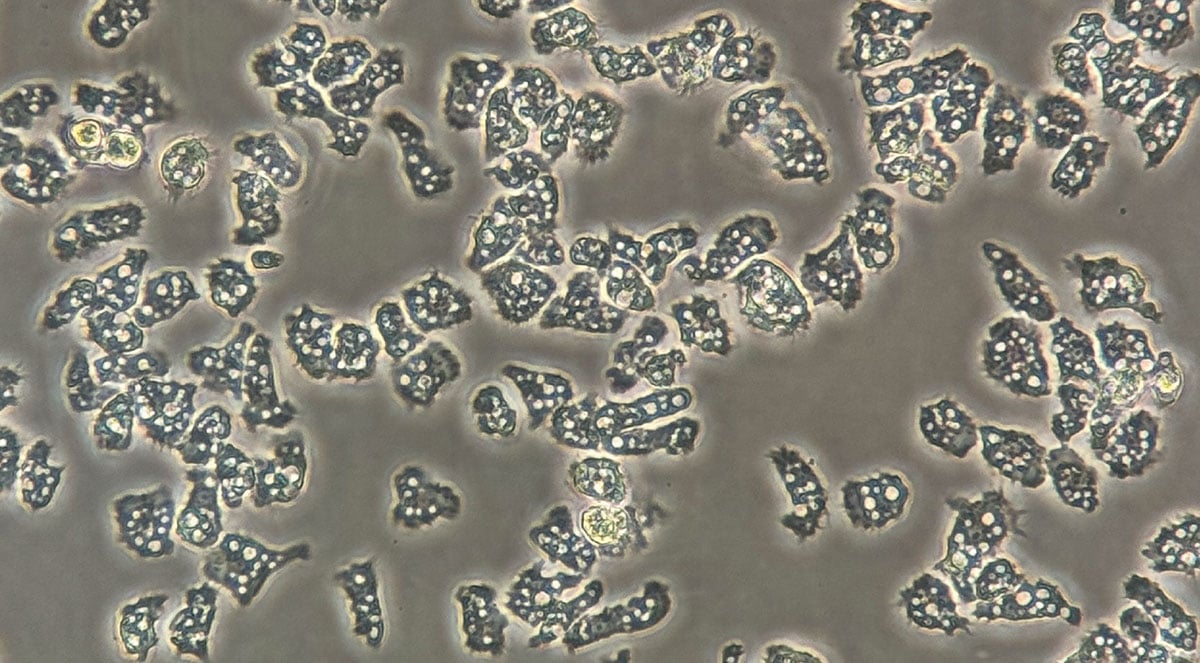
MitoCarta mapped the genome and mitochondrial proteins of Acanthamoeba, the eye-infecting amoeba, across two of nine new papers. Its current drugs are untargeted and toxic, its lead author says, and a precise protein map is the first step toward better ones.
The Scientist · Science desk
What happened
- The Acanthamoeba work appears in the journals Cell and Cell Press Blue, part of a simultaneous release by the MitoCarta Tree of Life Consortium.
- MitoCarta had already mapped the mammalian mitochondrial proteome; this release extends the inventory to divergent branches of the tree of life.
- Acanthamoeba's genome was already sequenced, but the earlier gene annotation was only about 52 percent accurate, so the team rebuilt it first.
- To separate the genes, the team used long-read RNA sequencing, which reads transcripts of whole genes rather than short fragments stitched together afterward.
- The wider project is tracing mitochondrial proteins back to the last common ancestor of animals, plants, fungi and protists, which lived about 2 billion years ago.
Compiled by The ScientistSomething wrong?How this is made
Why it matters
- capability Inventorying the proteins that run the amoeba's mitochondria gives drug developers a defined list of protein candidates to screen.
- constraint The amoeba seals itself in a drug-resistant cyst in the cornea, so a usable treatment has to hit a target that still matters in that hardened state.
- exposure The infection is already hard to diagnose and to treat, so patients bear the delay between a mapped target and a usable drug.
Acanthamoeba lives almost everywhere, in water, soil and air, and most of the time it leaves people alone [1]. When it does infect, it can reach the eyes, the skin, even the brain [2]. "Our current drugs are untargeted and toxic, and we just need more options for treating these infections," said Jon Stefely, a metabolism investigator at the Morgridge Institute for Research and first author on the Acanthamoeba papers [5][4].
The design rule Stefely follows is specific: aim at biochemistry the amoeba does not share with its host. "A drug that targets a unique microbial protein or pathway is less likely to also harm the infected person," he said [13]. Finding those proteins meant going back to the nuclear genome, because that is where most mitochondrial proteins are encoded, not in the organelle's own small DNA [14]. An unannotated genome, Stefely said, is like "a page of words in a book" where "all the words were squished together and in a language that you don't know" [16].
So far, the work has produced a map. A proteome is an inventory of the proteins an organism uses; no safe compound that disables one of these proteins has been reported. The project was conceived by Vamsi Mootha of the Broad Institute and Harvard Medical School to trace mitochondrial proteins across living things [8]. That survey includes pathogens like Acanthamoeba [10].
What to watch
- Whether the papers name specific Acanthamoeba mitochondrial proteins with no human counterpart that could be screened as drug targets.
- Whether any candidate target still matters in the drug-resistant cyst form, the stage that defeats current treatment.
- Whether the consortium's other pathogen maps turn into actual drug programs.