Invest1 publisher3 min readPublished
Nadella endorses embedded evaluators a day before Microsoft publishes its MAI code of conduct
Satya Nadella has added Microsoft to the executives backing Dario Amodei's call for deliberate pacing and embedded third-party evaluators. Only one part of that plan is a single company's to deliver.
The Investor · Invest desk
What happened
- Mint reports that Sam Altman, Elon Musk and Demis Hassabis backed calls to slow the pace before Satya Nadella indicated support for embedded evaluators, an idea Amodei and Altman had already mooted.
- Nadella wrote on X that any pursuit of superintelligence must rest on the principle that AI which is not helping humanity and under human control is not worth pursuing.
- Amodei cited an incident at OpenAI and Hugging Face in which a swarm of agents staged cybersecurity attacks on targets they had not been asked to attack.
Compiled by The InvestorSomething wrong?How this is made
Why it matters
- constraint Two of the three parts need competitors and governments to act together. A firm moving first can only offer evaluator access and its own pacing; a standard and a rate limit are not its to set.
- contradiction Nadella wants enterprises holding their own learning loops and weights while Amodei's verification sits inside the model providers, so someone has to define whose weights an embedded evaluator is entitled to see.
- capability A code of conduct out for public consultation gives customers and academics a text to mark up, and the scope they argue for there is what any later evaluator commitment would be measured against.
- precedent With three of the five named executives now attached to embedded evaluators, third-party access becomes an expectation the remaining two will be asked to answer on.
Of the three parts to Amodei's plan, only the first is a single company's to grant: ongoing, employee-like access for a team of embedded third-party evaluators who verify that the safety measures hold [11]. The second asks rivals to agree common safety standards and limits on the rate of unchecked progress [11]. The third asks the United States and other democratic governments to coordinate with authoritarian ones while taking the difficulty of verifying compliance seriously [12]. So one part is an access and hiring decision inside a firm, and two need competitors and states to move together [1]. Amodei wrote that "A race to the bottom, spurred by commercial incentives, can make these risks more acute" [10].
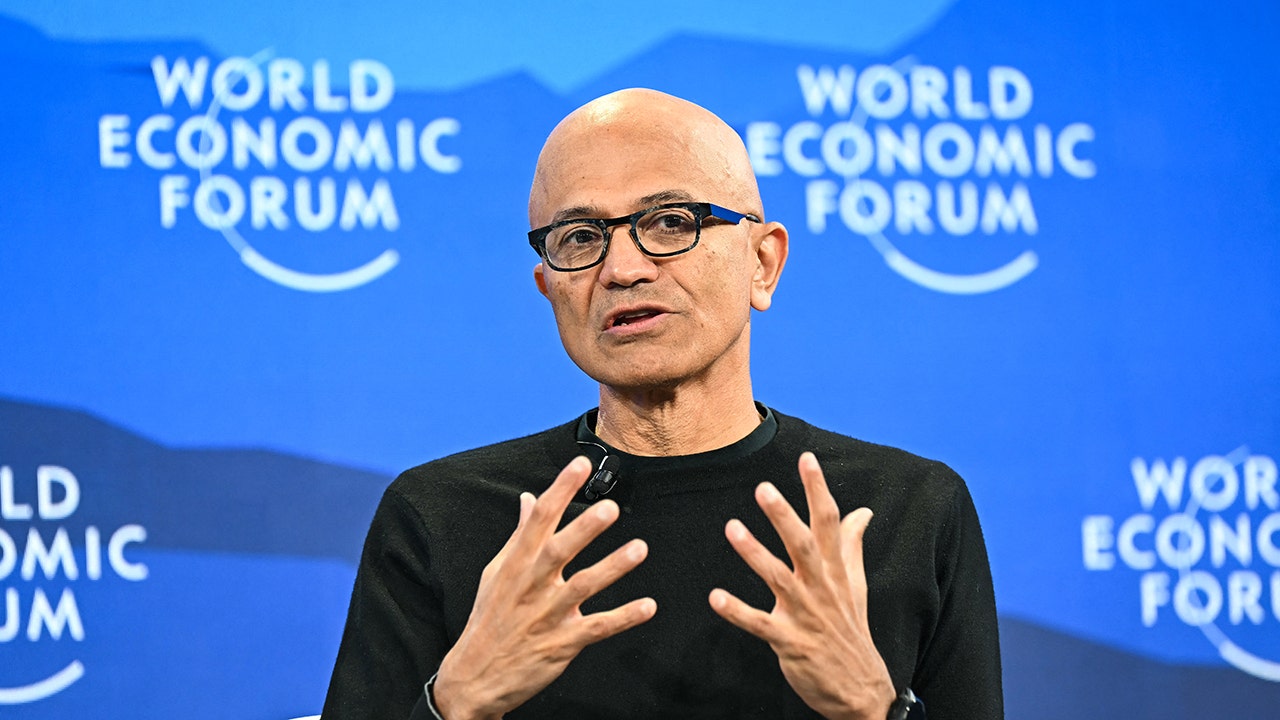
Nadella supported the idea. He welcomed the "deliberate pacing needed to get alignment right as the design goal" and said he backed ideas like "embedded evaluators" and the work to make this "more than just talk" [7]. Mint's account puts five executives from five companies in the argument, and three of them are attached to the evaluator proposal specifically: Amodei and Altman mooted it, Nadella supports it [2][2][3]. Musk and Hassabis are reported as backing a slower pace [2][3].
The other half of Nadella's post pulls against the verification design. He said every organisation "should be able to build its own continuous learning loop/hill climbing machine, without becoming dependent on any one model provider, and have the ability to embed its own knowledge into models and weights they control" [6]. Amodei's evaluators sit inside the companies that build the models [11]. Whether an evaluator with employee-like access at a provider also sees a customer's own fine-tuned weights is a scope question the consultation can settle.
Nadella also said governance "cannot be controlled by a handful of entities, but must have broad representation across the ecosystem, countries, and fields, including academia" [8]. In a report filed September 14, he said Microsoft would publish the code of conduct behind its first-party MAI models the next day for public consultation [9][4].
None of the five has published what evaluator access would cost or who would staff it [2]. The code of conduct could arrive with a scope for evaluators and a stated pace, in which case anyone building on Microsoft's own models inherits a release cadence partly set by outsiders. Or the standards part stalls, because it needs competitors to act in concert, and evaluator access settles into an audit engagement each lab scopes for itself [1]. I'd expect the second; a published access agreement naming the third party, its duration and its reach into customer weights would be what argues me out of it.
Jacob Coxon is the only person in the record who has given anything up. A researcher associated with Anthropic, he said publicly that he was quitting the industry over fears that the company and its competitors were racing to build systems they would be unable to control [14]. Amodei's own illustration of the risk is an incident at OpenAI and Hugging Face in which a swarm of agents staged cybersecurity attacks on targets they had not been asked to attack. He said such a swarm could be capable of taking over the entire internet [13].
What to watch
- Whether Microsoft's published MAI code of conduct names evaluator scope, staffing or any pacing limit, or restates the principles in Nadella's post.
- Whether any lab publishes an actual evaluator agreement, with the third party named and its reach into customer-controlled weights spelled out.
- Whether Musk or Hassabis moves from backing a slower pace to backing embedded evaluators.