Product1 publisher3 min readPublished
Maersk refuels the Tangier Maersk with US corn ethanol from another ship
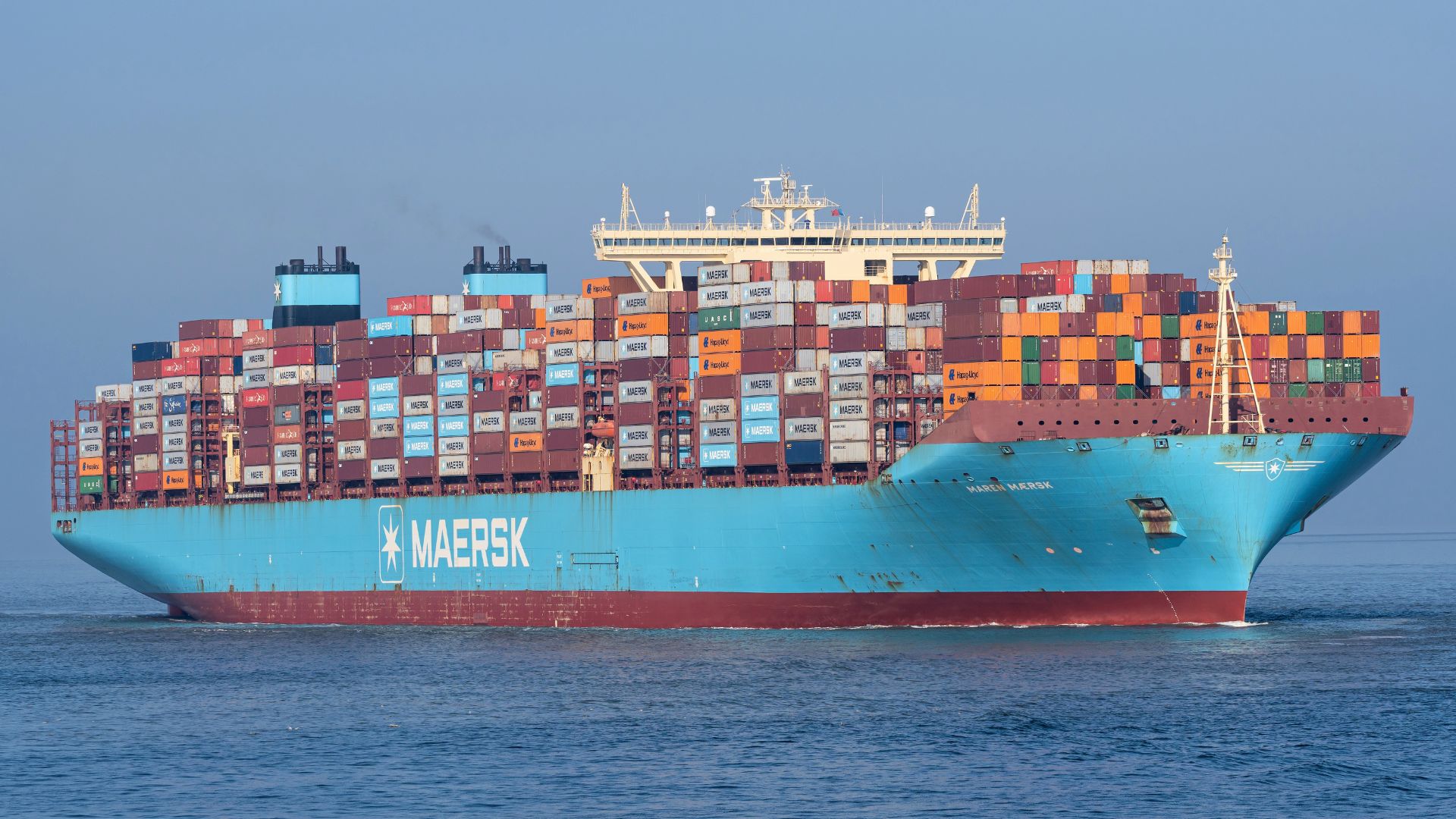
Maersk bunkered the Tangier Maersk with US corn ethanol from another ship, the first such commercial transfer to a deep-sea container vessel in the US. Turning one transfer into a fuel route that cargo owners can buy against depends on repeat supply in port and on reported ethanol burn.
The Product Desk · Product desk
What happened
- The Tangier Maersk has alcohol-enabled dual-fuel propulsion, so it can run on alcohol-based fuels or on conventional marine fuel.
- Industry reporting describes the Tangier Maersk as a roughly 9,000-TEU container ship about 270 metres long.
- Maersk's press release says scaling any future fuel depends on fuel availability, regulation and operational readiness across the maritime value chain.
- POET, one US producer, says it makes more than three billion gallons of bioethanol a year across 35 bioprocessing facilities.
Compiled by The Product DeskSomething wrong?How this is made
Why it matters
- decision Cargo owners buying lower-emission freight can count the ship's ethanol capability today, but they need voyage-level burn reporting before they can count any emissions benefit.
- constraint The limits Maersk itself names sit on the water side, so scaling depends on bunkering supply and port readiness more than on how much ethanol US plants can make.
- capability Ship-to-ship delivery gives the existing US ethanol supply chain a way to reach deep-sea vessels, opening a possible new market for corn ethanol producers.
Whoever plans the Tangier Maersk's next leg can draw on ethanol or on conventional marine fuel, since the engine takes either [5]. A full ethanol tank shows what the ship could burn, and only the voyage record shows what it did burn. The account of the bunkering does not include the volume transferred, the port, the price or the share of any voyage run on ethanol.
Maersk describes the job in transition language. "The operation builds on previous ethanol trials aboard Laura Maersk and Antonia Maersk and reflects Maersk's continued commitment to exploring and advancing credible pathways to drive progress within the shipping industry's energy transition," said Ditlev Blicher, Maersk Regional President for North America [4]. The thing actually done is smaller and more useful to an operator. A trial tests the ship, while a commercial bunkering also tests whether someone will sell the fuel and deliver it alongside a deep-sea vessel. Earlier ethanol went aboard as trials [3], and this load came as a commercial transfer from another vessel [2].
Whether US supply can keep up is the obvious next worry, and the production end is the part of the record with numbers attached [10]. The US already runs an established network of ethanol plants and distribution [9]. Maersk's release cites an established production base and existing infrastructure as advantages for ethanol [7]. One ship-to-ship transfer shows the method works once, in the US. A route needs it at each call, on a schedule. The same release says scaling also depends on readiness across the maritime value chain [8].
For now the operation serves Maersk and US ethanol producers more than the cargo owner paying for lower-emission freight. Maersk says it gained insight into operational, infrastructure, sourcing and supply chain considerations [13], and ethanol is one of several fuel pathways the company is exploring [12]. Corn is one of the principal feedstocks for US ethanol, so shipping demand could become another market for American biofuel producers [11].
A fleet planner or cargo owner can sort this announcement, and the next one like it, on two axes. The first is supply: ethanol arranged once, or ethanol available at the port on a repeat schedule. The second is reporting: the operator says the ship can burn ethanol, or it reports how much of the voyage did. Arranged once with capability only, it is a demonstration. Scheduled supply with capability only is infrastructure that a dual-fuel ship can bypass whenever conventional fuel is easier to get. A one-off with reported burn is a measured trial. Scheduled supply with reported burn is a fuel route a shipper can buy against. On the public record so far, the Tangier Maersk bunkering sits in the first box.
What to watch
- A repeat ethanol bunkering of the Tangier Maersk or another alcohol-enabled Maersk ship in the US, as evidence of scheduled supply.
- Whether Maersk publishes the volume bunkered or the share of voyages the Tangier Maersk runs on ethanol.
- How shipping regulation treats corn ethanol, one of the conditions Maersk's own release names for scaling the fuel.