Product1 publisher3 min readPublished
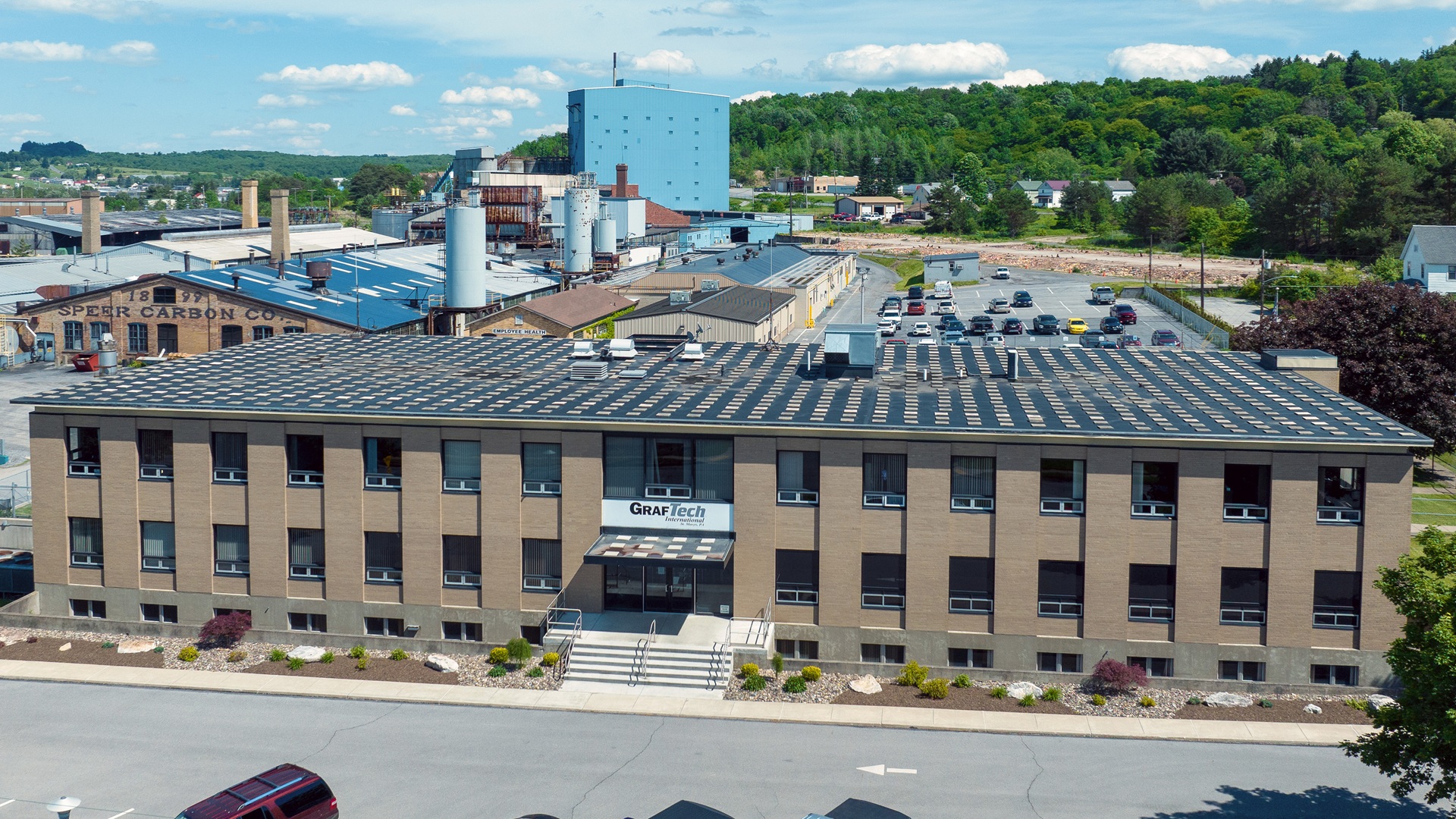
GrafTech restarts eight bake furnaces in Pennsylvania to supply Antora's heat batteries
GrafTech and Antora have signed a memorandum of understanding and say the definitive agreements still have to be negotiated. For a plant engineer pricing round-the-clock heat, the restarted furnaces are the firmest number on offer.
The Product Desk · Product desk
What happened
- GrafTech International and Antora Energy are teaming up to develop carbon-based materials for thermal batteries that store low-cost electricity as heat inside insulated blocks of solid carbon.
- New workers have been hired at the plant and about a dozen more are planned across plant operations, machining and maintenance.
- Antora said in May it had commissioned Project Big Stone in South Dakota, which is already delivering round-the-clock energy to the biofuel producer POET, and announced a $550 million Series C in July.
Compiled by The Product DeskSomething wrong?How this is made
Why it matters
- exposure GrafTech restarted furnaces and put people on payroll while the deal is still a memorandum of understanding, so the fixed cost at St. Marys sits with GrafTech until definitive agreements land.
- capability Building the storage medium from petroleum coke and coal tar pitch puts Antora's bill of materials in a byproduct market a procurement team can already benchmark, instead of a critical-minerals queue it cannot.
- decision A chemical plant or data center weighing thermal storage now has to ask how much of one Pennsylvania plant's bake capacity its delivery date depends on, and GrafTech has not put a figure on it.
- constraint With one commissioned site against five named target segments, a buyer outside biofuels has no reference plant with its own duty cycle to underwrite the schedule.
A buyer who has sat through a thermal storage pitch usually gets to two questions before the slides run out: where do the blocks come from, and how long is the wait. The first one now has an address. Eight bake furnaces at GrafTech's St. Marys plant in Pennsylvania have been restarted for the Antora work [2].
Antora says its factory-built modules can serve chemical plants, food producers, steelmakers, data centers and the grid [4]. The pitch names five segments; the operating record in the announcement has one entry [16]. That entry is Project Big Stone in South Dakota, which Antora said in May was already delivering round-the-clock energy to POET, a major US biofuel producer [12].
The industrial commitment is further along than the paperwork. GrafTech and Antora have signed a memorandum of understanding and intend to negotiate definitive agreements, which remain subject to negotiated terms and conditions [14]. The furnaces are already running, new workers are already hired, and about a dozen more are planned across plant operations, machining and maintenance [7]. Andrew Ponec, Antora's co-founder and CEO, said: "By partnering with GrafTech to source carbon-based materials from their St. Marys facility, Antora is strengthening our domestic supply chain" [13].
The materials are the part a procurement team can already benchmark. Antora's blocks and insulation are baked from lower-purity carbon feedstocks, including petroleum coke and coal tar pitch, in high-temperature furnaces [5]. That keeps the design out of the supply-constrained critical minerals many conventional batteries depend on [9]. It also moves the bottleneck to furnace hours. GrafTech is expected to use a significant portion of the bake furnace capacity at St. Marys for the collaboration, though neither company gave a figure [6].
For anyone budgeting industrial heat for next year, the first thing to price is what kind of commitment the component supply is. Restarted furnaces and hired staff are real capital; a memorandum of understanding is an intention to negotiate [2][14]. The second is a reference site running your duty cycle. A biofuel plant's heat demand is not a data center's, and Big Stone serves POET [12].
Antora's stored heat comes back out either as process heat or as electricity, so one unit can serve a thermal load and sell power [3]. The company also says the modules can be deployed without the multi-year construction timelines of some large energy projects [10]. The second site is where that claim gets tested. Antora raised a $550 million Series C in July [11].
For GrafTech the deal is another use for capacity it already owns. Timothy Flanagan, the company's CEO and president, said: "St. Marys has been an important part of GrafTech's manufacturing footprint since we acquired the facility in 2010, and we are proud to partner with Antora to leverage the facility and our nearly 140 years of experience in carbon and synthetic graphite-based solutions" [8].
What to watch
- Whether the definitive agreements get signed, and whether they name volumes, duration or price.
- Whether GrafTech says how much of the St. Marys bake capacity is committed to Antora.
- Whether Antora commissions a site serving data center load, giving that buyer a reference closer to its own duty cycle.