Science1 publisher2 min readPublished
Worms with damaged mitochondria need an ER calcium channel to live longer
Kris Burkewitz's lab finds an ER calcium channel is essential for a mitochondrial mutation to extend worm lifespan. It explains an old aging puzzle in one worm mutant, a long way from showing how metformin, an aging-drug candidate, works in people.
The Scientist · Science desk
What happened
- Some mitochondrial defects lengthen life instead of shortening it, a decades-old paradox in aging biology first discovered in the worm C. elegans.
- Earlier research had shown that the endoplasmic reticulum works closely with mitochondria and regulates them partly through calcium signals.
- Calcium released by the ER triggers remodeling of the actin cytoskeleton, which earlier work had shown can form restrictive cages around mitochondria.
- In the long-lived worms, stopping damaged mitochondrial networks from growing too large and interconnected was essential to adapting successfully.
Compiled by The ScientistSomething wrong?How this is made
Why it matters
- constraint Any therapy aimed at this pathway would have to reproduce a calcium signal whose timing and pattern the lab has not yet worked out, since its tools only switched signaling up or down in bulk.
- decision Metformin's anti-aging program gains a specific pathway to measure in treated animals, ER calcium and mitochondrial network size, though the worm data cannot yet count as support for the drug.
- exposure On the lab's reading, aging cells that lose calcium signaling also lose their restraint on damaged mitochondria, a vicious cycle it proposes as one route into neurodegenerative disease.
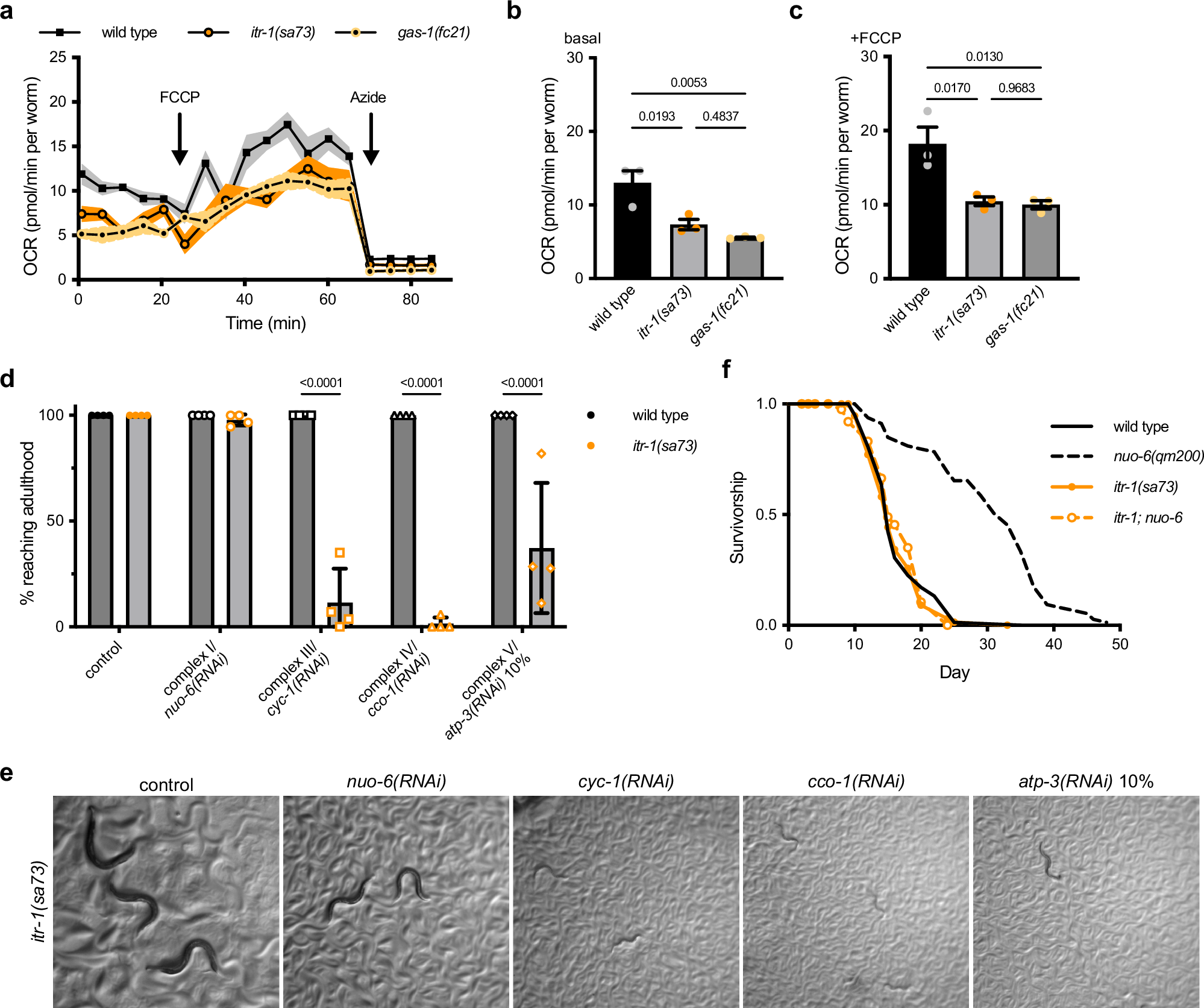
Calling the IP3 receptor essential is a claim about necessity in one mutant [8]. The long-lived worms depend on the channel for their extra lifespan. Whether extra ER calcium on its own would lengthen a normal worm's life is a separate experiment.
The lab went looking beyond the mitochondria by design [5]. "Much of the past research has focused on understanding how mitochondria themselves adapt to stress, but really the cell operates as a community of many different organelles," Burkewitz said [6].
That wider view bears on the question the field has left open: why mitochondrial inhibition helps in some settings and harms in others [4]. Mitochondria with defective energy pathways grow and expand to make up for their lost output [9]. Set beside the caging result, this points to a variable that could separate benefit from harm. It is whether a cell can stop that compensation from running too far [10]. The evidence comes from one mutation in one species, and Burkewitz described the wiring as incomplete. "We've identified new genetic links between ER calcium signaling, actin remodeling and the turnover dynamics of mitochondrial networks in these aging contexts, but there are many molecular details to fill in before we fully understand how these pathways are connected," he said [12].
The thing this doesn't tell you is the size of the effect. The phys.org article does not name the mutation, report how much longer the mutants lived, or say how many worms were followed. The group changed calcium signals with "simple genetic tools" of large effect, and Burkewitz sees the next step as working out how cells tune the timing and pattern of calcium release [13].
The metformin connection needs care. The drug is a mild mitochondrial inhibitor now being developed as a potential anti-aging drug [3], and the article says the lifespan effect of mitochondrial disturbance has been observed across evolution and even in humans [2]. The worm finding comes from a genetic mutation in C. elegans [8]. Metformin is a medicine approved for people with type 2 diabetes [3].
What to watch
- Whether the IP3 receptor requirement holds for other lifespan-extending mitochondrial mutations beyond the single one studied.
- Whether animals given metformin show the same ER calcium release and actin caging around their mitochondria.
- Whether the calcium-and-actin restraint appears in mammalian cells, including neurons where calcium and mitochondrial defects co-occur.