Invest1 publisher3 min readPublished
Korea's $200 billion investment track is now setting the pace of its submarine talks
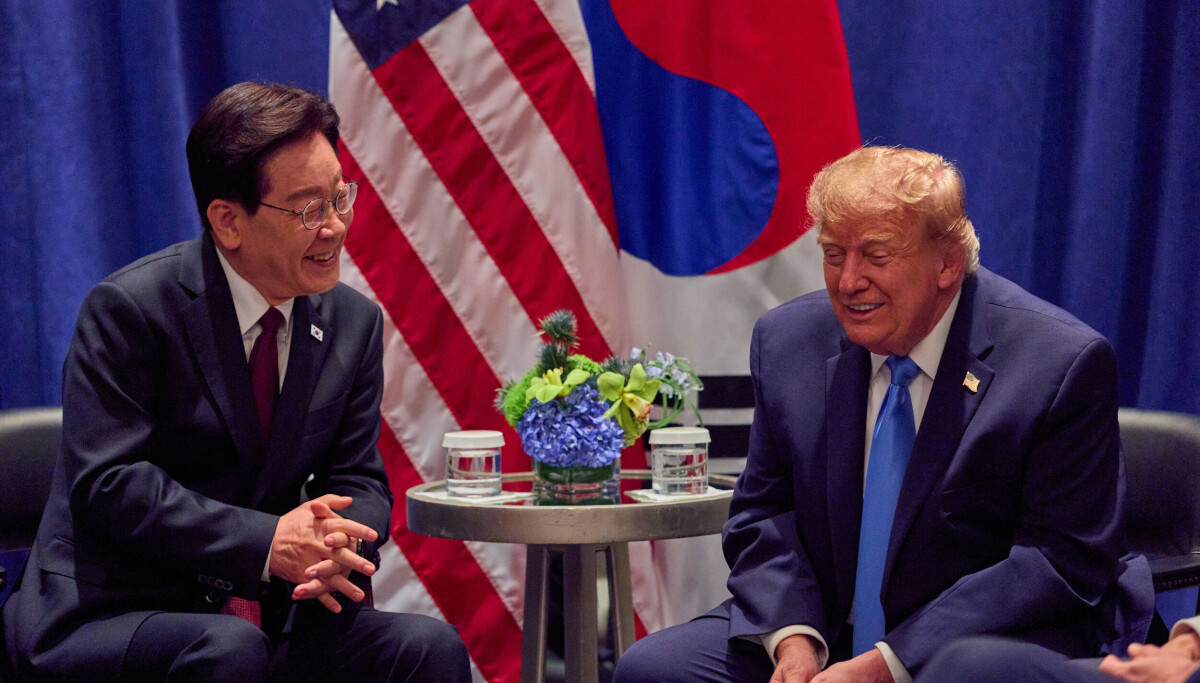
The third Lee-Trump summit came together only after strategic investment negotiations moved. Seoul's asks on submarine fuel and wartime command now run through next month's Security Consultative Meeting in Washington.
The Investor · Invest desk
What happened
- The New York meeting on the 22nd was the third Lee-Trump summit, following talks in Washington last August and at the APEC summit in Gyeongju in October.
- Progress in the deadlocked negotiations over Korea's strategic investment in the United States was cited as the key reason a summit that looked likely to fall through went ahead.
- Security issues that had stalled alongside those negotiations, among them wartime operational control, the submarine, the bilateral nuclear cooperation agreement and shipbuilding, are set to regain momentum.
- Seoul plans to finish the second-stage full operational capability assessment and win both defense ministers' approval before presenting a target year for the command transfer.
- Wi Sung-lac said Trump reaffirmed his willingness to hold talks with North Korea; the Presidential Office said the summit did not address whether specific contacts with Pyongyang were under way.
Compiled by The InvestorSomething wrong?How this is made
Why it matters
- constraint Seoul has tied its security agenda to the progress of the capital package, so a stall in the investment talks stalls the submarine and the command transfer with it.
- cost The defense spending Lee offered has to be written into a Korean budget, and money that goes to independent defense capability comes out of other line items. No figure came out of the summit.
- decision The two defense ministers now decide whether a transfer year exists, because the full operational capability assessment has to clear before one can be named.
- precedent If investment progress is what convenes a summit, Seoul's future asks on enrichment and shipbuilding will be answered at the pace it commits capital.
When the two governments agreed last year on $200 billion of Korean investment in the United States, they also discussed introducing a nuclear-powered submarine and widening Korea's authority over uranium enrichment and nuclear fuel reprocessing [9]. Unlike the money, the security talks moved slowly [10].
A senior Presidential Office official told reporters at the New York press center that Lee "reaffirmed a willingness to increase defense spending or take on greater responsibility for the defense of the Korean Peninsula in order to strengthen independent defense capabilities" [6]. Lee also "conveyed the view that, as an extension of that, he hoped discussions on a nuclear submarine could accelerate", the official said [7]. Wi Sung-lac is national security adviser at the Presidential Office. He said the two sides "confirmed a joint will to further deepen cooperation in areas including nuclear submarine fuel, enrichment and reprocessing, shipbuilding cooperation and the transfer of wartime operational control, and agreed to hold follow-up talks" [8].
Wi put the meeting at "about 30 minutes starting at 7:20 p.m." [4], held during a reception Trump was giving [5]. Wartime operational control, which Lee raised, took up a substantial portion of that [13], so the investment file, the submarine and shipbuilding shared what was left of half an hour [22]. "Our side explained the need for the transfer of operational control, and President Trump came to understand the issue much better," the senior official said [14]. The Sedaily report summarizes the evening as Lee raising operational control and Trump focusing on shipbuilding [24].
Lee's defense spending offer was described as a willingness and carried no figure; last year's $200 billion is still the only sum in the record [23]. For anyone holding Korean yards or pricing the fuel cycle, the next checkable item is the 58th Security Consultative Meeting in Washington next month [16].
In my view Washington has paid little so far: Korea conceded a direction on defense spending and received faster discussion. Two other readings survive the same evidence. The first is scheduling, since Lee was in New York for the General Assembly [1] and half an hour at someone else's reception produces follow-up talks. The second is that fuel, enrichment and reprocessing is the substantive item and the submarine is the presentational one. On that reading, what the two defense ministers sign next month counts for more than the "significant progress" the leaders welcomed in New York [12].
The capital-for-security reading fails if the Washington meeting ends with another round of follow-up talks and no transfer year. In that case Seoul will have spent its summit time on a promise to keep talking.
In the same day's keynote, Lee named the United States and China, along with the two Koreas, as parties concerned in discussions on a peace regime for the peninsula [20]. He also proposed a "coalition of constructive contributors" on energy supply chain instability stemming from the Strait of Hormuz and the Red Sea [21].
What to watch
- Whether expanded enrichment and reprocessing authority surfaces in a revised South Korea-U.S. nuclear cooperation agreement, the item Seoul has wanted since the $200 billion deal.
- Whether shipbuilding cooperation, the item Trump focused on, produces named yards, hulls or contract values.
- Whether any Washington-Pyongyang contact is confirmed, after the Presidential Office said the summit did not take up specific contacts.