Invest1 publisher3 min readPublished
Leaving OPEC would not lift a production target Venezuela is currently exempt from, so the interim government would be trading away a vote for nothing measurable, at the moment the White House says it controls the reserves.
The Investor · Invest desk

Compiled by The InvestorSomething wrong?How this is made
Reserves are a stock and production is a flow, and the distance between the two is where this transaction actually sits: more than 65 billion barrels claimed under US majority control [2], against incremental output that Amena Bakr, head of Middle East energy and OPEC+ research at Kpler, puts at perhaps 200,000 barrels a day [13][15]. Drain 65 billion barrels at 200,000 a day and the reservoir runs for 325,000 days, call it 890 years [2], which is another way of saying the headline figure is a balance-sheet item rather than a cash flow. It is also about 19 billion barrels more than the roughly 46 billion the US holds in its own proven reserves, a ratio of about 1.4 to one [3][1].
The cash flow is the smaller and more interesting number. Price 200,000 barrels a day at the $66 WTI level the Dallas Fed's most recent energy survey says US shale needs to drill a new well profitably [10], and you get about $13.2m a day, near $4.8bn a year gross, before a dollar of the rebuild [3]. That $66 is an American cost of supply, not a realization on heavy, high-sulfur Merey crude, which some US officials have floated as a Strategic Petroleum Reserve top-up and which Bakr says is not technically viable there, being better suited to specialized Gulf Coast refineries [12].
An exit is cheap in barrels precisely because the target does not bind, and Bakr reports no sign of Washington pressure to leave, in Venezuela's case or in the UAE's [6]; what she describes instead is an interim government aligning itself with US companies that would not want quota constraints on capital they are still considering [8].
The exit reads three ways: housekeeping ahead of a capex programme that Bakr says requires sustained investment over decades and multiple administrations [13]; a signal to other members; or a non-event, since there is no quota to escape. My read is the third, and the seat is free to keep, so surrendering it now is a concession priced at zero to whoever receives it, which is close to Bakr's own conclusion that remaining costs Venezuela little while leaving forfeits leverage without adding export revenue [14]. The stronger counter-argument is a timing one: an investor underwriting decades of drilling, gathering and export infrastructure is asking about the year the understanding lapses, not this one, and a Venezuela that recovers into a target it did not negotiate holds a liability rather than an asset. If OPEC's next declaration attaches a recovery threshold or an actual number to Venezuela, that counter-argument wins and mine loses.
The evidence does not show how Venezuelan oil revenue is being managed. Bakr's outlet notes the Trump administration has not been transparent on that point [16], so the majority-control claim cannot be reconciled against receipts. Until someone publishes where the money lands, 65 billion barrels is a claim and 200,000 a day is a forecast, and Caracas is being asked to trade a vote for both.
Ranked by verification strength, evidence, and original report placement.
Venezuela is one of OPEC's five founders, present when the organization was conceived in Baghdad in 1960 as a counterweight to the "Seven Sisters" Western oil majors.
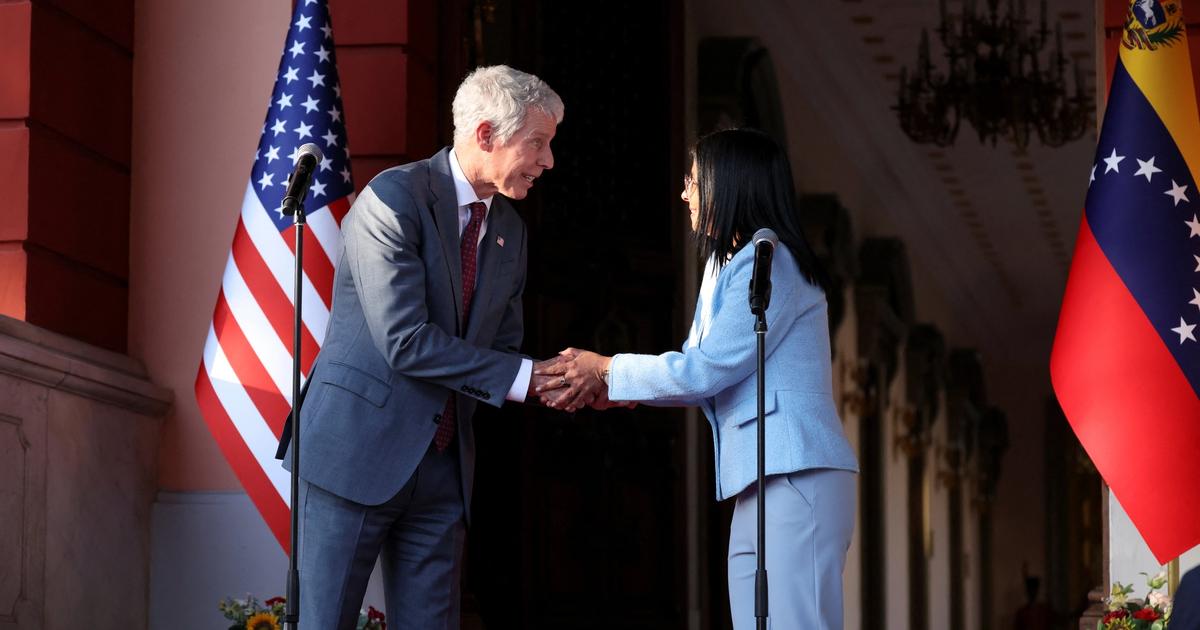
The White House announced what it called "the biggest oil deal in world history," claiming the agreement secured US majority control over more than 65 billion barrels of Venezuela's proven reserves.
More than 65 billion barrels would exceed the roughly 46 billion barrels of proven reserves held by the US itself.
US President Donald Trump removed Venezuelan President Nicolas Maduro, leaving the country with an interim government; Trump said the US will control the sale of Venezuelan oil, and a recent agreement grants Washington sweeping influence over access, production and exports.
Reports that Venezuela was considering leaving OPEC emerged just before the White House announced the deal.
Venezuela, along with Iran and Libya, is exempt from OPEC production targets because of sanctions or conflict that disrupted output, with an understanding that quotas will not apply until production has sufficiently recovered, so leaving in the near term removes no meaningful obstacle to increasing Venezuelan output today.
Follow any of these and your For You feed starts watching them — no settings page required.
Evidence-backed comparisons of source perspectives and observed adoption signals. Read the methodology
Which Builder, Operator, and Investor concerns the observed source mix emphasized—not a truth score.
Evidence, demonstrated adoption, hype gap, incentives, and confidence are assessed independently, each on its own current evidence. How these are measured.
One signed column, one outside number
All of this rests on a single analyst column. Bakr's OPEC+ beat makes her credible on the quota exemption for Venezuela, Iran and Libya, which is first-hand ground for her, but the piece cites exactly one figure to a named outside institution, the Dallas Fed's $66 breakeven, and paraphrases the White House announcement it argues against instead of quoting it. The 200,000 barrels a day our headline turns on is her estimate, hedged and unshown.
An announcement and reports, no barrels
What has actually occurred is a declaration and a set of reports. An interim government is in place, the deal has been announced, and Venezuela's OPEC exit remains at the stage of people saying it is being considered. No incremental barrel is attributed to the agreement yet, and Bakr's own timeline puts real volume behind decades of infrastructure spending spanning several US administrations.
White House superlative against 200,000 a day
The overstatement here belongs to the announcement, and the column exists to size it. "The biggest oil deal in world history" and majority control of 65 billion barrels stand against an increment of maybe 200,000 barrels a day, a rate at which those reserves would take about 890 years to lift, and against a crude grade the Strategic Petroleum Reserve cannot physically take. Bakr's side has a smaller stretch of its own: she tells Caracas what it should do while conceding no one has been observed pushing it either way.
An OPEC+ analyst defending the OPEC seat
Bakr runs Middle East energy and OPEC+ research at Kpler, which sells trade intelligence to people who need the group's decisions to mean something, and the conclusion she reaches is that Venezuela should keep its chair. Semafor discloses this properly, running the piece as her view with the Kpler affiliation attached. Cutting the other way: the column talks a very large number down rather than up, which is not the flattering posture for anyone selling access to Washington's deal.
Mechanics solid, headline numbers unchecked
The quota mechanics and the OPEC history are the sturdiest part of this, and they are enough to support the column's central point about an exit changing nothing near-term. The figures that make it travel are not: nobody outside the announcement has verified 65 billion barrels, and a Venezuelan departure is still hearsay about deliberations. The accountability question is no sturdier, resting on one former Treasury official's line in a notes section.
invest
Washington bids a century of tenure for Venezuelan fields now pumping 1.16 million barrels a day1 publisher
invest
Hormuz is neither open nor closed, and that is the position you have to price1 publisher
leadership
Hormuz Was Shut For Four Months And Nothing Broke. The Buffer That Did That Is Spent.1 publisher
invest
Aramco discounts Arab Light to its widest since June 2020 in a market Hormuz should have tightened1 publisher
Publishers with included, body-backed reporting in this cluster.
1 article · September 8, 2026