Invest1 publisher2 min readPublished
Microsoft's one-year capex increase equals Meta's entire 2025 build
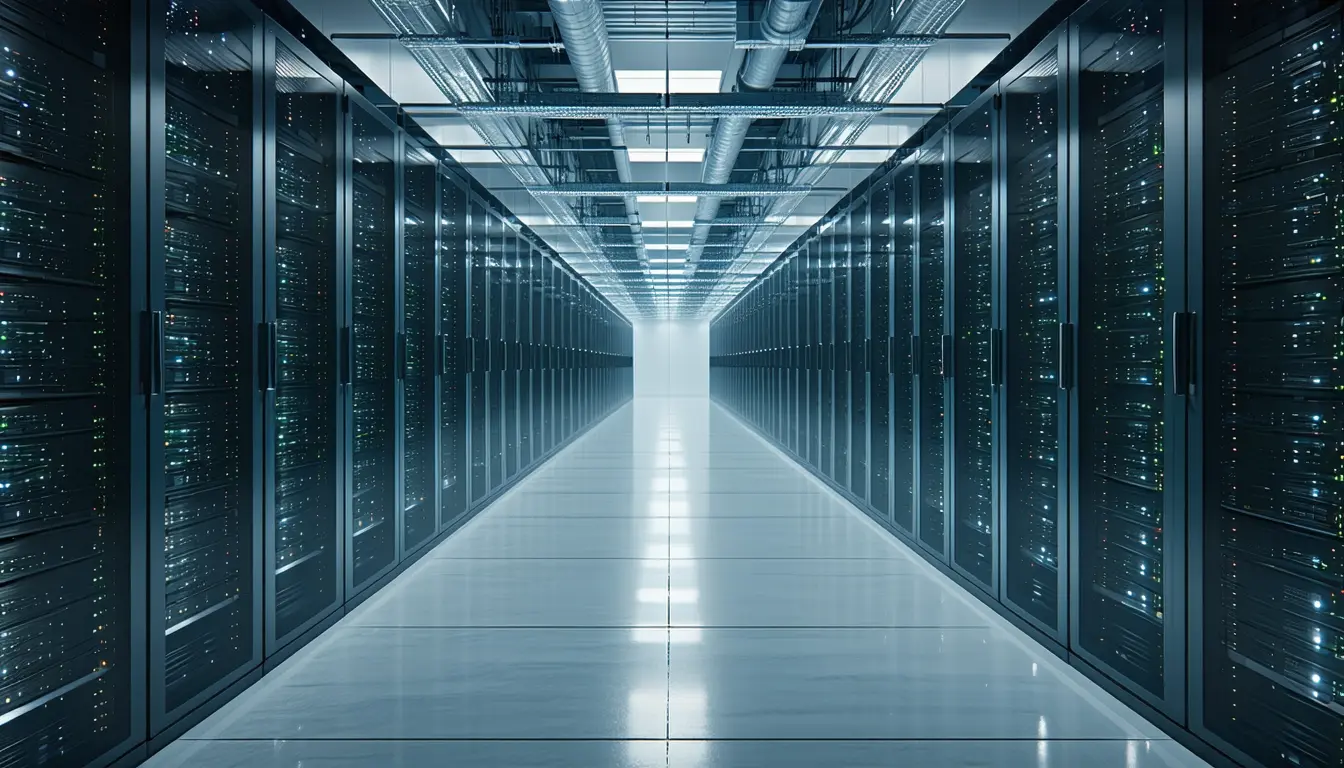
A column on en.sedaily.com puts four US hyperscalers at as much as $760 billion of capital spending this year, up from $412.5 billion between them in 2025. It takes the dot-com burst as evidence the hardware outlives the money.
The Investor · Invest desk
What happened
- Meta's latest guidance takes capital spending from $72 billion in 2025 to between $130 billion and $145 billion this year.
- Alphabet is projected to more than double its spending, from $91.5 billion to between $195 billion and $205 billion, while Amazon has lifted its own investment to $220 billion from $131 billion.
- The column totals this year's spending at as much as $760 billion, a figure it puts well above 1,000 trillion won.
- Its frame is the 1990s: the bubble burst in 2000 and astronomical sums evaporated, but the fiber-optic cables and telecommunications lines laid then carried Google, Amazon and Meta.
- For Korea the column prescribes industrial depth over capital size, concentrating on industry-specific business-to-business "K-vertical AI" in automobiles, semiconductors, biotechnology and Korean content.
Compiled by The InvestorSomething wrong?How this is made
Why it matters
- exposure Every dollar of the $760 billion is owed by four balance sheets, so a vendor selling into this build has four customers and no diversification beyond them.
- contradiction One camp in the column calls the spending indispensable to seize future dominance, the other says AI revenue is not keeping pace, and no revenue figure appears for any of the four to settle which is right.
- constraint The column calls AI infrastructure an electricity guzzler. On its own terms the limit on Korea's build is grid capacity and siting outside greater Seoul.
- precedent If 2000 repeats, the equity and debt behind the build take the loss and the capacity passes to whoever buys it cheap, as the companies built on 1990s fiber did.
Microsoft's step from $118 billion to $190 billion is a $72 billion increase in one year, and $72 billion is Meta's entire 2025 capital spending [6]. The comparison rests on data the investment platform moomoo released in July [6].
Add the 2025 figures for Meta, Microsoft, Alphabet and Amazon and the base is $412.5 billion [1]. Take the top of each company's range for this year and the total is $760 billion [2]; take the bottom of each and it is $735 billion [3]. The growth being asked of suppliers is 84 percent in twelve months at the top of guidance, 78 percent at the bottom [4][5]. The $25 billion between the two totals is Meta's $15 billion range plus Alphabet's $10 billion [7].
The column asks whether generative AI is "the prelude to a new civilization that will explosively expand human productivity" or a "dot-com bubble season two" created by excessive expectations [8]. It does not split this year's money between the four destinations it names, which are AI data centers, high-performance servers, graphics processing units and power infrastructure [5]. Whether the 1990s pattern transfers to a supplier depends on that split, and the column does not say how much of the $760 billion is shell [5]. A shell and a substation connection are still worth something to a second owner.
Every one of the four guidance figures sits above what the company spent in 2025, and the smallest increase in the set is Meta's $58 billion at the bottom of its range [8]. In my view the floor matters more than the ceiling here. The four have put $735 billion in writing [3]. That is $322.5 billion of net new spending over last year [5]. A supplier building to that number does not depend on where inside its range any one of them lands. What would break it is a guidance cut that takes any of the four back toward the $412.5 billion base [1], and the July data does not contain one [8].
Korea's side of this, in the column's account, is the K-Cloud project: domestic neural processing units applied to AI data centers and demonstration projects [12]. They are priced so small and mid-sized firms and startups can use them cheaply and reliably [12]. The column ties excessive dependence on specific foreign graphics processing units directly to technological sovereignty [13].
What to watch
- Whether Korea enacts the Distributed Energy Act tax and power preferences for data centers outside greater Seoul.
- Revenue disclosures from the four buyers that would let the capex-to-revenue gap be measured.
- Resale prices for used accelerators and data centre shells, the market test of which parts of this build hold value.