Science1 publisher2 min readPublished
Optical tweezers catch histone H1 bouncing off nucleosomes until a chaperone escorts it
Ohio State physicists found that the gene-silencing histone H1 slides along DNA but needs a chaperone to load onto nucleosomes. The single-molecule result adds a delivery step to the working model of how cells keep unused genes compacted.
The Scientist · Science desk
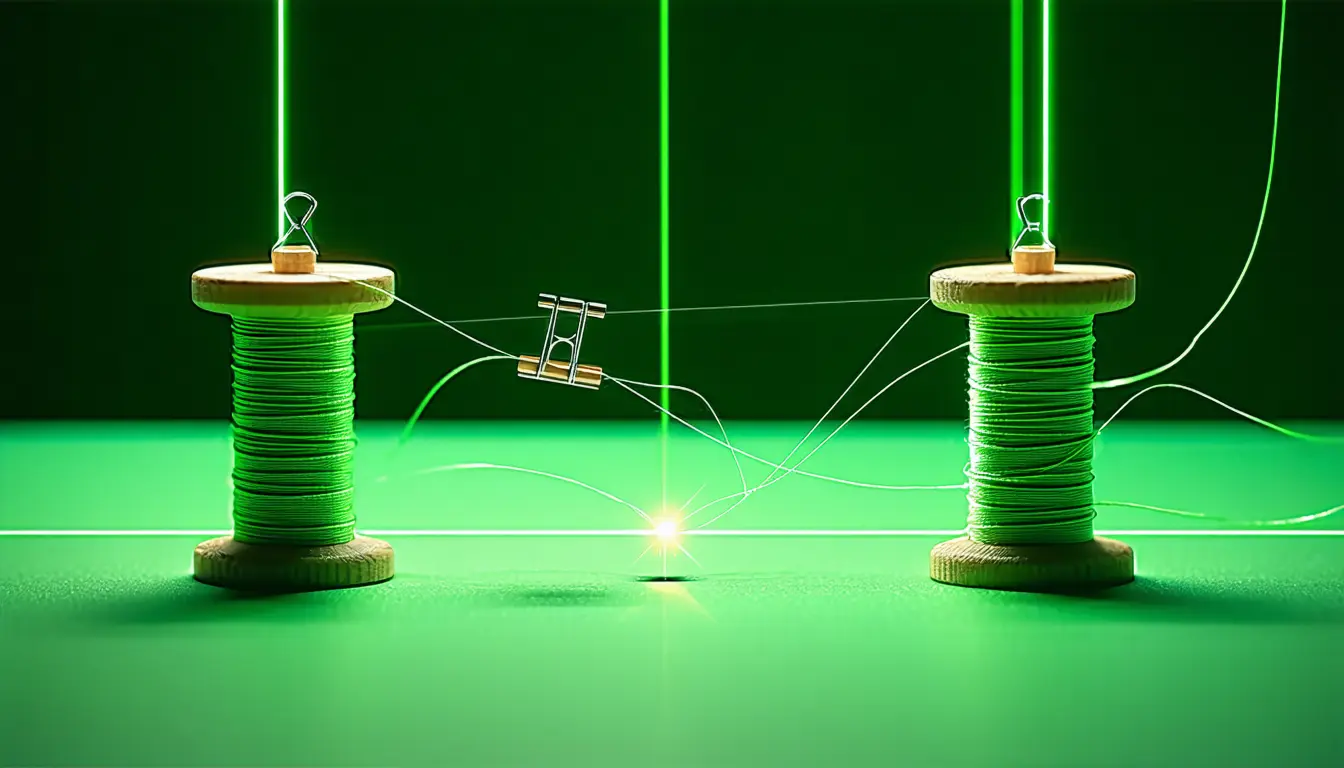
What happened
- The team used optical tweezers and single-molecule fluorescence to watch individual H1 proteins and nucleosomes before, during and after binding.
- On its own, H1 gripped the DNA sticking out of the nucleosome and kept moving, then bounced away from the nucleosome without loading onto it via the DNA.
- Suspecting a missing partner, the researchers added three known linker histone chaperone proteins to the same experiments.
- Ehsan Akbari led the work in physicist Michael Poirier's lab at Ohio State, and it was published on Sept. 22 in Molecular Cell.
Compiled by The ScientistSomething wrong?How this is made
Why it matters
- constraint If the chaperone dependence holds in nuclei, explaining why compacted regions carry more H1 means accounting for where chaperones work as well as how much H1 a cell makes.
- capability Cancer-linked H1 mutants can be tested stage by stage, so a failure in DNA binding, in sliding, or in the chaperone handoff can be told apart.
- precedent Linker histone chaperones become candidates for study as a control point in faulty gene silencing, a line of work Poirier ties to possible future therapies.
Poirier's group ran the experiment in two stages. First they put H1 alone with DNA and a nucleosome and followed each molecule [2]. Poirier's case for the method is that "you literally can watch in real time what individual molecules are doing," he said [13]. They saw H1 grip the DNA, keep moving, and then bounce away from the nucleosome instead of travelling along the DNA onto it [4]. "It moves around and doesn't even go to the nucleosome, which I didn't believe," Poirier said [5].
The second stage added three known linker histone chaperones to the same system [6]. That makes the H1-only runs the control: same DNA, same nucleosome, one new ingredient. "Amazingly, the chaperones did a bunch of things to regulate how H1 goes around and how it actually finds and gets onto nucleosomes," Poirier said [7].
Within this setup, the H1-only runs rule out the simplest loading route, in which H1 lands on linker DNA and slides into place by itself [4]. H1 does slide. Poirier said it "likes to slide along DNA", something the team "didn't even know" about, but "it needs a chaperone to help get onto the actual nucleosome" [8][10][9].
The release does not give binding rates, the number of molecules tracked, or what each of the three chaperones contributed, and it does not describe any experiment inside a cell [6]. Its own word for H1 on its own is that it "struggles" to bind the nucleosome [3]. That points to a difference in how readily loading happens in an optical-tweezer assay. It does not say H1 alone never loads.
H1's job is to help compact chromatin, keeping DNA that holds unused genes wrapped up and unavailable for expression [1]. Poirier said "regions that are going to be compacted are loaded with a lot of H1, while regions that are more open are going to have less H1" [11]. I think the working model does need a delivery step, on one condition. If H1 depends on chaperones to reach nucleosomes inside the nucleus the way it did here, then where H1 builds up would depend on where chaperones are active, and not just on how much H1 the cell makes.
H1 is linked to cancer when it is mutated [14]. According to the release, the work "doesn't tell the entire H1 story", but seeing the process step by step gives hints about where it could go wrong [15]. A mutant H1 can now be checked at each stage the assay separates: binding the DNA arms, sliding along DNA, and the chaperone-assisted move onto the nucleosome [3][8][9].
What to watch
- Whether H1 shows the same dependence on chaperones when loading is measured in living cells or nuclear extracts.
- Which of the three chaperones drives loading, and by how much, once the Molecular Cell paper's rates and molecule counts are examined.
- Results from Poirier's lab on cancer-linked H1 mutations, and at which step of loading they fail.