Science1 publisher2 min readPublished
Hayabusa2's altimeter ranged an asteroid twice during a 5.3-kilometer-a-second flyby
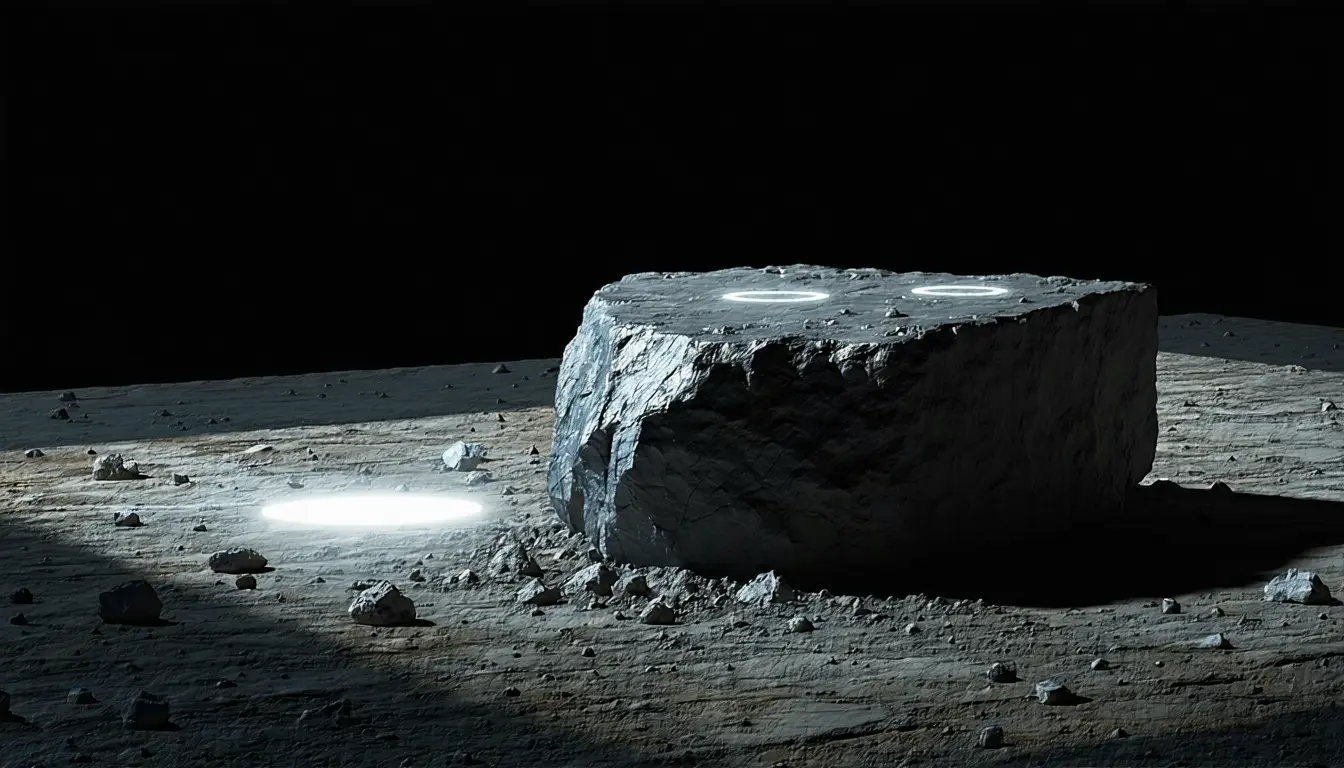
The two returns from Torifune are the first laser ranging of an asteroid. The ranges, footprints and timings JAXA has published point to more than one approach geometry, and the team is still locating the spots the beam hit.
The Scientist · Science desk
What happened
- JAXA fired Hayabusa2's LALT laser altimeter during a July 5 flyby of asteroid Torifune and got a return, which the mission describes as a first for space agencies.
- Hayabusa2 was moving at 5.3 kilometers per second, about 18,000 kilometers an hour, and the beam had to be laid on a small target from that platform.
- Getting the shots off took precise attitude and trajectory control plus instrument settings chosen so the detector would not register background noise.
- Torifune is the first exploration target of Hayabusa2's extended mission.
Compiled by The ScientistSomething wrong?How this is made
Why it matters
- capability A spacecraft that cannot stop at a target can still come away with an absolute distance to it. That single high-speed pass puts a measured scale on the images.
- constraint One pass of this kind returns distances to two patches a few tens of meters wide, so any mission wanting a shape model or bulk properties still has to buy repeat encounters or a rendezvous.
- precedent Ranging combined with tracking tightens orbit predictions for objects on collision watch, so planners of future near-Earth asteroid flybys have a reason to spend scarce pointing time on a one-second shot.
Two of the published numbers check each other. The beam covered a patch about 30 meters across on one shot and about 23 meters on the other, both tiny portions of the asteroid's surface [5]. Divided by the ranges JAXA gives, each footprint implies a beam divergence near 1.5 milliradians [1].
The timings are harder to square with the ranges. One second at 5.3 kilometers per second is 5.3 kilometers, close to the 5-kilometer difference between the two shots [2]. Apply the same speed to the reported 56.5 seconds before the flyby and Hayabusa2 should have been roughly 300 kilometers from Torifune, not 20 [4]. The pairing as printed runs the other way as well: the earlier shot, 57.5 seconds out, is listed at 15 kilometers and the later one at 20, so the range would have grown as the encounter closed [3].
A range measurement gives scale. In space there are no reference objects, which makes foreground and background hard to tell apart, and a laser range puts a size on the object in a spacecraft's images [10]. Collect ranges at several times, combine them with tracking of the spacecraft itself, and the body's position and trajectory come out of it, along with better orbital predictions [11].
LALT was designed to do more than measure distance. Asteroid density and porosity, surface reflectance and the presence of levitating dust particles are all in its brief, and it grew out of the LIDAR altimeter JAXA flew on the Kaguya lunar orbiter [7][6]. What JAXA has published from July 5 is the ranging itself. It has not released density or dust figures for Torifune [5].
LALT is a veteran of this mission. It supported Hayabusa2's navigation and collected a large body of surface topography data at Ryugu [8]. In the mission's account of the flyby, the successful test shows that scientists can gather information on celestial objects while a spacecraft is traveling at high velocity [13].
What to watch
- The surface locations JAXA derives for the two spots: how far apart they sit sets how much of Torifune this single pass sampled.
- Whether the return intensities are published as a surface reflectance figure, one of LALT's stated design capabilities.
- Whether the extended mission yields enough ranging epochs on Torifune to combine with tracking data for an orbit solution.