Invest1 publisher3 min readPublished
An AI assistant reversed Georgia's ballot shuffling four years after researchers flagged the flaw
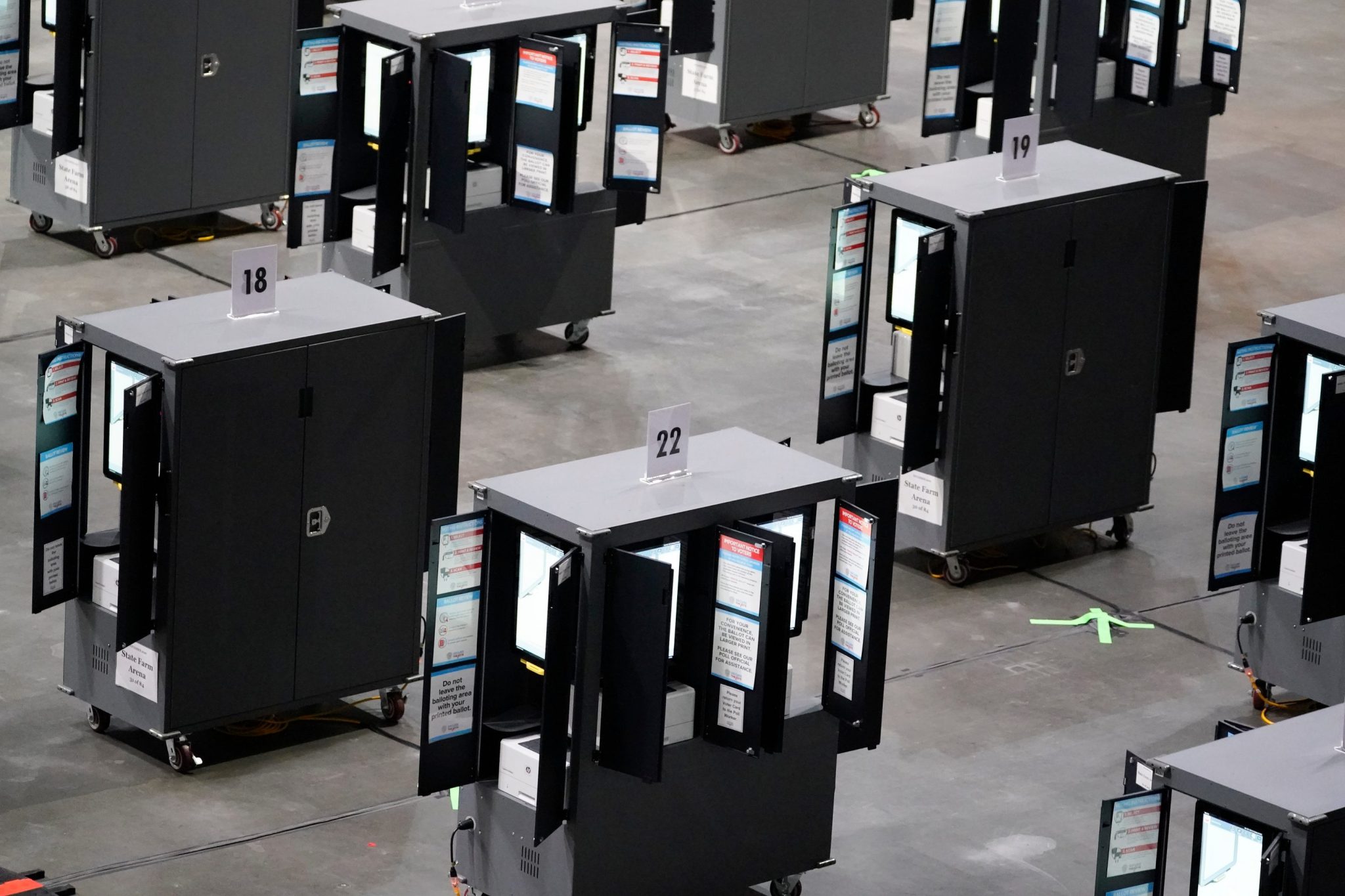
Princeton's Max Springer says a publicly available AI assistant unshuffled Georgia's May primary ballot records and then told him which public files it needed to attach names to them. The flaw was documented in 2022.
The Investor · Invest desk
What happened
- Researchers who found the flaw reported in 2022 that Georgia's randomized cast-vote records and ballot images can be put back into the order in which the ballots were cast.
- Princeton researcher Max Springer, who was not on that team, said he gave a publicly available AI assistant the research and it reversed the shuffling of electronic ballot records from Georgia's May primary.
- Georgia officials have been criticized for not fixing the flaw before the November elections, while the state says it has taken steps to address the potential harm.
Compiled by The InvestorSomething wrong?How this is made
Why it matters
- exposure Voters whose ballots can be reconstructed become reachable by employers, family members, political organizations or officials seeking to coerce a vote, and campaigns gain a data set that a records request can supply.
- constraint Georgia's open records law is now part of its security posture: states that refuse to release the underlying files deny the exploit its inputs, so transparency and secrecy pull against each other in a way patching alone does not settle.
- decision State officials have to choose in the weeks before November between applying the fix others have applied and defending the unspecified steps they say they have already taken.
- precedent Any risk accepted on the grounds that exploiting it needed a specialist has to be weighed again when a commercial assistant supplies the specialist's work, and other jurisdictions run the same equipment.
Every file in Springer's chain is one Georgia hands out. He used the early voting list for the counties he examined and the cast-vote record file, which he says can be obtained through a public records request, and where ambiguity remained he added the ballot scanners' public audit log and precinct check-in records [8][9]. Four record sets in total [20]. The assistant produced "buckets of ballots and potential voters," he wrote in a blog post [8]. "AI coding tools are essentially supercharging laymen people to exploit vulnerabilities," Springer said in an interview [10].
Georgia is the only place the equipment runs statewide, and it is a presidential battleground with one of the most closely watched Senate races this year [12]. Many jurisdictions using the same machines, made by Dominion Voting Systems and since sold and renamed Liberty Vote, applied a software update, and some states do not allow the public release of the records needed to exploit the flaw, said Mark Lindeman of Verified Voting [11]. Lindeman said the statewide footprint combined with Georgia's open records law creates a "perfect storm" [12]. "It's really embarrassing that this is still a possibility," Lindeman said [13].
The flaw was written up in 2022 [5]. Georgia goes into a November election roughly four years later with advocates saying officials failed to fix it and officials saying they have taken steps to address the potential harm [19][14].
Gabriel Sterling, special projects manager in the secretary of state's office, answered on relative cost: it would be easier to use mail ballots if vote-buying or coercion was the goal, and it would likely be cheaper for campaigns to increase outreach to voters who fit a certain profile [17]. On coercion that may hold. The guarantee, though, is written in absolute terms: state law requires voting machines to "permit voting in absolute secrecy so that no person can see or know any other elector's votes" [4]. Fortune reports that violations of ballot secrecy could create an opening for legal challenges [3].
Whatever the state has done may be enough to break the match on general-election files [14]. And Springer's test ran on a May primary [7], where turnout is lower: a general election puts more voters in each bucket, while a longer ballot gives more races by which to tell them apart.
What has changed here is the probability of exploitation. The flaw cannot change a vote [2], and the population able to run this chain now includes anyone who can file a records request and paste the files into an assistant [8][10]. The counter-case is Sterling's, and it is a real one: if every use of the flaw has a cheaper substitute, cheap skill leaves the odds that anyone bothers where they were [17]. J. Alex Halderman, the University of Michigan voting technology specialist who was part of the team that exposed the flaw, said it is "a bit of a wake-up call because it illustrates how much more easily vulnerabilities can be exploited now that AI can do all of the technical work for you" [6].
What to watch
- Whether Georgia applies the Liberty Vote software update before November, or specifies the steps it says it has already taken.
- Any change in how Georgia handles records requests for cast-vote record files and scanner audit logs.
- A legal challenge invoking the state constitution's secret ballot clause against a November result.