Science1 publisher3 min readPublished
El Niño pushes eastern Pacific hurricanes past a typical season's total by September
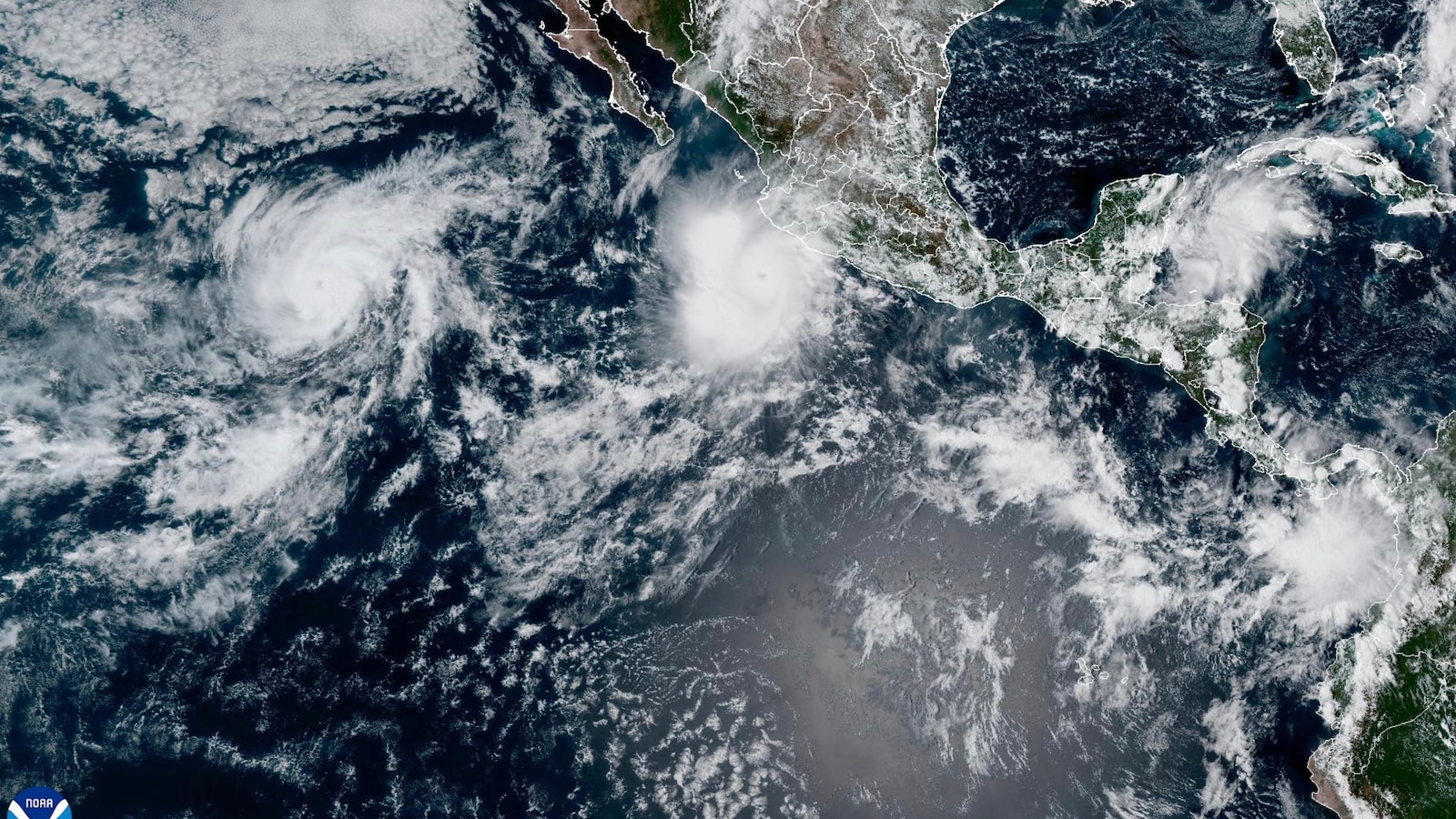
Eastern Pacific hurricanes have outnumbered a typical full season by September as an El Niño that may prove the strongest on record builds. Past strong El Niño seasons show that where the storms track, more than how many form, decides the death toll on land.
The Scientist · Science desk
What happened
- El Niño conditions that emerged in June have warmed Pacific waters above normal, and tropical storms have formed in rapid succession in recent weeks.
- NOAA's lead hurricane season forecaster says the eastern and central Pacific have both seen four more tropical storms than normal to date, with over two months left.
- Three Pacific hurricanes have reached Category 5 this year, tying a record set in 2002, also an El Niño year.
- Hurricane Polo drenched Mexico's Pacific coast this week while swinging between Category 4 and Category 5 strength.
- Hurricane Nolo strengthened Thursday night and could drop rain measured in feet on Hawaii, the third hurricane to threaten the islands in about a month.
Compiled by The ScientistSomething wrong?How this is made
Why it matters
- constraint Coastal planners in Mexico have to judge each storm by its forecast track, because strong El Niño seasons have produced both harmless open-ocean major hurricanes and deadly landfalls.
- exposure Any losses from Nolo would pile onto repair bills from August and September, leaving Hawaii's recovery budgets to cover three hurricanes in one season.
- decision Emergency plans on Mexico's Pacific coast and in Hawaii need to stay active until the Nov. 30 close, since the El Niño behind this season is expected to keep strengthening toward a winter peak.
The only baseline the reporting gives is 15 named storms, the 1991-2020 average for an eastern Pacific season that runs from May 15 to Nov. 30 [5]. This year's running total was not published, so the comparison with a typical season cannot be checked against a count [3]. The comparison also sets a hurricane tally against a named-storm average [3][5]. On passing the yearly average as early as September, Matthew Rosencrans of NOAA's National Weather Service said, "That's a different story." [6]
Matching the eastern Pacific record would take ten named storms above that average. The record year, 1992, had 25 [8][9]. The central Pacific record is 14, set in 2015 [8].
How strong the El Niño gets is still a forecast. "It's ramping up to be perhaps the strongest El Niño on record," University of Miami hurricane expert Brian McNoldy said [2]. During an El Niño, the low-level winds that blow east to west across the Pacific weaken or reverse [21]. The same pattern holds back hurricanes in the Atlantic, which has been almost silent this year [20].
How many storms form says little about who gets hurt. In 2015 the eastern Pacific had nine major hurricanes and no reported deaths. Forecasters said El Niño made those storms form farther west and track westward, so they stayed over open ocean [10]. In 1997, during another strong El Niño, Hurricane Pauline killed hundreds of people on Mexico's Pacific coast [11].
Hawaii's record follows a pattern of its own. Two hurricanes came within 200 miles of the islands in 1957, and it did not happen again until 2014. It happened again in 2016 and 2018, and three are predicted this year [16]. Thirteen seasons is a small sample. Still, close approaches went from one season between 1957 and 2013 to four in the 13 seasons since, counting 2026 [17][18].
Hawaii has already taken heavy damage this year. Lala in August and Lowell in early September destroyed or damaged more than 510 homes and did $168 million in damage to public infrastructure [13]. Lala alone did $21.5 million in damage to 38 schools [14]. The March flooding was the state's worst in two decades, and a magnitude-6.0 earthquake followed in May. Gov. Josh Green said this year has been "unlike anything I can recall" [22].
McNoldy expects the El Niño to peak during the coming winter and to last into 2027. "It doesn't turn off right away," he said [19]. The evidence supports planning on Mexico's coast and in Hawaii for an active end to a season that runs until Nov. 30, and no more than that. A winter peak comes after the season closes [5][19], and in 2015 a strong El Niño kept its major hurricanes away from land [10].
What to watch
- Nolo's track and rainfall over Hawaii, and whether damage estimates grow beyond the 510 homes and $168 million already counted from Lala and Lowell.
- The eastern Pacific named-storm count through Nov. 30, set against the 1992 record of 25.
- Measurements of El Niño strength at its expected winter peak, the test of McNoldy's forecast that it may be the strongest on record.