Invest1 publisher3 min readPublished
Inspiren raises $70 million on outcome data supplied by the operators that bought it
NewView Capital led the Series C at a valuation above $500 million and lifted total funding to $225 million, with the falls and length-of-stay evidence behind that price coming from Inspiren's own customers.
The Investor · Invest desk
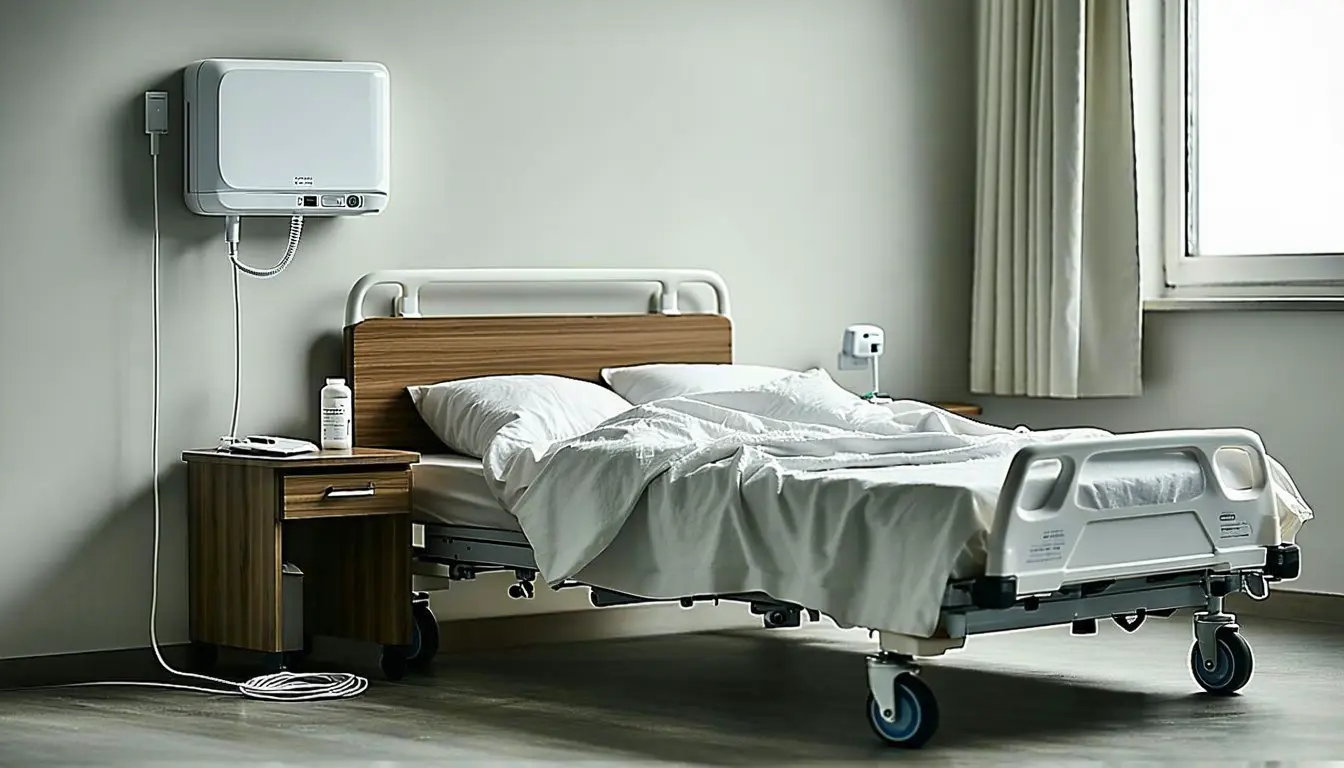
What happened
- NewView Capital led the Series C, with existing backers including Insight Partners, Primary Venture Partners, Scale Venture Partners, Vintage Investment Partners, Lightbank, Avenir Growth Capital, Story Ventures and Camber Creek taking part.
- Total funding for the company now stands at $225 million, and Inspiren says this is both its largest financing round and its highest valuation so far.
- A 10-month study at Solera Senior Living's Lumina Las Vegas community showed a 48% reduction in falls, a 54% decrease in hospitalizations and a 50% improvement in staff response times, according to Inspiren.
- Last month the company added two-way voice communication and alert claiming to its eCall system, rolling the features out in stages across communities already using its technology.
- The new capital is earmarked for go-to-market expansion, development of the hardware ecosystem and further work on the AI platform that flags resident events.
Compiled by The InvestorSomething wrong?How this is made
Why it matters
- decision An operator weighing the subscription can score the return as occupancy: 34% more billed months at the same monthly rate is a revenue case that does not require cutting staff hours to pencil out.
- constraint With no revenue figure on the record, anyone outside the syndicate has to judge the valuation on customer-reported clinical outcomes and on capital paid in.
- exposure The Aegis figure describes residents who chose the technology, so if selection explains part of the 34%, the operators renewing next year are the ones who will discover it in their own occupancy data.
- precedent Measuring footprint through owners such as AEW and Sabra Healthcare REIT makes the landlord a distribution channel for clinical software, and the next vendor in this category can pitch the capital owner before the operator.
Senior living bills by the month. Aegis Living reported that residents who opted into Inspiren's technology had stays 34% longer, with 22% fewer falls and 24% fewer injuries [5]. Only the first of those figures reaches an operator's revenue line: at a constant monthly rate, a stay running 34% longer is 34% more billed months [24]. It is also an opt-in cohort, and residents who accept ambient monitoring [4] are not obviously the same population as those who decline.
Now the price. Seventy million dollars against a valuation above $500 million is about 14% of the company if that number is post-money [19]. Cumulative funding of $225 million means investors have paid in roughly 45 cents for every dollar of the headline value [21], and $155 million of that went in before this round [20]. Inspiren did not disclose revenue or the number of communities on the platform [18].
Clearwater Living reported a 63% decline in falls resulting in injury during its first three months of deployment, alongside 73% fewer post-fall emergency room visits [6]. Across the three operators cited, the reported fall reduction runs from 22% to 63%, depending on whether the count is every fall or only the ones that caused an injury [22].
Inspiren said much of the activity involving residents happens inside private rooms without staff present [16]. "We are already making that unthinkable in the communities we serve, and this funding puts it within reach for many more," said Michael Wang, the founder and chief clinical officer [8]. Nick Bunick, a partner at NewView Capital, said "Inspiren's impact is apparent across the board" [9], and said the technology could improve both clinical outcomes and the economics of senior living communities [10].
Reach is described through owners: communities representing more than 80% of the largest senior housing investors, AEW and Sabra Healthcare REIT among them [11]. That counts landlords, not beds. Named operator customers include Arrow Senior Living, Ascent Living Communities, Heritage Communities, Thrive Senior Living and Wellpointe [12]. Hardware is the expensive item on the spending list [13], because every added room carries a device cost and an installation visit.
The occupancy argument is the one I expect to carry the next contract cycle. A 34% longer stay compounds rent every month [5][24]; a fall that never happens saves an operator liability and staff time without adding a line to the invoice. Two things would break that. If the opt-in gap at Aegis is partly selection, the larger owners will find it at renewal and reprice accordingly, and the demand backdrop Inspiren cites, an expanding population aged 85 and older with more clinically complex entrants [15], is a tailwind every vendor in the category already claims. If owner-level coverage [11] never converts into device count per community, then a valuation above $500 million [1] has been paid for access the company has not yet billed [18].
What to watch
- Whether the next raise or a customer disclosure puts revenue or a community count on the record, which is what would let the $500 million-plus be tested against a multiple.
- Renewal decisions at Aegis Living and Clearwater Living, and whether the length-of-stay effect survives outside the opt-in cohort.
- How the hardware ecosystem spending shows up: per-room device pricing charged to operators, or margin absorbed by Inspiren.