Product1 distinct publisher3 min readPublished
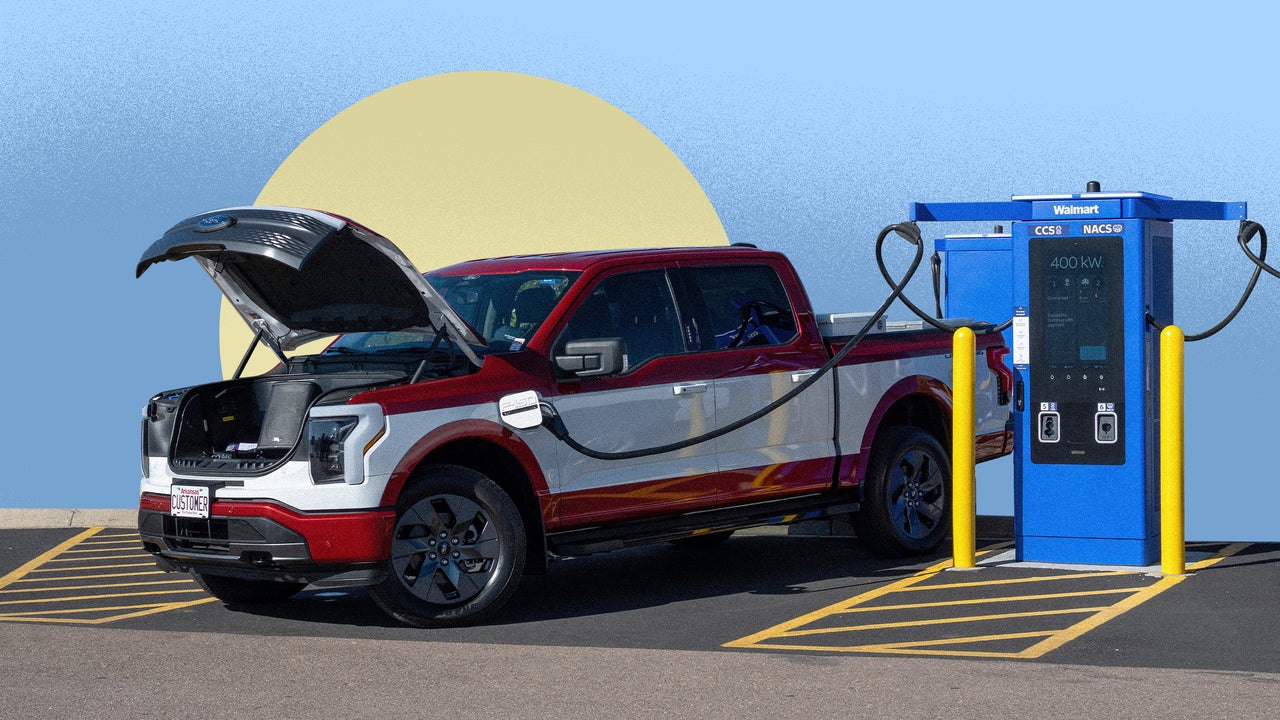
Roughly a year after installing its first branded charger, Walmart runs 838 ports at 100 stores with another 100 sites in build. It owns the hardware so that keeping the things working is its own job.
The Product Desk · Product desk

Compiled by The Product DeskSomething wrong?How this is made
When a pedestal in a Walmart parking lot goes dark, drivers blame Walmart, not whatever logo sits on the box. That is the entire ownership argument, and Shayne Wahlmeier, the senior vice president of Walmart Energy, says it plainly: the retailer wanted its own equipment so it could keep the chargers maintained and in working order [6]. Any team hosting somebody else's feature inside its own surface carries that same exposure, and usually settles for a promise instead of the keys.
The arithmetic is worth doing before the strategy talk. Divide 838 ports by 100 stores and Walmart is averaging about 8.4 ports per site [19]. Those 100 stores are roughly 2.2% of the more than 4,600 US Walmart stores [20], and the 838 ports are about 0.3% of the 250,000-plus charging ports the country already has [21]. Fast Company reports Walmart grew faster last month than any network other than Tesla's [3], which says as much about how small everyone else's monthly additions are as it does about Walmart's coverage. The forward number is the one that bites: the retailer says thousands of locations by 2030 [4], and at current density 2,000 sites would be around 16,800 ports [22].
Drivers do not shop for a charging brand, because as Loren McDonald of Chargeonomics puts it, most networks are unknown names to Americans [14]. They stop where they were already going, at a price that does not surprise them. That is what Walmart is selling when Wahlmeier says charging should be affordable and consistent and not change "just because you showed up on a holiday weekend" [7]. Then add the geography: about 90% of Americans live within 10 minutes of a Walmart, and the stores sit next to most major highways [5].
Walmart's retail case is that a session runs about 30 minutes, the chargers sit a short walk from the door, and most people who charge also shop [10]. That measures time spent, not money spent. The figure that would settle it is incremental basket size and repeat visits measured against a matched non-charging trip, and no such number appears in the reporting [25]. Walmart's own siting method concedes the uncertainty: Wahlmeier describes demand data plus store associate feedback as as much an art as a science [16].
So, the forcing function for anyone weighing own versus lease on an amenity that lives inside their product comes down to two questions: does the failure get attributed to you, and can you measure a lift in the business you actually run? If both answers are yes, you own the hardware, and you accept that you have signed up for a vendor roadmap and a payments integration you never wanted, which is why Walmart's 2023 announcement took time to become a build while it settled hardware vendors and software [15]. If attribution is yes but the lift is unmeasurable, keep the partner and buy an uptime guarantee with money attached, because what you need is reliability, not upside. If the lift is yes and attribution is no, partner and take the revenue share. If neither applies, it is a parking lot, and you leave it be.
Walmart is roughly a year past its first branded charger [1] and adding sites every week [24]. Its answer to those two questions was to buy the pedestals.
Ranked by verification strength, evidence, and original report placement.
Walmart installed its first company-branded EV charger last year.
Walmart has 838 charging ports in place at 100 stores, with construction under way at 100 other sites.
By 2030 Walmart has said it plans a charging network extending to thousands of locations.
Roughly 90% of Americans live within 10 minutes of a Walmart store, and the stores are adjacent to most major highways.
Walmart had third-party charging stations in place at many stores but wanted its own equipment so it could control the chargers, keeping them well-maintained and in working order, and so charging would feel like part of the shopping experience; Shayne Wahlmeier is senior vice president of Walmart Energy.
Wahlmeier: "We want our charging to be affordable and consistent and easy to understand. So not something where price changes just because you showed up on a holiday weekend."
Distinct publishers with included, body-backed reporting in this cluster.
1 article · August 31, 2026
Follow any of these and your For You feed starts watching them — no settings page required.
invest
Tariff refunds are landing, and where the cash stops tells you who has pricing power1 distinct publisher
invest
Three Retail Prints Are This Week's Entire Consumer Read2 distinct publishers
invest
The July retail miss is a Prime Day artifact, not a consumer crack1 distinct publisher
invest
The trade-down trade gets marked to market: Walmart and Target report this week1 distinct publisher
Evidence-backed comparisons of source perspectives and observed adoption signals. Read the methodology
Which Builder, Operator, and Investor concerns the observed source mix emphasized—not a truth score.
Evidence, demonstrated adoption, hype gap, incentives, and confidence are assessed independently, each on its own current evidence. How these are measured.
One outlet, one insider, counts unverified
Every hard number here — 838 ports, 100 stores, 100 more in build, 30-minute sessions, weekly additions — comes from Walmart via a single Fast Company interview with its energy SVP. The two outside voices, Paren and Chargeonomics, are quoted on why the strategy makes sense, not on whether the counts are right, and the one claim that would be checkable against a tracker, last month's growth ranking, arrives with no tracker named.
Real steel in the ground, tiny share
This is not a pilot deck: 838 ports are energised, 100 more sites are being built, and the site list reaches Checotah, Oklahoma as well as Southern California. It is also 2.2% of Walmart's US stores and about 0.3% of the country's charging ports, with no utilization or session-volume figure to show anyone is plugging in. Deployment is genuine and early in equal measure.
Ambition running ahead of the meter
The gap is modest and specific. Walmart's whole argument for owning the chargers is that it will keep them working, yet not one reliability number appears; the network is presented as second only to Tesla in growth while holding 0.3% of national ports; and 'thousands of locations by 2030' would mean something like 16,800 ports at today's density, a build nobody has priced in this reporting. Nothing stated is implausible, it is just described in language the disclosed data cannot yet reach.
Sourced almost entirely from people who sell charging
The narrator is Walmart's own energy executive describing a program Walmart wants shoppers to try; the corroboration comes from a charging data analytics firm, a charging consultancy and a charging software vendor, all of whom benefit from the story that charging is becoming ordinary retail infrastructure. That does not make the facts wrong, but no utility, competing network, regulator or customer appears to push back.
Clear story, one witness
We can be reasonably sure what Walmart says it is doing and how far along it says it is, because the account is detailed, on the record and internally consistent. We cannot be sure of much beyond that: with a single publisher and no independent measurement of ports, uptime or usage, a correction to any headline number would have nothing to collide with.