Invest1 publisher3 min readPublished
ARIA is paying 18 teams £70M to keep 300 watts aloft above Britain for a week
ARIA's Enduring Atmospheric Platforms budget has gone from a £50M estimate in December 2025 to £70M across 18 teams, and the milestone it buys is a week of station-keeping at 300 watts, beyond what high-altitude aircraft have managed so far.
The Investor · Invest desk
What happened
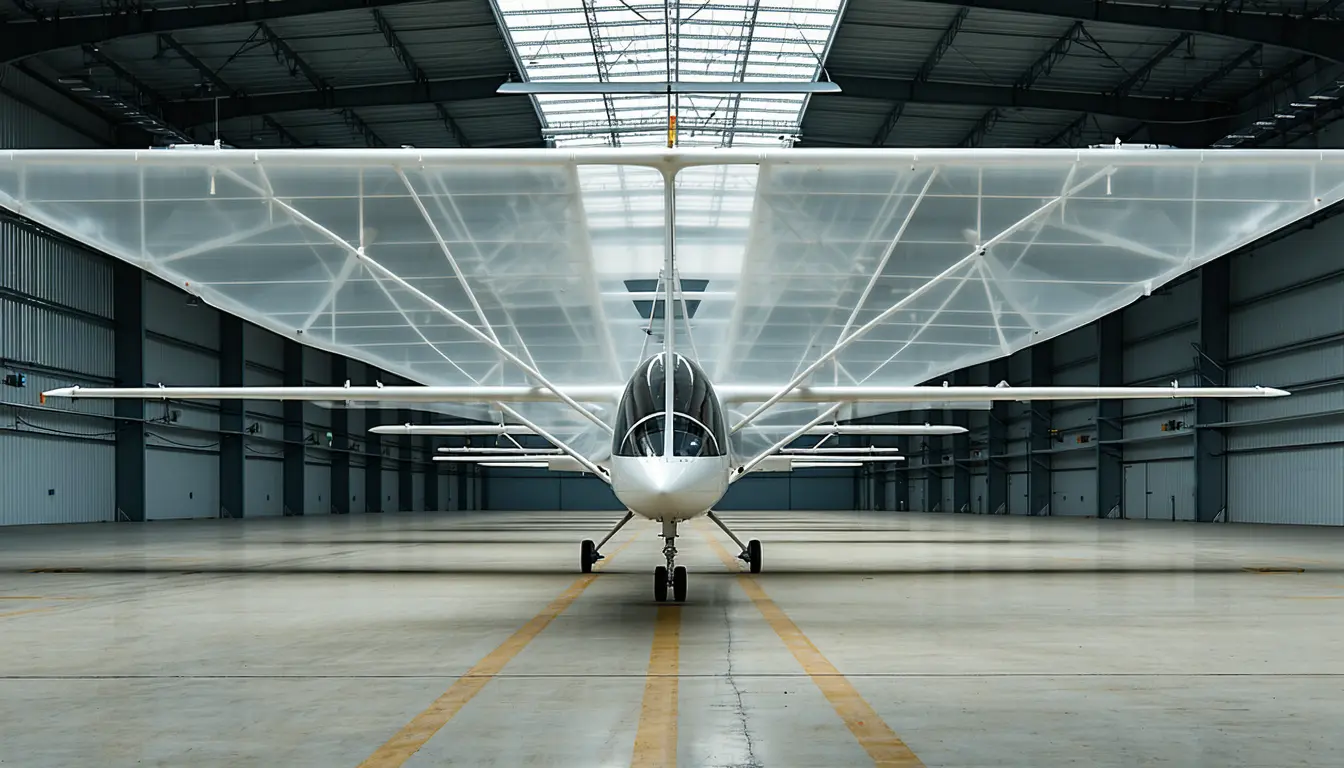
- ARIA is putting £70 million into 18 UK-based projects over three and a half years, under a programme aimed at aircraft that hold position 15 to 20 kilometres up and behave like satellites.
- Each team is working to the same target: 300 watts to a communications payload for a week while holding a fixed position above the UK. ARIA says it would be a first.
- The programme was costed at £50 million as recently as December 2025, and the current figure is £70 million.
- Sixteen of the 18 funded teams are already in the UK, and two others, from Australia and the United States, are relocating there because of the award.
- High-altitude platforms of this kind have so far lasted hours or a few days before batteries run out, weather damages them, or they drift off station.
Compiled by The InvestorSomething wrong?How this is made
Why it matters
- constraint Any commercial case has to close inside 50.4 kilowatt-hours per aircraft-week, so the payload is what limits what these platforms can sell.
- cost The 40 per cent budget revision came from test ranges, airspace and a rotorcraft entrant, and the public purse absorbed all of it before a single week-long flight.
- decision By requiring that a project would not go ahead without it, ARIA has committed itself to backing approaches private investors passed on, and to rejecting qualified applicants who could raise elsewhere.
- capability If VFP's rate holds, a week of stratospheric cover becomes a four-figure operating expense per aircraft. That is a different procurement conversation from booking satellite capacity.
Three hundred watts held for a week is 50.4 kilowatt-hours delivered to a communications payload [20], and all 18 teams are being paid to make it [4]. What differs is how they supply it. Menapia, in Leeds, wants to rotate a fleet through the stratosphere so no single airframe has to last the full week [8]. "When it comes to reaching the stratosphere, the vehicles don't have very long endurance whilst up there, but that problem can be overcome by means of this fleet-level rotation system," John Mooney said [9]. Space Solar is working the power side instead, beaming radio-frequency energy up from the ground [13]. Rico Chandra, the programme director, splits the money three ways: enabling technologies such as power beaming and lightweight solar materials, aircraft integration and testing, and the communications systems a commercial fleet would need [7].
VFP Aerospace has given the clearest unit numbers. Six-axis drones, each built by founder Andy Cheadle at about £50,000, flown at less than £10 an hour, rotating around a 20-kilometre service route [12]. At that rate, a week of continuous cover costs under £1,680 in operating cost for each aircraft on station, with the airframes as the capital item [23].
Whether that undercuts orbit is not a question the programme sets up to answer. ARIA's case is qualitative: satellites have to survive rocket launches and radiation, and the agency thinks an aircraft holding 15 to 20 kilometres for long periods might be cheaper [25]. The target it has actually written down is stated in watts and days, and leaves out cost per unit of communications capacity and any launch comparison [26].
Then there is the budget. The £20m increase over December's estimate is 40 per cent [22], and ARIA attributes it to the rotorcraft proposal and the expense of flight testing [16]. "It's not easy to work out how costly it will be to book the drone test ranges and obtain the necessary airspace," Chandra said [17]. That revision arrived before any team had held the one-week endurance test [4].
The two screening criteria say what kind of bet this is. A project had to show the potential for a "trillion-pound socio-economic impact" and had to be unlikely to proceed without ARIA's support, and a number of well-qualified applicants were turned down [19]. Spread across 18 projects, £70m averages about £3.9m each [21], enough to fund demonstrators, and ARIA's stated hope is that at least one of the 18 engineering approaches works [6]. In my view the eventual comparison will turn on how much traffic 300 watts carries at that altitude, since endurance is only the minimum requirement to qualify. The counter-argument comes from Space Solar's co-founder and co-CEO. "If we are successful, it will open up new markets in a new type of telecommunications infrastructure. In rural areas it is difficult to provide the high-bandwidth connectivity that businesses need," Martin Soltau said [14]. If rural backhaul is the market, the price to beat is a terrestrial one.
The 40 per cent revision is still the most concrete cost number this programme has produced, and no team has published a bandwidth figure [22]. ARIA notes that the rotorcraft entrants are proposing a class of aircraft new to these altitudes [11]. "The teams are now building aircraft that have never been built before, and that is exactly something we were determined to fund," Chandra told Tech Funding News [10].
What to watch
- Whether the £70m figure moves again once drone range and airspace bookings for the flight-test phase are actually contracted.
- Whether the rotorcraft entrant gets a rotary-wing vehicle to 15 to 20 kilometres. ARIA says that would be a first for rotary-wing aircraft.
- Whether any of the 18 teams reports 168 continuous hours at 300 watts inside the three-and-a-half-year term.