Invest1 publisher3 min readPublished
The 125 kilolitres a day that Thane residents are protesting works out at roughly 0.11% of the city's water supply, which means the eight megawatts an acre and the diesel fleet behind it are the numbers that will decide this site.
The Investor · Invest desk

Compiled by The InvestorSomething wrong?How this is made
Eight megawatts an acre is what makes the Balkum plot unusual: 422 MW of expected draw spread across 53 acres [3], on a site ringed by highrises, padas and at least eight schools and hospitals [3]. Divide the load by the 193 generators on standby and you get about 2.2 MW apiece [4], an average consistent with a fleet able to cover the site's full draw rather than a token backup. How many hours a year those engines are permitted to run does not appear in the public record.
The water case is the weakest instrument the residents are holding. A draw of 125 kilolitres a day is 0.125 MLD against the 115 MLD the Thane Municipal Corporation distributes [9], about 0.11% of it [1]; set against the 31 MLD the city is already short each day [8], it is roughly 0.4% [2]. That shortfall is itself about 27% of what TMC supplies [5]. Thane's water problem is large and documented, and by this arithmetic this customer is not the cause of it. According to Thane Municipal Corporation, the campus will draw treated water from the Kolshet and Majiwada sewage treatment plants, and an unnamed TMC official told The Indian Express that no potable supply will be impeded [10]. Amazon's spokesperson told the same paper that the facility will not use water for cooling at all, using sealed closed-loop coolant, and will connect to high-voltage transmission rather than the local network [11]. If both statements hold, the enforceable fight is about air, noise and land use.
Which brings up the purchase. AWS bought the land from Kalpataru Buildings during the Covid period [2], a brownfield plot whose previous tenant, a chemical company, was closed over health concerns after employing local villagers [4]. What AWS paid is not in the record, and that is the figure that would tell you how much consent risk was priced into the deal. What is in the record is where this build is not: the MMR bureaucrat quoted by The Indian Express drew the distinction plainly, that data centres in Mumbai and Navi Mumbai have gone up inside existing industrial complexes like the Airoli-Mahape belt and Chandivali-Powai, hardly surrounded by housing, while the Thane site sits next to a residential area and so needs extra precautions [7].
This site can go three ways from here. The clearance already lodged on the government portal [11] gets conditioned on generator hours and monitoring, the campus proceeds, and #WakeupThanekar wins measurement rather than cancellation. Or the bureaucrat's phrase hardens into a written siting rule, which raises the value of industrial-belt land across MMR and lowers the value of every in-city brownfield plot a hyperscaler has quietly optioned. Or Naresh Mhaske's backing [6] converts into political pressure to relocate, the expensive outcome, because the land is bought and the load has been engineered.
The first is where the evidence points, and the reason is boring: a 53-acre asset with clearances on file and transmission-level supply arranged concedes conditions long before it concedes a site. The read fails if the portal documents turn out to be thin on generator limits and the STP allocation exists only as an unnamed official's assurance, in which case the residents are objecting to a facility whose measurable commitments were never measurable.
Ranked by verification strength, evidence, and original report placement.
An Amazon spokesperson said the company is committed to being a responsible neighbour in Thane, that its environmental clearances are publicly available on the Indian Government portal, that the data centre will not use water for cooling but closed-loop cooling recirculating coolant through sealed pipes without consuming water, and that it will not draw power from the local network but connect to high-voltage transmission.
Data centres have faced protests in countries such as the US, and that backlash has now reached the Mumbai Metropolitan Region even as it races to establish itself as one of India's biggest data centre hubs.
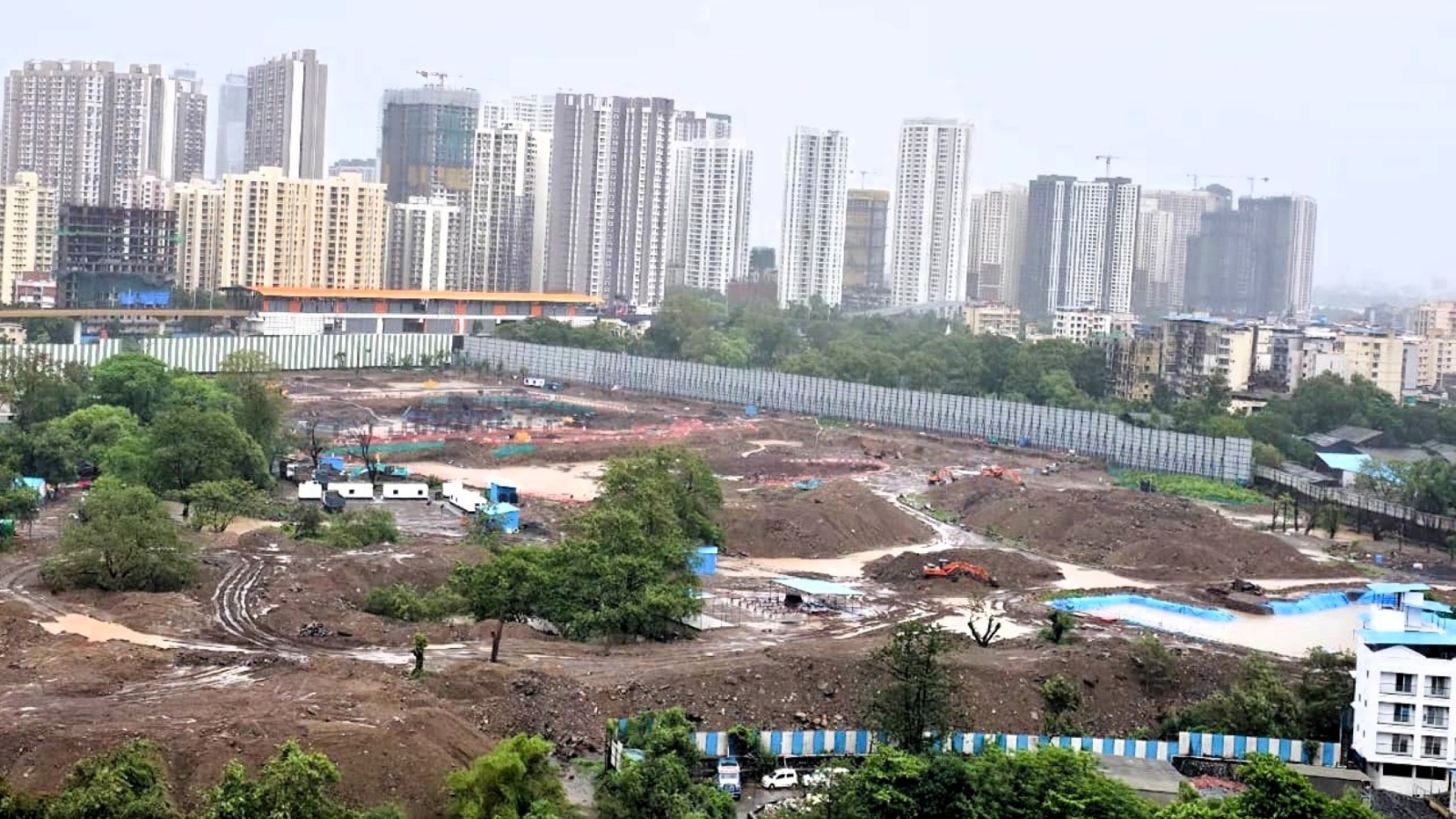
The proposed Amazon Web Services hyperscale data centre in Thane's Balkum area covers 53 acres and is expected to consume 422 MW of power and 125 kilolitres of treated water daily, with 193 diesel generators on standby.
AWS purchased the land for the facility from developer Kalpataru Buildings during the Covid period.
The site is surrounded by highrises, small padas and at least eight schools and hospitals.
The land previously housed a chemical company that employed local villagers and was closed over health concerns, costing thousands their source of income, according to Rohidas Patil, a native farmer of Balkum whose home is next to the facility's boundary wall.
Follow any of these and your For You feed starts watching them — no settings page required.
Evidence-backed comparisons of source perspectives and observed adoption signals. Read the methodology
Which Builder, Operator, and Investor concerns the observed source mix emphasized—not a truth score.
Evidence, demonstrated adoption, hype gap, incentives, and confidence are assessed independently, each on its own current evidence. How these are measured.
One newsroom, mostly self-reported figures
The residents are named and quoted on the record, which is the strongest part of the sourcing. Everything that decides the case is weaker: the 53 acres, 422 MW, 125 kilolitres and 193 generators come from Amazon's own public information, the water assurance from a TMC official who would not be named, the siting comparison from an unnamed MMR bureaucrat. The clearances the company calls publicly available are cited but never read.
Land bought, nothing running
So far this campus is only a purchase and a set of filings, with a boundary wall standing next to Rohidas Patil's house. What is measurable is the build-out around it: Rubix Data Sciences counts the MMR at 49% of India's operational capacity across at least 76 sites, and Maharashtra says it has signed MoUs above $300 billion. Regional momentum is real; this site's is a proposal.
Water carries the protest, power goes uncounted
Both the campaign and the coverage lead with water, and the filed figure is 125 kilolitres a day of treated effluent for landscaping, about a thousandth of what Thane distributes and a fraction of a percent of the shortfall the city already lives with. The grievance that would survive scrutiny is the power load, which stays unquantified in the campaign: 422 MW at roughly 8 MW an acre, and 193 generators averaging some 2.2 MW each, parked among highrises and at least eight schools and hospitals.
Assurances from the parties issuing them
Amazon's environmental reassurance comes from Amazon. The promise that no drinking water will be displaced comes from the corporation that both permits the site and would sell it treated effluent, through an official who required anonymity, as does the comparison with Navi Mumbai's industrial belts. Maharashtra's chief minister is marketing a $300 billion pipeline, and the MP standing with the protesters answers to the same residents.
Single account, interested numbers
The derived shares hold only as far as the 125 kilolitre and 115 MLD figures hold, and both reach the reader through parties with something at stake. Only one newsroom is reporting this, relying on two anonymous officials, and nobody has seen the clearance documents; the shape of the dispute is clear, but its decisive quantities are not yet independently pinned.
invest
Nvidia's Perplexity talks move its money one layer further from its own chips1 publisher
product
The "24 million cars" data centre stat is a unit error, and citing it costs you the argument1 publisher
product
Optional disclosure would leave data centre diesel fleets unaccounted, as Northern Virginia shows1 publisher
invest
Amazon stopped eating the memory bill, and the Echo Dot went up 60%1 publisher
Publishers with included, body-backed reporting in this cluster.