Product1 publisher2 min readPublished
Qualcomm clears its own 13% CPU claim on prerelease reference hardware
Tom's Guide measured a 16% CPU gain on a Qualcomm Reference Design whose battery it calls unrepresentative. Apple's A20 Pro still leads single-core, and the Snapdragon's clearest win was lower gaming wattage.
The Product Desk · Product desk
What happened
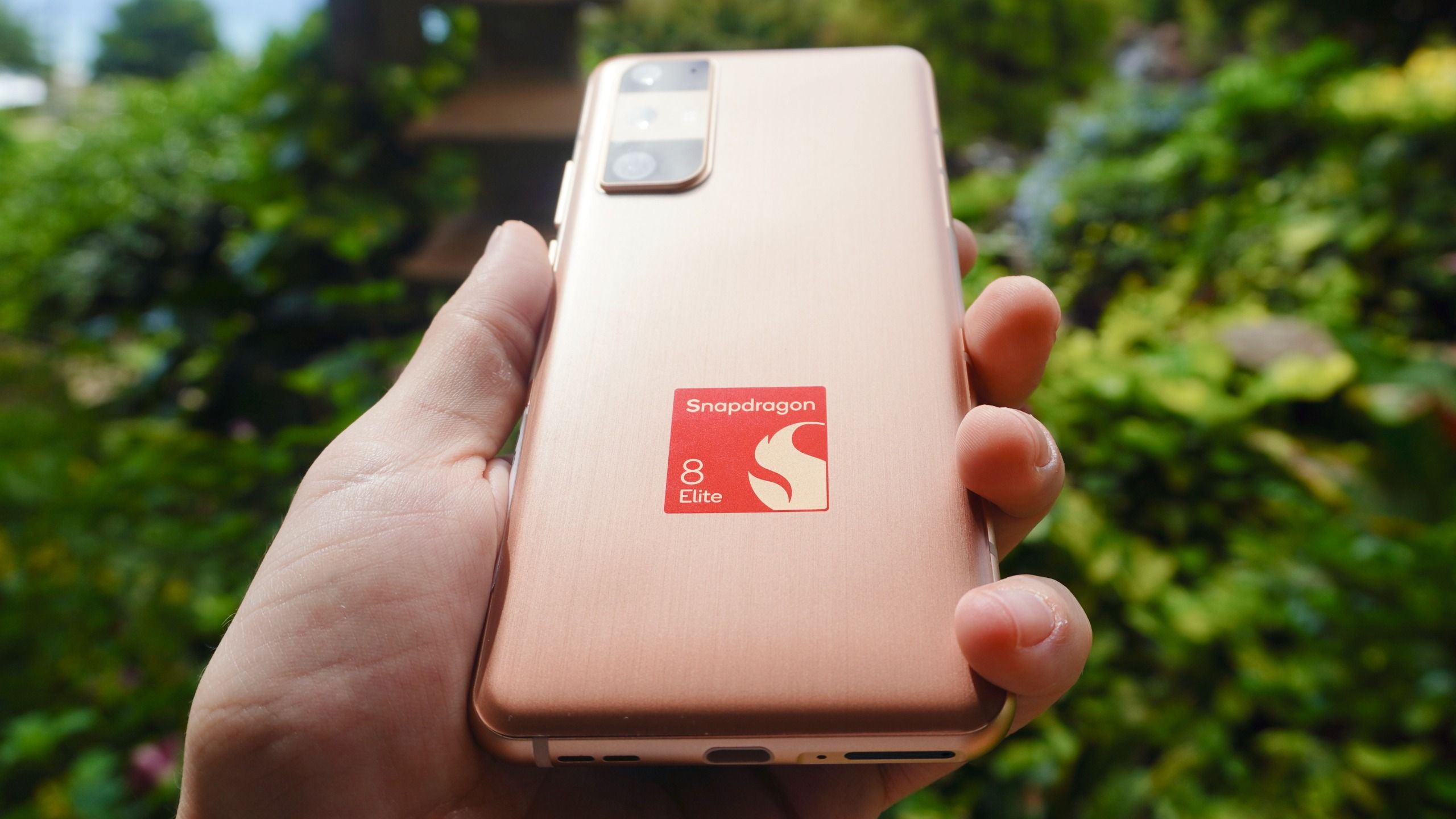
- Tom's Guide benchmarked Qualcomm Reference Designs of the Snapdragon 8 Elite Extreme Gen 6 rather than shipping phones, on a unit with 24GB of LPDDR5X, 1TB of storage and a 4,400 mAh battery.
- Qualcomm claims a 13% CPU gain over Gen 5, and the review's headline figure came in at 16%, with the reviewer saying Qualcomm had been modest about it.
- Apple's A20 Pro kept its single-core lead in the same testing, while the multicore gap between the two chips narrowed a little.
- 3DMark left the two chips trading blows, with Qualcomm's separation coming from Adreno Neural Fusion, its AI upscaling and frame generation running in the display coprocessor.
- The Extreme tier is set apart from the base 8 Elite Gen 6 by 50% larger shared on-chip memory and support for a much wider mix of on-device mixture-of-expert models.
Compiled by The Product DeskSomething wrong?How this is made
Why it matters
- constraint Every figure here came off a reference design whose battery Tom's Guide says is unrepresentative, so a purchase or a spec decision has to wait for retail phones with their own thermals.
- decision A team picking a platform for an on-device feature now has a cleaner split to argue over: burst single-thread latency points one way, sustained power draw and resident model size the other.
- capability If the wattage drop survives real games, Android studios get a long-session power budget that Apple's more power-intensive upscaling path does not match, by Tom's Guide's account.
- exposure Putting the agentic-AI headroom behind the Extreme part means a developer's feature availability depends on which of Qualcomm's two 2026 flagships a customer happened to buy.
The back of the reference designs got hot. Tom's Guide attributes a good chunk of the CPU gain to two new prime cores running at 5GHz, which Qualcomm bills as a first for smartphones [3][4]. Loading the background with apps and switching between them, the reviewer found the snappiness unaffected [15]. The same write-up warns that the cell in the test unit is not what a shipping ultra flagship will carry [17].
The measured figure sits three points above the claim, about a quarter more uplift than Qualcomm advertised [18]. The article describes its Geekbench, AnTuTu, 3DMark and AI runs but does not state the scores in its text [19], so the overshoot rests on one session with a reference design [7].
On the single-core result, Tom's Guide is blunt about what a person will notice: "you won't really feel that difference in real-world use in that gap" [6].
Apple's upscaling path, MetalFX, works from a lower-resolution image and tracks motion, contrast and edges to paint in missing pixels; Tom's Guide calls it "a bit of an old-fashioned way of going about it (and quite power intensive)" [10]. Qualcomm's stated purpose for Adreno Neural Fusion is power efficiency over long-term play, not the highest possible frame rate [11]. On Traverse benchmarks purpose-built for ANF, the reviewer reported a drastic reduction in total wattage plus better detailing on faces and terrain [12].
Players stay in one session on a phone that is already warm in their hand. A wattage drop on a demo Qualcomm built for its own feature is the narrowest possible version of that evidence, and it is the only version in the record so far [12].
So anyone placing an on-device feature this cycle has to work out which constraint decides it. If it is single-thread latency, Apple leads on this test set [5]. If it is sustained power draw during long GPU work, ANF is the thing to measure, and it has to be measured on a game people play [12]. And when the constraint is the size of the model that has to stay resident, the larger shared memory pool and the wider mixture-of-experts support are Extreme-tier only [13].
Qualcomm's word for the third case is the "agentic age", the idea of a phone that works for you, and the AI benchmarks in this session showed a sizeable uplift over previous generations [13][14]. Tom's Guide describes that goal as "starting to come into view, but we'll see how people feel about using this in practice" [14].
What to watch
- Retail phones using the Extreme part, with their own batteries and chassis, and whether 5GHz holds under sustained load.
- Whether ANF upscaling and frame generation appear in games people already play, or stay inside Traverse-style demos.
- Any published limit on the model sizes the 50% larger shared memory pool can keep resident.