Invest1 publisher2 min readPublished
MediaTek puts its first 2nm phone chip against Qualcomm on a single AI speed claim
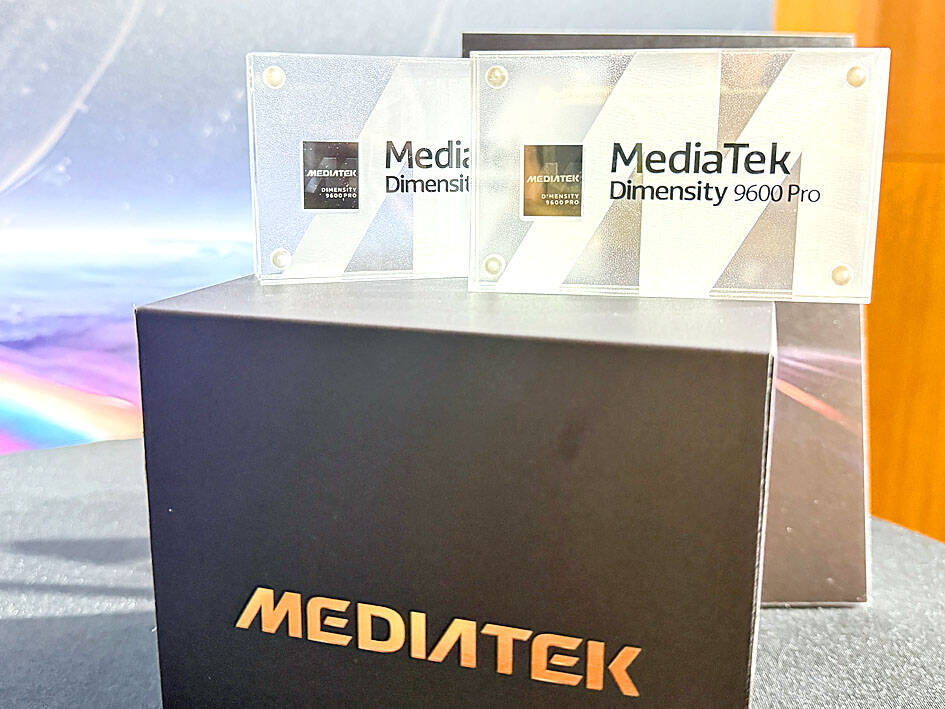
The Dimensity 9600 Pro is MediaTek's first processor on TSMC's 2nm process, and the case for taking premium handset share from Qualcomm rests on a single prompt-processing figure.
The Investor · Invest desk
What happened
- MediaTek unveiled the Dimensity 9600 Pro, its first mobile processor built on TSMC's 2-nanometer process, aimed at premium handsets running more AI work on the device itself.
- It also introduced the Dimensity 9600M on TSMC's 3nm process, pitched at a broader slice of the flagship smartphone market.
- MediaTek said the Pro's neural processing unit improved 51 percent over the previous generation at processing a user's prompt before a model starts generating. It did not provide supporting detail.
- MediaTek raised US$3.9 billion in a convertible bond sale last month, with Nvidia taking US$3.5 billion of the offering and Alphabet also participating.
- Hsu said the company was working with handset makers on ways to limit the effect of higher component costs on consumers as the AI boom strains supply chains.
Compiled by The InvestorSomething wrong?How this is made
Why it matters
- constraint Whatever MediaTek takes at the flagship tier is what is left after TSMC prices 2nm, and TrendForce expects top-ten foundry revenue to rise again this quarter partly on price hikes.
- decision Xiaomi, Oppo and Vivo now pick between a 2nm part and a 3nm one. That choice sets how much wafer cost goes into a phone before the shelf price shows it.
- contradiction Hsu treats rising prices as room to gain share while MIC blames high component prices for falling notebook units, and the two cannot both hold for phones.
- exposure MediaTek's market value already passed Qualcomm's, so a premium-share gain is in the price before a single named flagship handset carrying the new chips exists.
The margin MediaTek wants at the top of the handset market is shared with whoever fabricates the part, and TSMC's leverage is visible in TrendForce's quarter: 72.5 percent of the foundry market, up from 72.3 percent, on revenue 12 percent higher sequentially at 40.2 billion US dollars [13][14]. TrendForce expects combined top-ten foundry revenue to grow again this quarter from 53.49 billion, helped by price hikes [15]. Divide TSMC's quarter by that top-ten total and TSMC alone is about 75 percent of the group [1]; divide it by its own 72.5 percent share and the whole foundry market comes to roughly 55.4 billion [2]. Samsung, at 5.9 percent and falling, is about a twelfth of TSMC [16][4].
J.C. Hsu, MediaTek's corporate senior vice president, is selling into a rising price band. "As the overall market moves to higher prices, I believe there is still room for us to increase our share of the flagship segment," Hsu said [9]. Apple's foldable iPhone, announced last week, retails for as much as 3,199 US dollars in the highest-storage model [10]. The same report carries the counter-case from a neighbouring device category: MIC expects notebook shipments to fall 8 percent to 167.9 million units this year on weak demand, high component prices and supply constraints [17]. MIC's Edward Lin said shipments decline a further 4.7 percent to 160 million next year as higher retail prices weigh on consumption [18].
Nvidia's cheque was about nine-tenths of last month's convertible offering [3], and MediaTek's first AI accelerator for a major US cloud provider is due to enter mass production in the fourth quarter [11].
I think the flagship claim is currently thinner than the equity implies. MediaTek's market value passed Qualcomm's earlier this year [7], and what supports the premium push in this announcement is a stated effort to gain ground on Qualcomm [3] plus one prompt-processing improvement [4]. MediaTek said the first phones using the two chips launch soon and did not name the models [5]. Its customer list runs through Xiaomi, Oppo and Vivo [6]. The version where Hsu is right is straightforward: a 2nm part costs the handset maker more and sells for more, and the band Apple set at 3,199 dollars gives it room [10]. The version where he is wrong looks like MIC's notebook forecast, where the cost gets to the shelf and units fall [17].
The test is margin. MediaTek says it is working with handset makers to limit the effect of higher component costs on consumers [8], and a 2nm die absorbed on MediaTek's own account comes out of MediaTek's margin.
What to watch
- The retail price of the first handsets carrying the 9600 Pro, set against the current flagship band.
- TrendForce's third-quarter foundry numbers, and whether TSMC's share and pricing keep rising.
- Whether MediaTek's cloud-provider AI accelerator actually enters mass production in the fourth quarter.