Science1 publisher3 min readPublished
Base edits made before the first cell division persisted in every daughter cell of human embryos
Dieter Egli's Columbia team edited single letters in PCSK9, HBG1 and HBG2 and followed the embryos for six to seven days. Large chromosomal deletions and extra changes near the target still appeared, and he says clinical use is not currently safe.
The Scientist · Science desk
What happened
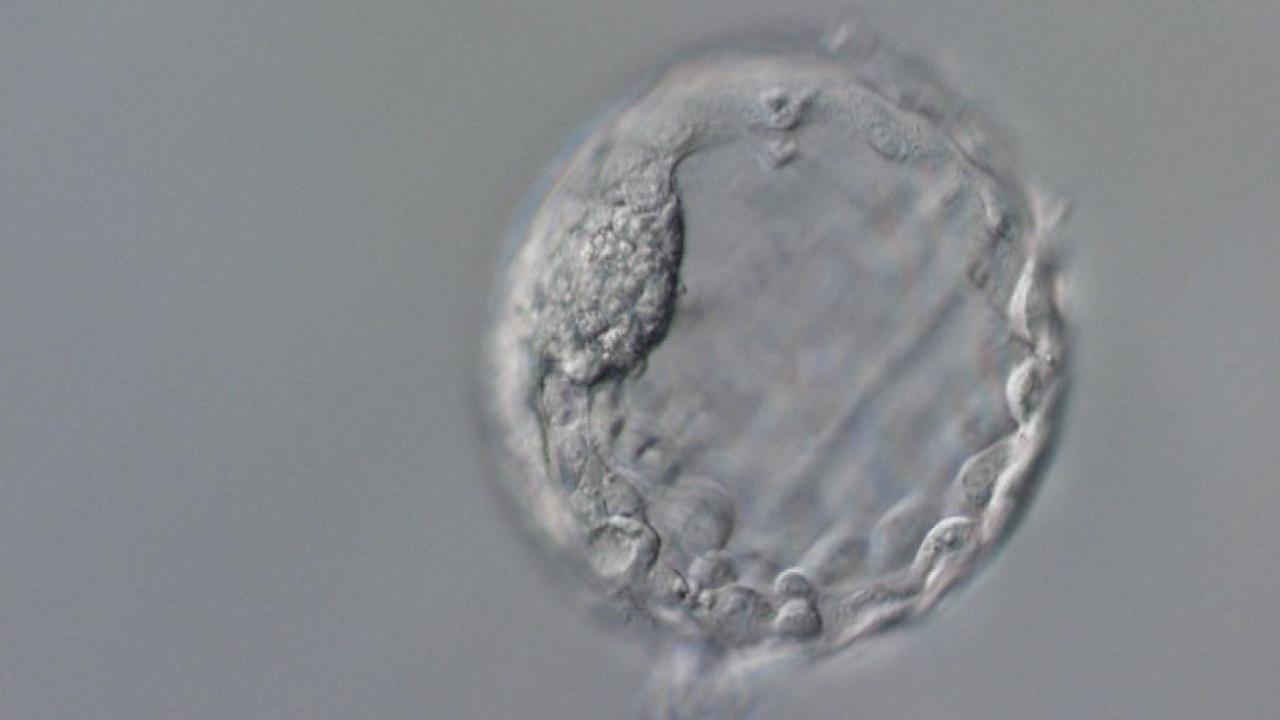
- A Columbia team led by Dieter Egli published base-editing results in human embryos in Nature on Sept. 9, following each embryo for six to seven days, the stage at which an IVF embryo could be implanted.
- Edits made in fertilized eggs before the first cell division modified the genome, and the changes persisted in 100% of the resulting embryos' daughter cells.
- The targets were single-letter mutations in three genes: PCSK9, linked to high cholesterol and cardiovascular disease, and the hemoglobin genes HBG1 and HBG2, tied to sickle cell anemia and beta-thalassemia.
- The same procedure produced an array of other alterations in unpredictable patterns, including large chromosomal deletions, at a much lower frequency than the team had seen with CRISPR.
- Columbia's summary of the work says the techniques edit accurately but carry risks that currently preclude their use in the clinic.
Compiled by The ScientistSomething wrong?How this is made
Why it matters
- constraint Confirming the intended edit no longer clears the embryo, because the same procedure alters sites elsewhere in patterns nobody can predict in advance. Egli points to that as the obstacle to clinical use.
- capability Editors that damage DNA at rates unacceptable for therapy can still be used to ask how early human embryos repair breaks in their DNA, a question Egli links to why so many IVF embryos arrest.
- precedent A lab documenting the risk profile of its own method raises the evidentiary bar for anyone proposing germline editing in a clinic, and Egli says he expects the paper to discourage inappropriate use.
Timing explains the 100 percent. An edit installed in a fertilized egg before the first cell division is copied into every cell that follows, so the Columbia group worked at the single-cell stage and then checked whether the change had been made correctly and handed on to all cells [2][3]. In some experiments it had, and development looked apparently normal [4].
Base editors were tried here because of what the older tool does to DNA. CRISPR cuts both strands and then depends on the cell to glue the broken ends together [13]. Egli's lab had already found that human embryos usually bungle that repair [15], and when his team tried CRISPR in early embryos about ten years ago the attempt mostly failed, deleting large sections of chromosomes and even entire chromosomes as development progressed [14]. A base editor stays on one strand, removing a single letter and putting another in its place [13].
Deletions did not go away. They turned up at much lower frequency than with CRISPR, alongside an array of other alterations in unpredictable patterns [7]. The editor also changed additional sites as the embryo developed, some of them in the vicinity of the intended change [8]. "This tells us something about how the type of DNA damage caused by base editors is repaired or fails to be repaired by the cell," Egli said [9].
The 100 percent is reported for some experiments, and the phys.org account did not say how many embryos were edited or how often editing reached every cell [18]. It reported the deletion frequency only relative to CRISPR, without a rate [7].
Six to seven days covers the stage at which an IVF embryo could be implanted [3]. Later development was not observed, so the fate of an embryo carrying a deletion in some of its cells is unknown.
The design does allow damage to be studied on purpose. Early human embryos accrue a surprising amount of DNA damage as they grow, and most embryos made with IVF stop developing in the first few days [16]. "By introducing such damage using editors, we are starting to understand how human embryos handle damage in their genomes. In the long term, we hope to learn how to prevent genetic and developmental abnormalities during IVF to create more efficient, safer and more affordable fertility treatments," Egli said [12].
On the clinical question he was direct. Editing embryos could in principle let carriers of disease-causing mutations have healthy children through IVF, "But given our findings, it is currently not possible to do so safely," Egli said [10]. He added: "I think our study will discourage inappropriate use of these techniques in the clinic because we clearly demonstrate the risks" [11].
What to watch
- Whether the Nature paper's own tables report embryo counts and per-experiment editing rates that the summary leaves out.
- Whether other labs reproduce the large chromosomal deletions at the same low frequency using different base editors or delivery timing.
- Whether professional bodies or regulators cite the collateral-change finding in guidance on germline editing.